



A Marathi Language Controversy Sparks Debate in Maharashtra
In Maharashtra, a heated debate over language erupted after a food stall owner in Thane was assaulted for not speaking Marathi. Minister Yogesh Kadam declared that speaking Marathi is a must in the state, warning of legal action for any disrespect to the language. The incident, linked to members of the Maharashtra Navnirman Sena, went viral, drawing widespread outrage. Kadam condemned the violence, urging people to file complaints instead of taking the law into their own hands. Meanwhile, the Kashimira Police filed an FIR against the attackers. This clash comes amid a broader language debate, as Amruta Fadnavis, wife of the Chief Minister, recently pushed for Hindi in school curriculums, stirring tensions with Marathi advocacy groups. It’s a reminder of how language can ignite deep cultural passions.
Dalai Lama Defies China on His Successor
The Dalai Lama dropped a bombshell by declaring that his reincarnation will be chosen without China’s interference, directly challenging Beijing’s claim to control Tibetan religious affairs. In a video statement from Dharamshala, the 89-year-old spiritual leader insisted the Gaden Phodrang Trust holds sole authority over his successor. This move is sure to rile China, which has historically meddled in Tibetan Buddhism, like when it detained the Dalai Lama’s chosen Panchen Lama in 1995. China’s state media pushed back, arguing the “golden urn” method, used by Qing emperors, should decide the next Dalai Lama. As the spiritual leader nears his 90th birthday, this clash underscores a broader struggle for Tibetan autonomy. It’s a bold stand for religious freedom against political control, and the world is watching closely.
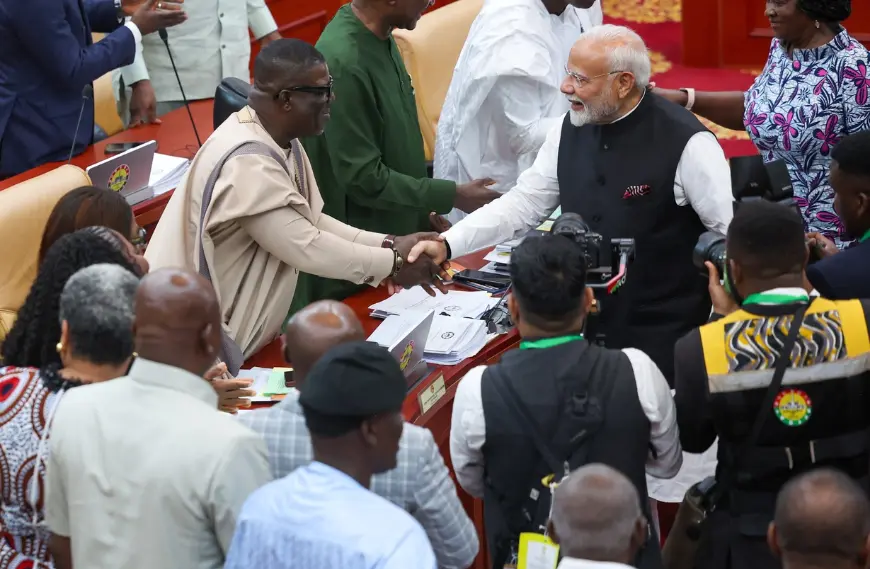
PM Modi Calls for Global Reforms in Ghana
Prime Minister Narendra Modi made waves during his historic visit to Ghana, the first by an Indian PM in three decades. Addressing Ghana’s parliament, he highlighted the rapid shift in the post-World War II global order, driven by technology, the rise of the Global South, and changing demographics. Modi called for “credible” reforms in global governance to keep up. He also elevated India-Ghana ties to a “comprehensive partnership,” pledging support for Africa’s development. Modi paid tribute at the Kwame Nkrumah Memorial, honouring Ghana’s independence hero. The visit, strengthening trade ties, especially in gold, signals India’s growing African outreach. Modi dedicated Ghana’s national honour, bestowed on him, to the shared values binding the two nations. It’s a step toward a stronger, more inclusive global future, with India playing a key role.
UK’s Stranded F-35 Jet Faces Dismantling in Kerala
A British Royal Navy F-35 jet, stranded in Kerala’s Thiruvananthapuram Airport since June 14, is causing headaches. After an emergency landing due to bad weather and low fuel, a hydraulic failure grounded the high-tech fighter. Despite attempts by a small Navy team, repairs failed, and a promised UK engineering crew hasn’t arrived. Now, the jet may be partially dismantled and airlifted back to the UK on a cargo plane. The Indian Air Force aided the landing, and the jet, parked under CISF protection, was recently moved to a hangar to shield it from monsoon rains. This saga highlights the complexities of maintaining cutting-edge military tech far from home. For now, the F-35’s fate hangs in the balance, a costly reminder of how even advanced machines can falter.
Quad Takes on China’s Grip on Critical Minerals
The Quad, India, Australia, Japan, and the US, launched the Critical Minerals Initiative to counter China’s dominance over rare earth elements vital for electric vehicles, semiconductors, and jet fighters. The group expressed “deep concern” over China’s control, which risks economic coercion and supply chain disruptions. The initiative aims to diversify supply chains and boost recycling, building on the G7’s similar push. China’s recent export restrictions, like banning rare earth magnets to the US, have hit industries hard, including India’s growing EV sector. The Quad’s move follows a US-India agreement to advance mineral extraction tech. With President Trump prioritising domestic mining, this effort signals a global shift to secure critical resources. It’s a strategic play to ensure economic and national security in a tech-driven world, but the challenge is steep.
Apple’s India Plans Hit Snag as Foxconn Pulls Chinese Staff
Apple’s push to ramp up iPhone production in India hit a roadblock as Foxconn, its key manufacturer, sent over 300 Chinese engineers back home. The move, reported by Bloomberg, follows China’s informal push to curb tech transfers to India. With Chinese staff gone, training local workers and transferring manufacturing know-how could slow, raising costs and affecting efficiency at Foxconn’s southern India plants. Apple, aiming to assemble all US-bound iPhones in India by next year, relies on these factories for 15% of its global output. The absence of an official statement from Apple or Foxconn adds uncertainty. This shift highlights the delicate balance of global tech supply chains amid geopolitical tensions. For Apple, it’s a setback in its bid to diversify away from China, and India’s manufacturing ambitions face a test.
Ramayana’s First Glimpse Wows with Epic Promise
The first look at Ramayana: Part I, directed by Nitesh Tiwari, has fans buzzing with excitement. Unveiled on July 3, the three-minute teaser showcases Ranbir Kapoor as Lord Ram, Yash as Ravana, and Sai Pallavi as Sita, promising a grand retelling of the epic. With Sunny Deol as Hanuman and Ravi Dubey as Lakshman, the film boasts a stellar cast. Backed by Oscar-winners Hans Zimmer and AR Rahman for music and top stunt coordinators, it’s set to be a visual spectacle. Producer Namit Malhotra aims to localise the film globally using advanced tech for seamless dubbing. Part I hits theatres in Diwali 2026, with Part II in 2027. This news roundup can’t capture the full buzz, but the teaser’s grandeur hints at a cinematic milestone for Indian storytelling.
