



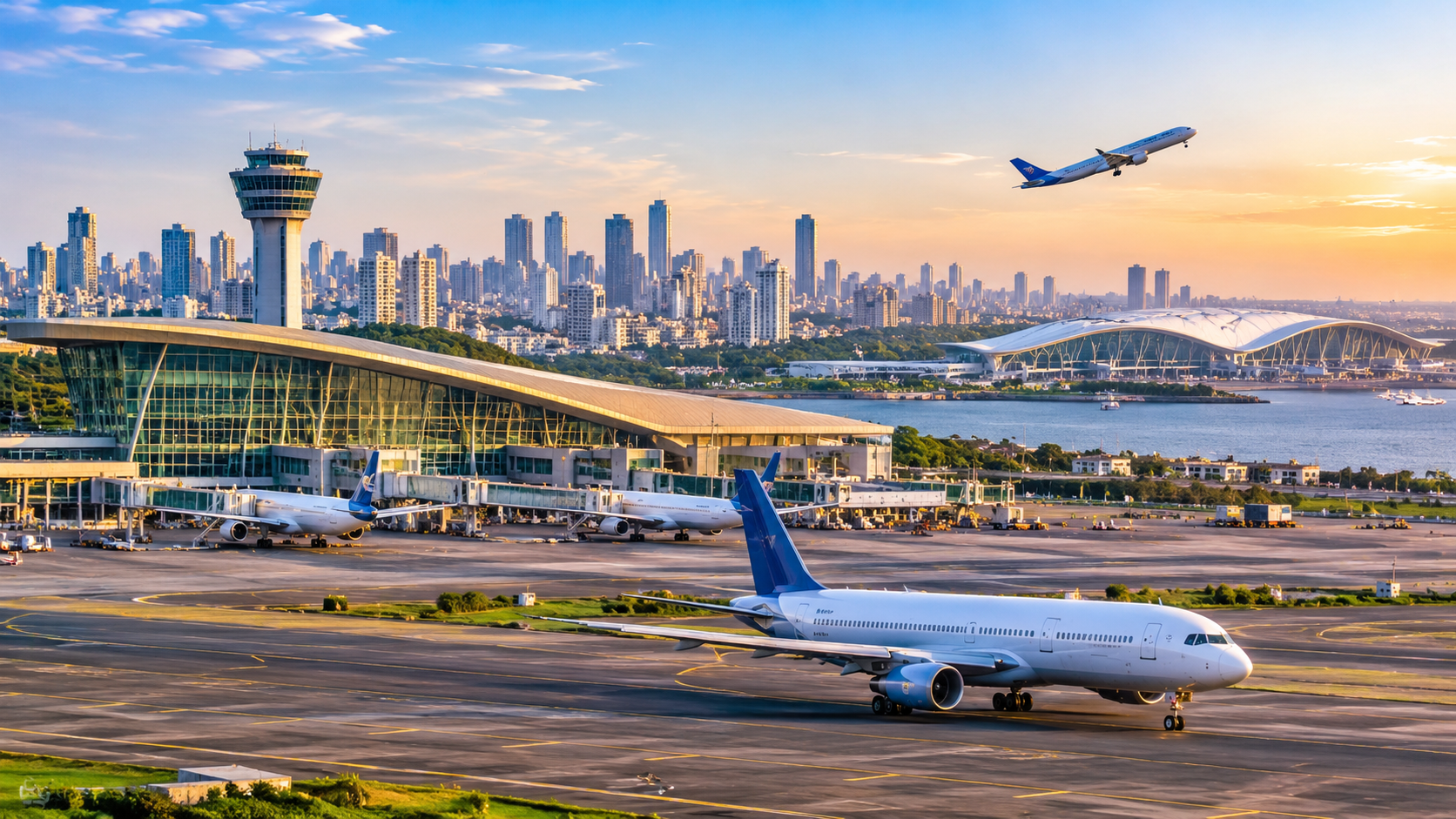
For years, Chhatrapati Shivaji Maharaj International Airport has been the main gateway for people flying in and out of Mumbai. Whether travelling for work, visiting family or heading abroad for a holiday, millions of passengers have depended on it every year.
Now, Mumbai’s aviation landscape is entering a new phase. With Navi Mumbai International Airport already operational, the Mumbai Metropolitan Region is moving towards a two-airport system. The new airport is expected to share the region’s growing air traffic with the existing Mumbai airport.
However, making this transition is not as simple as moving flights from one airport to another. It involves airport authorities, airlines, passengers and several operational decisions.
Why Does Mumbai Need Two Airports?
Mumbai is one of India’s busiest urban regions, with people travelling regularly for business, education, tourism and personal reasons. As air travel grows, managing passenger traffic and airport capacity becomes increasingly important.
The existing Chhatrapati Shivaji Maharaj International Airport (CSMIA) has limited room for expansion because of the surrounding city. Its Terminal 1 is also due for major redevelopment.
The redevelopment is expected to replace ageing infrastructure with a modern terminal and improve the airport’s capacity for future travel needs. However, carrying out such large-scale work while the airport continues to operate requires careful planning.
This is where Navi Mumbai International Airport (NMIA) becomes important. Located on the mainland across the harbour, it offers additional airport infrastructure and more room to accommodate the region’s growing aviation needs.
Why Are Airlines Concerned?
The redevelopment of Terminal 1 has brought changes to the existing airport’s flight plans.
Mumbai International Airport Limited (MIAL), which operates CSMIA, has proposed temporarily shifting passenger traffic equivalent to five million passengers annually to Navi Mumbai. The proposal involves moving selected international flight operations to the new airport to make room for the redevelopment work.
Some airlines have already agreed to a phased transition. IndiGo, the Air India Group and Akasa Air have announced plans to shift selected services to Navi Mumbai over the coming months.
However, not all airlines are comfortable with the proposed arrangements.
The Airline Operators’ Committee (AOC), which represents airlines operating from Mumbai airport, has raised concerns about the proposed capacity reduction. On November 2, it approached the Union Civil Aviation Ministry, arguing that the airport operator’s decision lacked adequate justification and consultation.
The airlines have also asked authorities to protect their existing flight slots for the Summer 2027 schedule. They want clarity before changes are made to their operations.
The disagreement shows that building a two-airport system requires more than new runways and terminals. Airlines also need time to plan their routes, aircraft schedules and passenger services.
What Could This Mean for Passengers?
For travellers, one of the biggest changes could be the airport from which their flights depart or arrive.
A person who has traditionally used Mumbai airport may eventually need to travel to Navi Mumbai for certain flights. This could make a difference to journey planning, especially for people travelling from different parts of the Mumbai Metropolitan Region.
For example, someone living in South Mumbai may need to consider a longer road journey to reach Navi Mumbai airport, while passengers living in Navi Mumbai or nearby areas may find the new airport more convenient.
However, the transition is expected to happen in phases. It does not mean that all flights will move from Mumbai to Navi Mumbai. Passengers should check their tickets and airport details before travelling.
A New Chapter in Mumbai’s Air Travel
The two airports represent an important change in how the Mumbai Metropolitan Region will handle air travel in the coming years.
The redevelopment of the existing airport and the expansion of Navi Mumbai’s aviation facilities could provide more room for future growth. But the success of this change will depend on how smoothly airport authorities and airlines coordinate their plans.
For passengers, the real benefit will not simply be having two airports. It will be having better connectivity, convenient journeys and a travel system that keeps pace with the needs of a growing city.
Mumbai is preparing for a future with two major airports. The challenge now is to make sure that this transition works smoothly for everyone who depends on them.
Subscribe Deshwale on YouTube
