



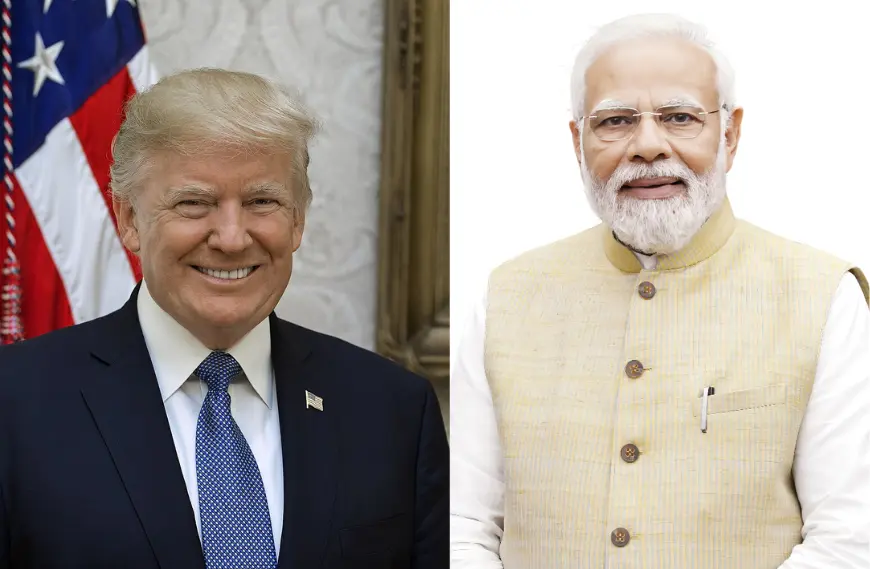
In a sharp critique of recent US trade policies, Edward Price, a senior US analyst and professor at New York University, has called on President Donald Trump to issue a formal apology to Indian Prime Minister Narendra Modi for imposing steep 50% tariffs on Indian goods. This demand, articulated in an interview with ANI, underscores the need to shift from confrontation to reconciliation to preserve the vital US-India partnership, which Price describes as “crucial” for navigating 21st-century global challenges.
The tariffs, which include a 25% penalty for India’s continued purchase of Russian oil, were enacted via executive order on August 27, 2025, as a measure to pressure nations trading with Russia amid the ongoing Ukraine conflict. These measures have drawn sharp criticism from India, with Modi’s government labeling them “unfair, unjustified, and unreasonable.” Price argues that the tariffs not only strain economic ties but also undermine a strategic relationship painstakingly built over decades, particularly as the US seeks to counterbalance China and Russia on the global stage.
Price emphasized that an apology from Trump would signal respect for India’s role as a “deciding” player in global affairs. “We need to remove the 50 percent tariff on India and get it down to something far more reasonable, I suggest zero per cent and apologise,” he stated, highlighting the urgency of mending diplomatic fences. This call comes at a time when US-India relations have hit a low, exacerbated by Trump’s public criticisms, including labeling India’s economy as “dead” and accusing Modi of “profiting from chaos.”
The US-India partnership has been a cornerstone of strategic cooperation, with bilateral trade reaching $190 billion in 2024, though the US runs a $45 billion trade deficit with India. Earlier this year, on February 13, 2025, Trump and Modi set an ambitious goal to double trade to $500 billion by 2030 during Modi’s White House visit. However, the imposition of tariffs, which Price finds puzzling given the US’s simultaneous confrontations with China and Russia, threatens to derail these aspirations.
India’s foreign ministry has pushed back, noting that other nations, including the EU and China, continue trade with Russia without facing similar punitive measures. This perceived double standard has fueled anti-American sentiment in India, with opposition leaders like Mallikarjun Kharge asserting that India’s “national interest is supreme.” Price’s call for an apology aligns with this sentiment, advocating for a diplomatic gesture to acknowledge India’s sovereignty and strategic importance.
The analyst also praised Modi’s nuanced approach to global alliances, noting his decision to skip a recent military parade in Beijing as evidence of India’s careful balance. By avoiding full alignment with either China or Russia, Modi has positioned India as an independent player, a stance Price believes should be respected rather than penalized. An apology, he argues, would not only de-escalate tensions but also reinforce the US commitment to a partnership that could shape the geopolitical landscape, particularly in countering China’s growing influence.
For diplomats and foreign affairs enthusiasts, Price’s remarks highlight the delicate balance of economic and strategic interests in US-India relations. The call for an apology underscores the need for mutual respect to sustain a partnership critical to global stability, especially as India navigates its role as a rising power. Without a course correction, the tariffs risk pushing India closer to alternative alliances, a scenario that could weaken the US’s position in the Indo-Pacific and beyond.
As trade negotiations remain stalled, previous talks collapsed despite India’s offer of a “zero-for-zero” tariff deal on certain goods; the path to reconciliation lies in diplomatic overtures. Price’s plea for Trump to apologize and eliminate tariffs offers a roadmap to restore trust, ensuring that the US-India relationship remains a cornerstone of 21st-century geopolitics.
