



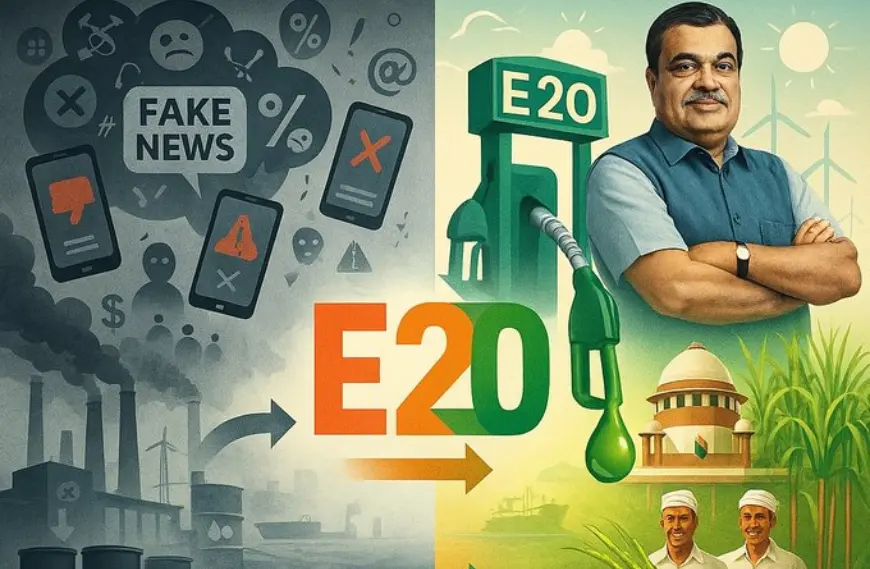
India is moving quickly towards using ethanol-blended petrol as part of its clean energy plan. The government has set a target to roll out E20 fuel (petrol mixed with 20% ethanol) across the country. While this is promoted as an eco-friendly step, it also raises a big question: are consumers losing their right to choose?
What is E20 fuel?
E20 fuel is regular petrol mixed with 20% ethanol. Ethanol is usually made from crops like sugarcane and maize. The idea is that blending ethanol will reduce dependence on imported crude oil, cut pollution, and support farmers who supply raw material for ethanol.
The problem of choice
At first glance, this seems like a win-win policy. But many motorists argue that it takes away their freedom to choose fuel. Most vehicles in India, especially older ones, are not designed to handle E20 fuel. These engines may face issues like reduced mileage, faster wear and tear, or even damage in the long run.
Despite this, petrol pumps across cities are starting to stock mainly E20 fuel. That means a driver with an older car or two-wheeler has little to no option left. In effect, the consumer is being forced to use fuel that may not be right for their vehicle.
Who bears the cost?
If a motorist faces engine damage due to using E20 in a vehicle not designed for it, who will take responsibility? Repairing or replacing parts can be expensive, and ordinary commuters may end up paying the price for a government decision. This has sparked a debate on whether consumer rights are being overlooked in the rush to achieve green energy targets.
The fairness question
Consumer rights experts say the rollout should have been more gradual. For example, E10 (10% ethanol) fuel could have remained available for people with older vehicles, while E20 could be offered as an option for new, compatible models. By making E20 almost mandatory, critics argue that the government has restricted consumer freedom instead of giving people a fair choice.
No one denies that ethanol blending has environmental and economic benefits. But a balance must be struck. Consumers deserve clarity, fair options, and protection against hidden costs. Clear labelling at petrol stations, dual availability of E10 and E20 for a transition period, and stronger consumer safeguards are some steps that could help.
In the end, clean energy goals should not come at the cost of consumer rights and fairness. A successful policy is one that protects the environment while respecting the choices and concerns of the people who have to live with it every day
