



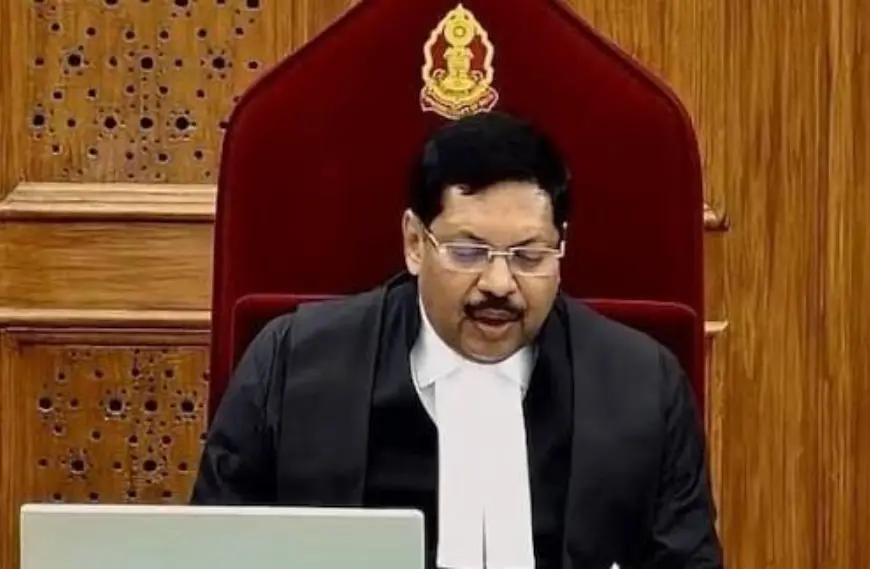
The Supreme Court recently dismissed a petition seeking the restoration of a damaged Lord Vishnu idol at the Javari temple in Khajuraho, Madhya Pradesh. The petitioner, Rakesh Dalal, argued that the mutilated idol, damaged centuries ago during invasions, should either be restored or replaced, as its current state violated devotees’ fundamental right to worship. The bench led by Chief Justice of India B. R. Gavai and Justice A. G. Masih, however, rejected the plea, holding that the matter lies within the jurisdiction of the Archaeological Survey of India (ASI). Under the Ancient Monuments and Archaeological Sites and Remains Act, 1958, conservation laws permit preservation and limited repair but do not allow full reconstruction or replacement of destroyed parts.
During the hearing, CJI Gavai remarked that the plea appeared to be ‘purely publicity interest litigation’ and told the petitioner, ‘You say you are a staunch devotee of Lord Vishnu. So go and pray now.’ This comment sparked controversy, with many seeing it as insensitive to religious sentiments. The backlash was immediate, with several advocates and groups criticising the remarks and urging the judiciary to show greater respect to matters involving faith. Some even raised concerns about whether such comments diminish the dignity of the court and erode public trust.
Legally, the Court’s decision is aligned with existing conservation statutes. The law clearly restricts restoration beyond preservation, and therefore the dismissal was within judicial precedent. Yet, the controversy highlights a deeper issue: while the Supreme Court is bound to decide based on law, it also carries a moral responsibility to maintain sensitivity when dealing with matters of faith. People approach the Court when they feel their constitutional rights, such as the right to worship, are threatened. In that sense, the Court is answerable not only to the Constitution but also to the people’s faith in the institution.
The question that emerges is significant: if someone takes their plea to the Supreme Court, isn’t the Court duty-bound to address it with empathy as well as legality? While the Supreme Court remains the apex body with no higher forum above it, except through impeachment or constitutional checks, its legitimacy ultimately depends on public trust. Legal correctness alone may not always satisfy citizens; sensitivity, clarity, and respect for belief are equally important to sustain confidence in the judiciary.
