



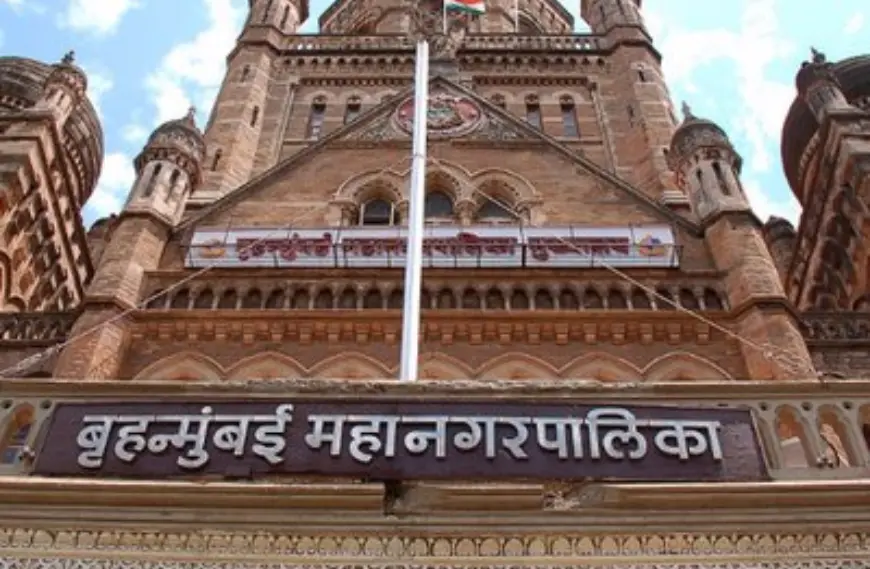
The Brihanmumbai Municipal Corporation (BMC) elections are around the corner, and the political heat in Mumbai is rising with each passing day. As the largest and the richest civic body in the country, the BMC plays a crucial role in the day-to-day lives of Mumbaikars, making these elections one of the most closely watched contests. Every citizen, from local residents to political observers, is keen to see who will emerge victorious this time. The Mahayuti government has already set a high target for itself, declaring confidently that it will secure 150 seats in the civic polls. But how realistic is this claim, and what do citizens really think about the issues in their neighbourhoods?
To understand this better, Deshwale spoke with Ganesh Darekar, who is actively involved in managing election-related work in Thane region. Though his epicentre is outside Mumbai, his perspective on a municipal election provided an interesting balance between political claims and on-ground realities.
When asked about Mahayuti’s ambitious target of 150 seats, Darekar was candid in his response. He admitted that it would not be an easy feat to achieve such numbers in the BMC elections. “It is not easy to win 150 seats,” he said, indicating that while the alliance may perform strongly, the final results will depend on multiple local factors.
On the issue of civic problems, Darekar highlighted that population growth has intensified challenges for Mumbai. He pointed out that problems related to roads, water supply, and traffic congestion have been steadily increasing every year. According to him, these issues cannot be solved overnight and need consistent efforts from the administration.
We further asked him whether he felt that local issues were being sidelined in the backdrop of big political promises and alliances. To this, Darekar disagreed, saying, “Local issues are indeed on the path to resolution, but more action is required to make the solutions impactful.”
On the question of voting preference, Darekar made his stance very clear. For him, the decision would not be based on party alliances but rather on the personal work of candidates. “Personal work matters more than party alliances,” he emphasised, reflecting the growing sentiment among many urban voters who prefer performance over promises.
Finally, when asked about the current ruling party, Darekar expressed a positive outlook. He felt that the party in power has been doing good work, though continuous efforts will be needed to match the expectations of the people.
As Mumbai gears up for the polls, voices like Darekar’s highlight the blend of hope, expectations, and cautious optimism that citizens carry into the BMC elections.
