



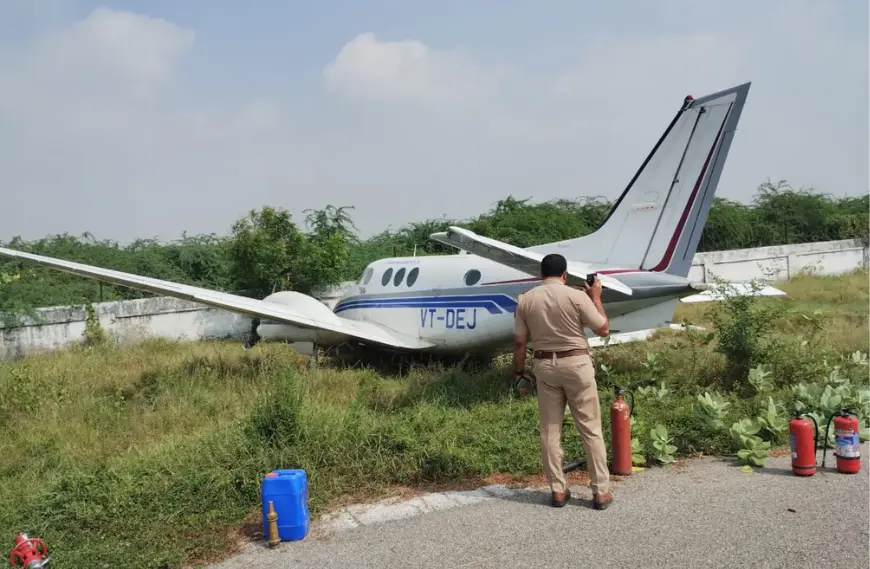
In a recent incident at Farrukhabad, Uttar Pradesh, a private aircraft lost control while taking off. The situation could have turned catastrophic, but the pilots’ quick thinking, extensive training, and composure prevented a serious accident, ensuring the safety of all six people onboard, including passengers and crew. This incident highlights the vital importance of pilot preparedness and rigorous training in aviation safety.
According to initial reports, the aircraft experienced technical difficulties immediately after the takeoff roll. While such situations are rare, they require split-second decisions and precise handling to minimize risks. The pilots, leveraging their professional expertise, acted swiftly to stabilize the plane and prevent it from veering off the runway. Their ability to maintain control under pressure averted what could have been a major disaster, underscoring the effectiveness of continuous training and simulation exercises in real-life scenarios.
Aviation experts stress that incidents like these, though uncommon, serve as a reminder of the high stakes involved in air travel. Modern pilot training programs focus not only on technical skills but also on decision-making under stress, situational awareness, and emergency response protocols. In this case, the pilots’ actions reflected years of disciplined practice and adherence to safety procedures, proving that human skill remains a critical factor in aviation safety, even with the advent of advanced technology in aircraft.
The aircraft, fortunately, sustained minimal damage, and no injuries were reported among the passengers or crew. Local authorities, along with aviation regulators, promptly responded to secure the site and ensure the plane was safely removed from the runway. Investigations are underway to determine the exact cause of the loss of control, but preliminary statements suggest that the pilots’ proactive handling was decisive in preventing escalation.
This incident also highlights the broader significance of aviation safety awareness. Airlines and private aircraft operators are encouraged to continually review safety protocols, conduct regular drills, and maintain high standards of aircraft maintenance. While technology and automation have enhanced flight safety, trained and alert pilots are often the last line of defense in preventing accidents.
Flight schools and aviation academies can use this case as a learning example, emphasizing the importance of comprehensive pilot training programs. Regular exposure to emergency simulations, hands-on experience, and decision-making exercises can prepare pilots for unforeseen challenges, ensuring that passenger safety remains the top priority.
In conclusion, the Farrukhabad aircraft incident serves as a testament to the critical role of skilled pilots in aviation. Their professionalism, calmness, and swift response prevented a potentially serious accident, ensuring all onboard were safe. As air travel continues to grow globally, such examples reaffirm that training, experience, and preparedness are indispensable in safeguarding lives and maintaining confidence in the aviation industry.
