



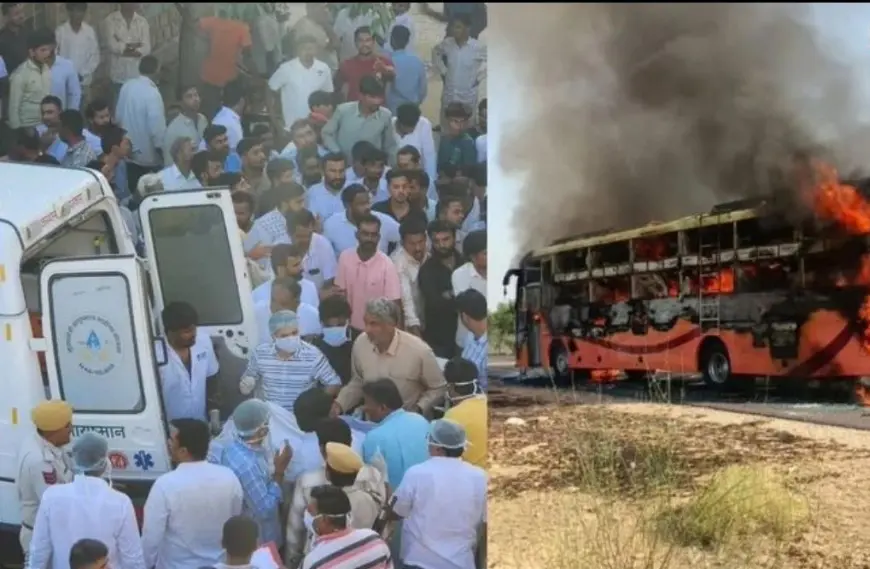
On October 14, 2025, a private sleeper bus travelling from Jaisalmer to Jodhpur caught fire near Thaiyat village, killing 20 passengers and injuring several others. Early reports suggest the blaze began at the rear of the vehicle, possibly due to a short circuit in the air-conditioning system. The tragedy has once again raised a familiar question why do such accidents keep happening despite India’s growing list of transport safety rules?
What the rules say
India’s bus safety framework is governed by the Central Motor Vehicles Rules (CMVR) and Automotive Industry Standards (AIS) set by the Ministry of Road Transport and Highways (MoRTH). These rules define how buses must be built, approved, and maintained for passenger safety.
- AIS-135 focuses on fire detection and suppression systems for both the engine and passenger compartments.
- AIS-153, the Bus Body Code, defines construction standards, exits, seat layouts, and safety gear for all passenger categories.
In recent years, MoRTH has expanded fire-protection norms, making suppression systems mandatory in categories like sleeper and school buses. Every bus must receive type approval from authorised agencies before hitting the road.
The reality on Indian roads
Despite these regulations, ground-level enforcement remains weak. Three major issues keep recurring:
- Unauthorised modifications: Operators often install extra wiring, air-conditioning units, or fuel lines that were not part of the original design. These retrofits bypass safety protocols and increase the risk of electrical fires.
- Limited applicability: Older or smaller vehicles often fall into regulatory gaps where fire suppression systems are not required.
- Lack of regular inspections: Compliance is checked only at the time of manufacture. Once a bus starts operating, there are few routine audits to ensure ongoing safety.
The human cost
Behind every such disaster are families torn apart and survivors left with lifelong trauma. Most victims die not from burns but from being trapped in locked or blocked compartments. Emergency exits, if present, are often hard to reach, and passengers receive no evacuation guidance. These are not design flaws, they are failures of enforcement and accountability.
Safety standards exist, but they must live beyond paper. Mandatory annual inspections, strict control over retrofitting, and proper crew training can make immediate differences. Every incident should lead to transparent investigation and corrective action.
Until enforcement becomes as strong as regulation, tragedies like the Jaisalmer bus fire will remain grim reminders of a preventable failure.
