



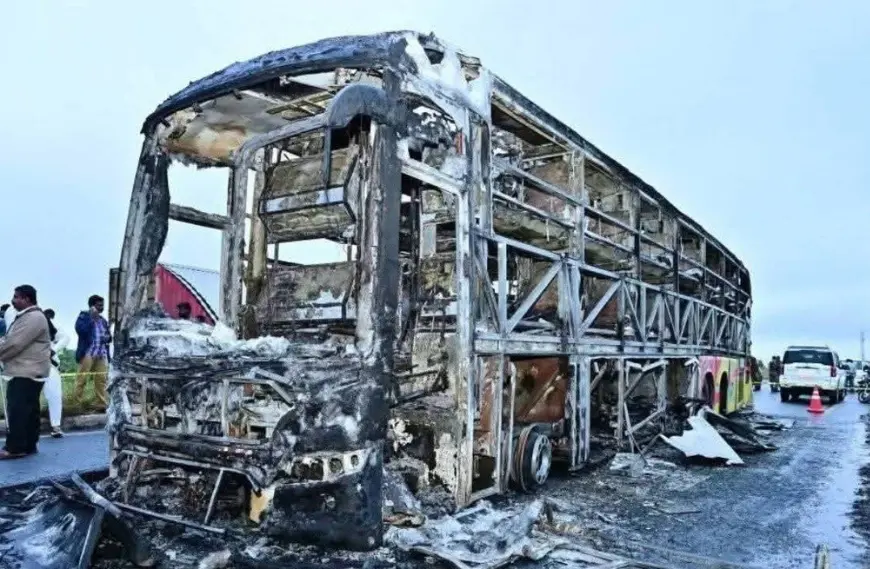
On October 24, 2025, a tragic bus fire in Kurnool district, Andhra Pradesh, exposed critical safety lapses in passenger transportation. A private sleeper bus operated by Vemuri Kaveri Travels, en route from Hyderabad to Bengaluru, collided with a motorcycle near Chinna Tekuru village on NH-44 at around 3:00 AM. The bus dragged the motorcycle underneath, causing sparks that ignited the diesel tank, triggering a rapid and intense fire.
The blaze claimed the lives of 19 passengers and the motorcyclist (total of 20). With approximately 43 people on board, including two drivers, survivors recounted harrowing escapes. Many emergency exits were either locked or jammed, trapping passengers inside the inferno. Some broke windows to flee, while others perished, unable to escape. Survivor Jayant Kushwaha described the main door as inoperable, likely due to snapped electrical wires, and the absence of fire safety tools like glass-breaking hammers worsened the situation. The drivers reportedly escaped via the cabin door but failed to alert passengers promptly.
Experts point to systemic issues in private bus operations. Unauthorized modifications, such as adding subwoofers, decorative lighting, or extra berths for luxury, often overload the vehicle’s electrical system, increasing fire risks. Tampering with factory-fitted couplers or conducting electrical work while the bus is in motion can cause short circuits, a known hazard in similar incidents like the 2013 Mahbubnagar fire. The bus in question had valid permits but faced 16 unpaid challans for overspeeding and negligence, highlighting lax oversight.
Design flaws further compounded the tragedy. The bus’s lower berth height, which should be 200–350 mm from the floor for easy evacuation, was built too low, trapping passengers during the fire. The 2X2 berth layout, banned under AIS-119 safety standards for reducing aisle space and increasing crush risk, remains common in private fleets despite regulations mandating 2X1 or 1X1 configurations. These violations, coupled with inadequate emergency exit functionality, turned the bus into a death trap.
In response, Andhra Pradesh authorities launched a high-level investigation, deploying 16 forensic teams to identify victims and pinpoint the fire’s cause. Transport Minister Mandipalli Ramprasad Reddy visited the site, announcing ex-gratia payments of ₹5 lakh for deceased victims’ families and ₹2 lakh for the injured. He stressed stricter enforcement of safety norms, including mandatory inspections and compliance with AIS-119 standards, to prevent future tragedies.
This disaster underscores the urgent need for rigorous safety adherence in passenger transportation. Functional emergency exits, regular maintenance, and bans on unauthorized modifications are non-negotiable to protect lives. As investigations continue, the Kurnool tragedy serves as a grim call to action for regulators, operators, and the public to prioritize safety over convenience.
Subscribe Deshwale on YouTube
