



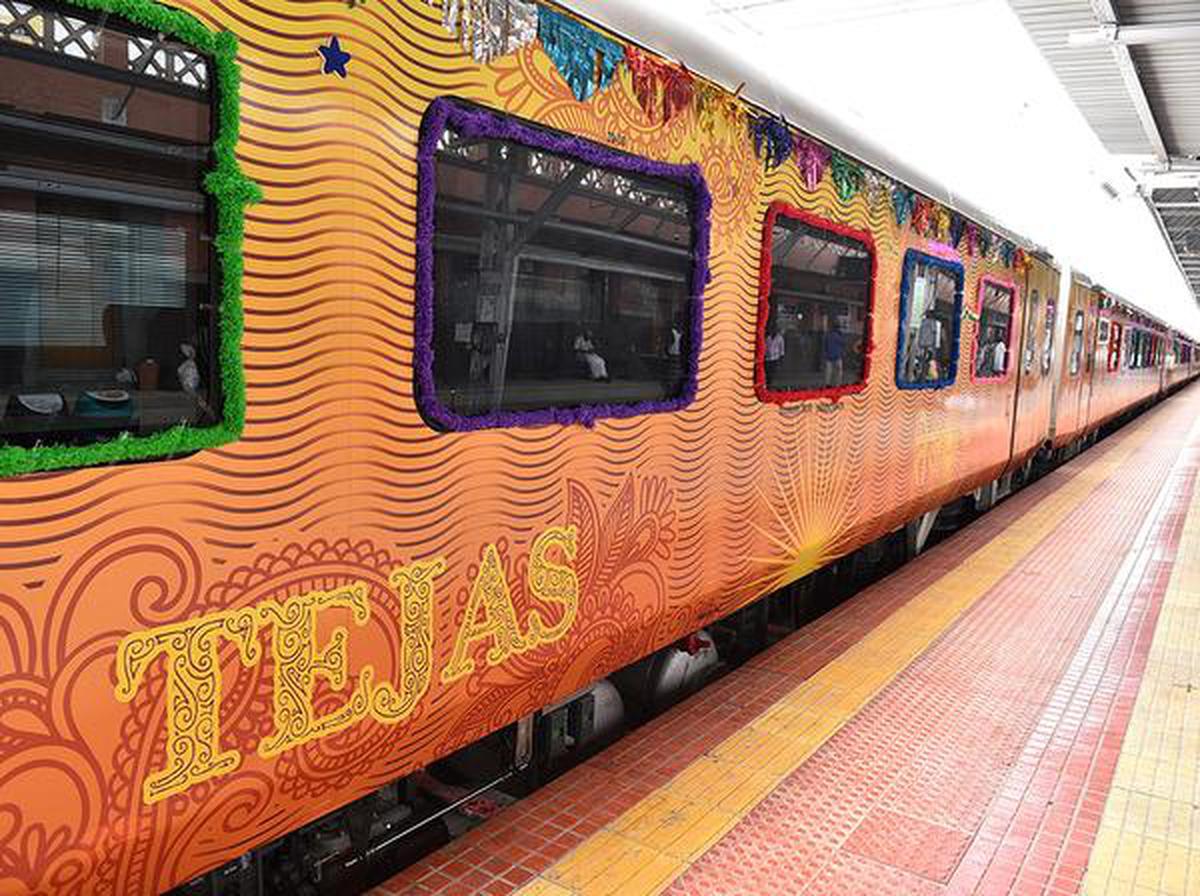
IRCTC’s Tejas Express Redefines Indian Rail Travel with Dynamic Fares and Modern Amenities
India has marked a new milestone in its railway modernization efforts with the launch of its first privately operated passenger train, the Tejas Express, now running between Delhi and Lucknow. Managed by the Indian Railway Catering and Tourism Corporation (IRCTC), this initiative represents the government’s move toward greater corporate participation in passenger services — aiming to deliver efficiency, punctuality, and improved passenger experience.
The Tejas Express introduces a new benchmark in comfort and convenience. It offers dynamic ticket pricing, with fares ranging from ₹1,679 for AC Chair Car to ₹2,457 for Executive Chair Car. Though slightly higher than comparable trains like the Shatabdi Express, Rajdhani Express, and Vande Bharat Express, the Tejas justifies its pricing with enhanced features and premium services.
The train’s interiors are equipped with modern ergonomic seating, infotainment systems, bio-vacuum toilets, and automatic doors. Passengers enjoy GPS-based information systems, onboard catering managed by IRCTC, and complimentary travel insurance.
The Executive Class provides superior comfort, additional legroom, and personalized service comparable to air travel. These include automatic doors, air-conditioned coaches, Wi-Fi connectivity, CCTV surveillance, personal infotainment systems, reading lights and snack trays.
Technically, the Tejas Express can achieve speeds of up to 200 km/h, though current operational limits restrict it to around 160 km/hour. The rakes come with advanced electro-pneumatic braking systems and steel brake discs, ensuring safety and stability even at higher speeds.
This development also highlights a strategic shift in Indian Railways’ operational structure, where select routes are being managed through corporate models. The aim is to bring private-sector efficiency while retaining government ownership and oversight. Under IRCTC’s management, all services — from ticketing and catering to onboard maintenance — are integrated for seamless delivery.
Experts see the Tejas model as a potential blueprint for future semi-private trains in India, especially on high-demand routes. While some critics raise concerns over higher fares, proponents argue that improved service quality and punctuality justify the pricing.
With its blend of technology, service, and comfort, the Tejas Express stands as a symbol of India’s evolving railway ecosystem — combining tradition with modern efficiency.
Disclaimer: The Tejas Express is operated by IRCTC, a public sector undertaking of Indian Railways, under a corporate management model — not a privately owned entity.
Subscribe Deshwale on YouTube
