



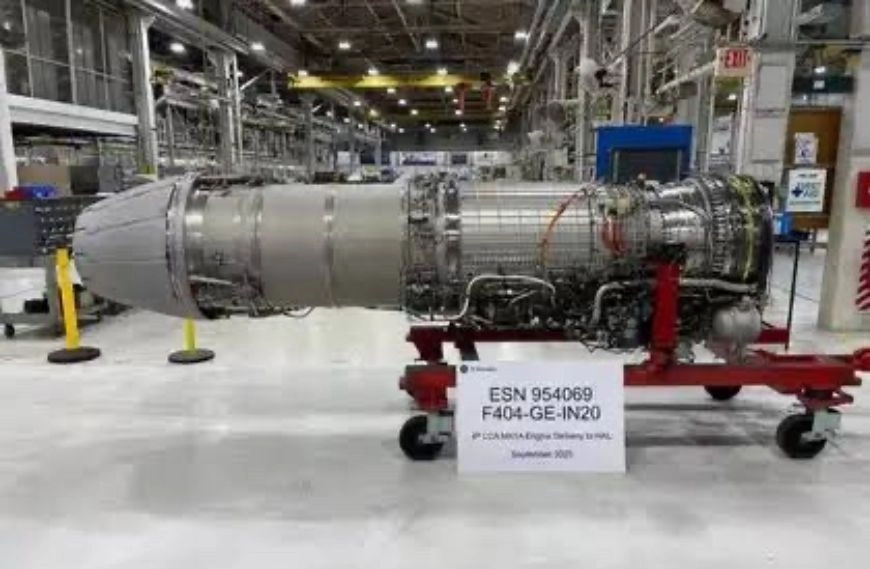
In a major step to strengthen India’s air power, the Indian government has signed a deal with the United States to buy 113 F404-GE-IN20 jet engines for its homegrown Tejas Light Combat Aircraft (LCA) Mk1A. The agreement, worth around $1 billion, was finalised with GE Aerospace, marking one of the biggest defence collaborations between the two countries in recent years.
The engines will be manufactured in partnership between Hindustan Aeronautics Limited (HAL) and GE Aerospace, with a significant portion of the production taking place in India. This will not only enhance the ‘Make in India’ initiative but also help India gain advanced technology for indigenous jet engine manufacturing in the future. HAL has already started preparing facilities for production and assembly, ensuring that local engineers and technicians will play a major role in the process.
According to reports, these engines will power the upcoming batch of Tejas Mk1A fighter jets being built for the Indian Air Force (IAF). The deal is seen as a critical move to boost the IAF’s combat readiness and replace its ageing fleet of MiG-21 aircraft. Once fully deployed, the Tejas Mk1A fleet is expected to form a key part of India’s frontline defence, capable of handling both offensive and defensive missions with greater precision.
The F404-GE-IN20 engines are known for their high thrust, fuel efficiency, and reliability, making them ideal for lightweight fighter aircraft like the Tejas. With this partnership, India aims to speed up the delivery and deployment of Tejas jets, which have already been praised for their agility and performance. The F404 engine has been tested in several advanced aircraft globally, including the US Navy’s F/A-18 Super Hornet, giving India access to a trusted and proven technology base.
The timing of the agreement is also important. It comes at a time when trade tensions between India and the US have been rising over tariffs and technology sharing. Yet, the deal highlights that strategic defence cooperation between the two nations remains strong. Defence experts see this as a symbol of mutual trust and a sign that both countries are willing to strengthen ties despite economic differences.
Officials have also said that the partnership could pave the way for future projects, including the next-generation Tejas Mk2 and the Advanced Medium Combat Aircraft (AMCA) programme, which will require even more powerful engines. The Tejas project represents India’s growing ability to design and produce advanced fighter jets domestically. With the addition of the new GE engines, the aircraft is expected to achieve better speed, altitude performance, and mission reliability giving the Indian Air Force a much-needed boost in its operational strength.
Subscribe Deshwale on YouTube
