



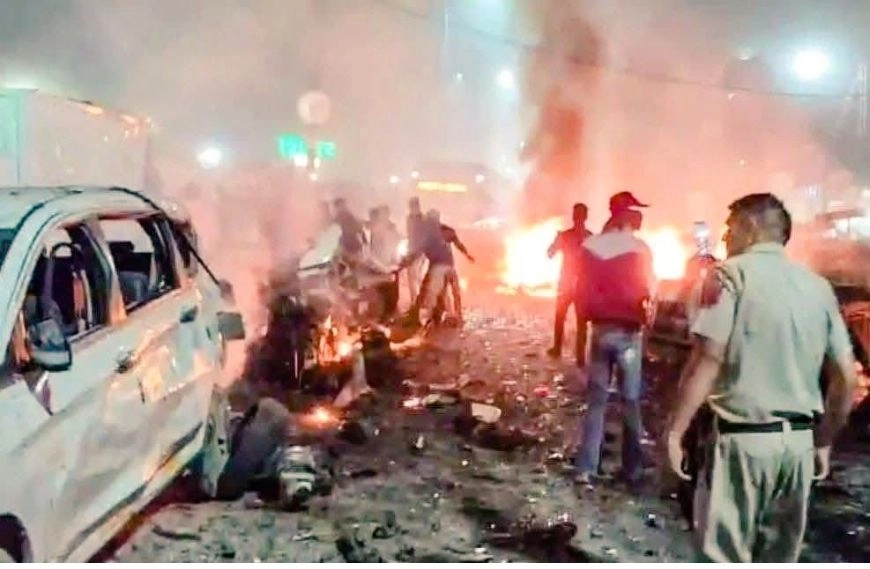
The recent revelations in the Red Fort blast investigation have exposed a chilling cross-regional terror network that began in Kashmir’s Pulwama district and aimed to strike at the heart of India’s capital. According to investigation reports, the terror module was initially planning a Pulwama-like car bomb attack in Kashmir. However, after a series of arrests in the Valley disrupted their plans, the group shifted its focus to Delhi. This change of target underscores the adaptability and ambition of the module, which sought to carry out a major strike despite security crackdowns.
Officials believe the same network was behind the car explosion near Delhi’s Red Fort on November 11. The blast, caused by an improvised explosive device fitted inside a car, did not lead to casualties but revealed the presence of a well-coordinated terror plan. Preliminary findings indicate that the arrested suspects had connections to Pakistan-based handlers who provided logistical and financial support. Investigators are probing whether the Delhi module was part of a larger plot involving multiple vehicles and possible sleeper cells.
Security agencies have identified that the module had a wide operational footprint spanning from Pulwama and Srinagar to Delhi and neighbouring regions. Several suspects were trained in handling explosives and were allegedly radicalised online before being tasked with executing the attack. Intelligence sources suggest the plan was designed to create widespread panic, mirroring the high-impact nature of the Pulwama attack of 2019 that killed 40 CRPF personnel.
The Red Fort blast, though limited in damage, has once again highlighted how terror networks are evolving to bypass surveillance and move seamlessly across regions. It also points to a growing need for coordinated counter-terror intelligence between Kashmir and national agencies. Experts say the shift from Kashmir to Delhi represents not only a change in geography but also a dangerous escalation in intent to challenge India’s security establishment in its most symbolic locations.
For policymakers and national security commentators, the episode serves as a grim reminder of how local radicalisation and external funding can intersect to produce high-risk threats, even far from conflict zones. The success of security agencies in averting a larger tragedy has been credited to timely arrests and intelligence sharing. Yet, as the investigation deepens, it reveals that India’s fight against terror is as much about preventing the next attack as it is about tracing the invisible links that connect the Valley to the Capital.
Subscribe Deshwale on YouTube
