



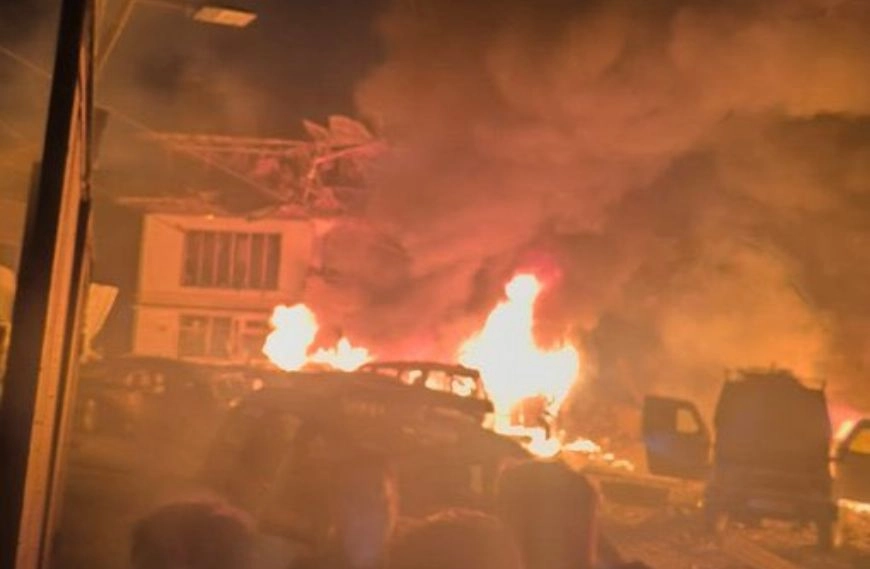
Late on Friday night, a horrifying accidental explosion ripped through the Nowgam Police Station in Srinagar, killing nine people and injuring 32 others, mostly police and forensic staff.
The blast happened during the sampling of explosive material, specifically ammonium nitrate and other chemicals that was seized earlier in connection with a “white‑collar” terror module. This very material was brought to the Srinagar station from a rented residence in Faridabad, Haryana, where doctors linked to the module were arrested.
Investigators say this is not a usual terror cell. Unlike typical militant groups, this one involved highly educated professionals — especially doctors. Authorities believe radicalisation happened within a “white-collar ecosystem”: medical professionals allegedly working with foreign handlers, stockpiling vast amounts of bomb-making material.
During earlier raids, police recovered 360 kg of dangerous chemicals from one of the doctors’ residences, including ammonium nitrate, potassium nitrate, and sulfur — all key ingredients for explosives. The larger terror case linked this module to Jaish-e‑Mohammad and possibly Ansar Ghazwat-ul-Hind.
Instead of a clean investigative success, the terror probe ended in tragedy. While the forensic team was testing samples, a powerful explosion shattered the police station compound and sparked follow-up detonations that delayed rescue. Several buildings, vehicles, and the station’s structure were badly damaged.
Rescue teams were slowed down by repeated smaller explosions, increasing the danger to first responders. Authorities have begun a full internal review of how explosives were handled, stored, and transported raising urgent questions over forensic safety protocols.
What makes this incident especially striking is the identity of those allegedly behind the terror plot. These are not shadowy militants; they are doctors. One of the doctors, Dr Muzammil Ahmad Ganaie, was arrested in Faridabad, and another, Dr Shaheen Saeed, was also taken in.
A third doctor, Umar Nabi, is suspected to be the driver of a car that exploded near Delhi’s Red Fort just days earlier an attack that killed 13 civilians. Another doctor, Dr Adeel Rather, was found with a rifle during raids.
This is not a crude terror outbreak but a deeply embedded network of educated professionals allegedly using their knowledge and status to build a sophisticated module for bomb-making — and now, tragically, those very materials have caused loss of life within a police station.
The disaster has triggered a serious shake-up. Police and security agencies will likely re-evaluate how dangerous materials are handled during forensic analysis. Families of the deceased and injured will demand clarity. And the public will be left grappling with the uncomfortable idea that terrorism may also involve well-educated people in professions like medicine.
For counter-terrorism watchers, this incident underlines a chilling risk: when radicalisation happens in unexpected places, the fallout can be not just ideological, but deadly in entirely new ways.
Subscribe Deshwale on YouTube
