



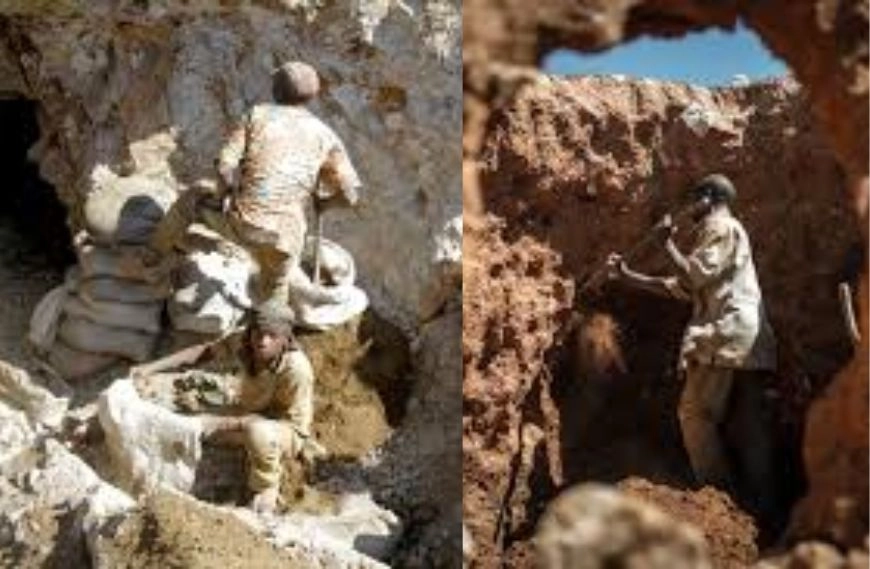
A tragic accident at the Kalando mine in the Democratic Republic of the Congo (DRC) has highlighted serious safety problems in small-scale, informal mining. On November 15, at least 32 people died after a makeshift bridge collapsed under overcrowding. The bridge was not a solid, permanent structure. It was built to help miners cross a flooded trench, a temporary solution, not designed for heavy traffic. When hundreds of miners rushed across it in panic, the bridge failed, leading to a deadly pile-up. Access to the site had been officially banned because of heavy rain and the risk of landslides. Despite this, a large number of wildcat or informal miners sometimes called artisanal miners entered the area.
According to SAEMAPE, the DRC’s Artisanal and Small-Scale Mining Support and Guidance Service, the panic among miners was triggered by gunfire from soldiers stationed nearby. The miners tried to flee quickly, crowding onto the narrow bridge, which gave way. The agency’s report explained that miners “piled on top of each other,” causing serious injuries and deaths. This tragedy is not an isolated incident. Artisanal mining in the DRC is widespread, with as many as 1.5–2 million people working in this informal sector. Yet, they often operate without safety gear, proper shelters, or regulated working conditions. Many of these miners do not have formal employment or contracts, making enforcement of safety regulations very difficult. Because they are working “outside the framework of the law,” they lack legal protections or support in case of accidents.
At the Kalando mine, there was already a longstanding conflict. On one side were wildcat miners operating informally. On the other side were the legal operators of the mine, reportedly with Chinese involvement. This tension raises questions about how mining sites are managed, who controls access, and how safety is enforced. The presence of soldiers at the site and the panic their gunfire caused suggests that the security apparatus is deeply intertwined with mining operations. Critics are calling for an independent investigation into the military’s role in the tragedy.
The Kalando mine produces cobalt, a key mineral for lithium-ion batteries used in mobile phones, laptops, and electric vehicles. The demand for these minerals connects even remote, informal mines with global tech supply chains, but that connection often overlooks the dangerous working conditions faced by miners. Deaths, unsafe working conditions, and accusations of child labour and corruption are long-standing problems in the DRC’s mining industry.
Experts say several steps are needed to prevent future disasters. Stronger regulation and enforcement are crucial, as temporary structures like the collapsed bridge are clearly unsafe for large, uncontrolled crowds. Artisanal miners must have access to safety training, proper gear, and a regulated working environment. Independent investigations could help establish accountability, particularly when military involvement is suspected. Encouraging informal miners to join cooperatives or regulated frameworks could reduce risk and improve safety.
The accident at the Kalando mine is a painful example of how informal mining deeply entangled with global mineral supply often happens without basic safety standards. For regulators, development organisations, and NGOs, it is a stark reminder of the human cost of weak governance and unsafe mining practices.
Subscribe Deshwale on YouTube
