



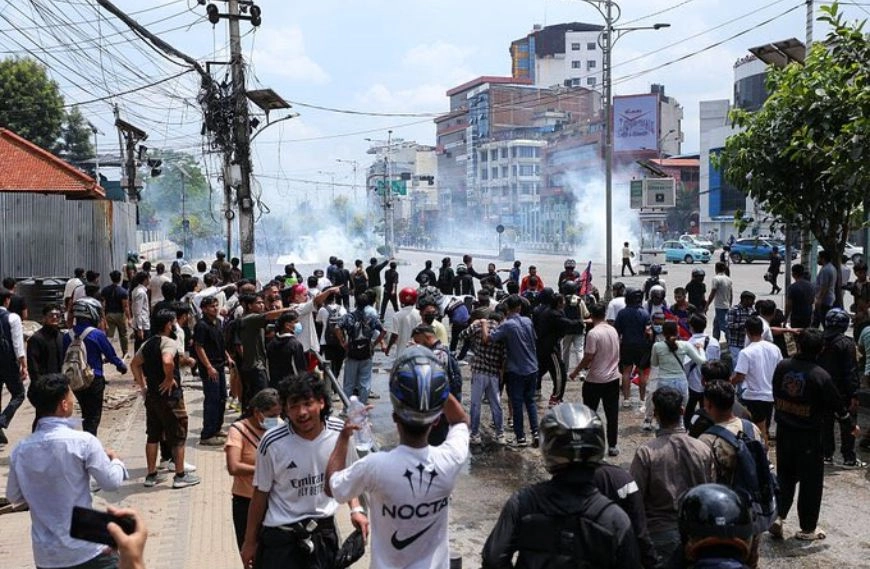
Nepal is witnessing a new kind of protest led mainly by Gen Z, and it is much bigger than anger over a social media ban. Thousands of young people have come onto the streets after the government blocked platforms like Facebook, Instagram and YouTube. The ban was meant to stop political criticism and control online speech, but it instead triggered a huge backlash. For many protesters, the issue is not just about losing access to apps. They say the ban is a symbol of deeper problems, including corruption, misuse of power and the growing distance between leaders and the public.
Young Nepalis argue that the political system is controlled by the same leaders who have held power for decades. They feel that their concerns about unemployment, rising prices and lack of accountability are being ignored. Many see the ban as a direct attack on their freedom of expression, which they believe is essential for a democratic society. As restrictions tightened, including bans on public gatherings, the protests grew louder. Some clashes even turned violent, with police using force to stop crowds in Kathmandu and other cities.
This movement stands out because Gen Z is not speaking for any political party. They are standing against a style of governance they see as outdated and authoritarian. Their message is clear: they want transparency, fairness and leaders who listen. The protests show a growing generational divide in Nepal, where young people are pushing for change and refusing to accept decisions that limit their rights. Whether the government responds or continues to resist, the voice of Nepal’s youth has become impossible to ignore.
Subscribe Deshwale on YouTube
