



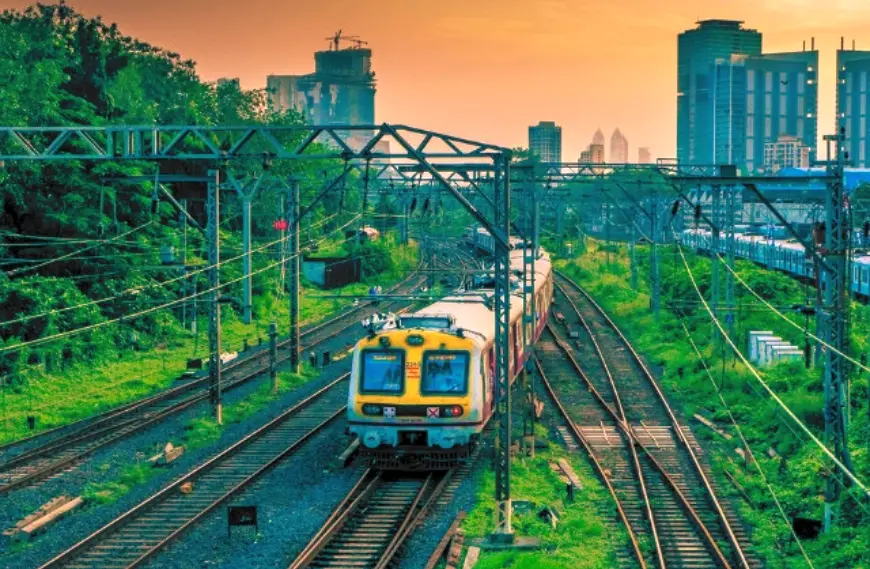
Rail commuters in Navi Mumbai have something to look forward to from today, as suburban rail services on the Belapur–Nerul–Uran corridor have been significantly strengthened. The move comes as part of a broader push to improve Navi Mumbai rail connectivity, especially in anticipation of the upcoming Navi Mumbai International Airport.
Railway officials confirmed that five additional pairs of suburban trains have been introduced on the corridor, along with the commissioning of two new stations, Targhar and Gavan. The changes are aimed at easing congestion, improving access to residential areas and strengthening last-mile connectivity for daily commuters.
More trains, less congestion
With the addition of the new services, the total number of daily train services on the Uran line has increased from 40 to 50. Look, for peak-hour commuters, that increase could make a real difference.
Officials said the expanded schedule is designed to reduce crowding during rush hours, a long-standing concern on this growing suburban route. As Navi Mumbai continues to expand, demand on the rail network has steadily risen, making service augmentation increasingly necessary.
Two new stations open
The commissioning of Targhar and Gavan stations marks another important step in improving Navi Mumbai rail connectivity.
Targhar station, located close to the Navi Mumbai International Airport site, is expected to play a crucial role once airport operations begin. The thing is, early rail access often determines how effectively passengers shift from road to public transport, and planners appear keen to avoid congestion from the outset.
Gavan station, meanwhile, is set to improve rail access for nearby residential areas that previously depended on longer commutes to reach the nearest stations. To be fair, this kind of micro-level expansion often brings the biggest relief to everyday travellers.
Extended operating hours
Train services on the corridor have also been extended, allowing passengers greater flexibility across the day.
Services from Uran will now operate from 5:35 am to 10:05 pm. From Belapur, trains will run between 5:45 am and 10:15 pm, while Nerul-bound services will be available from 6:05 am to 9:30 pm.
Honestly, extended hours matter just as much as increased frequency, especially for shift workers, students and those travelling late in the evening.
Airport-focused planning
The strengthening of this corridor is closely linked to the development of the Navi Mumbai International Airport. Railway officials have acknowledged that rail infrastructure must be in place well before passenger traffic begins.
By improving Navi Mumbai rail connectivity now, authorities aim to ensure smoother airport access when operations commence. That includes reducing dependency on private vehicles and minimising pressure on road networks.
Believe it or not, similar delays in rail integration have created bottlenecks at other major airports across India. Officials appear keen to avoid repeating those mistakes.
What commuters should know
Passengers have been advised to familiarise themselves with the revised timetable while planning their journeys. The railway administration has said that announcements and updated schedules will be displayed at stations and shared through official communication channels.
Meanwhile, officials reiterated that the focus remains on reliability, punctuality and commuter convenience as services scale up.
Gradual shift in suburban planning
The expansion of services on the Uran line reflects a broader shift in Mumbai’s suburban rail planning. Instead of reacting to overcrowding after it peaks, authorities are increasingly trying to anticipate future demand.
At Aazeem, the focus is on how such infrastructure upgrades translate into everyday commuter experience. More trains and new stations may sound incremental, but for thousands of daily travellers, they shape how smoothly a city functions.
As Navi Mumbai continues to grow, both as a residential hub and a transport gateway, investments in Navi Mumbai rail connectivity are likely to remain central to its urban future. And that’s when things start to change.
Subscribe Deshwale on YouTube
