



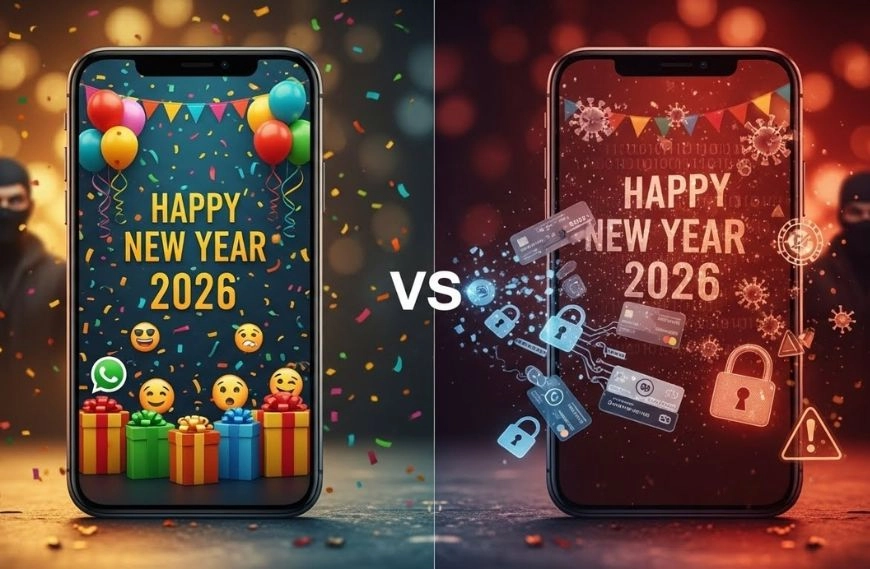
When celebration becomes a cyber trap
As people across India prepare to welcome New Year 2026, cybersecurity agencies are flagging a worrying seasonal trend: festive greeting messages are increasingly being used as delivery tools for digital fraud. What appears to be a harmless “Happy New Year” message can, in reality, open the door to financial theft, identity compromise, and complete phone control.
Unlike traditional scams that rely on fear or urgency, these attacks exploit trust, emotion, and celebration, making them particularly effective during holiday periods when digital caution drops.
Why New Year greetings are being targeted
Cybercriminals consistently time their operations around major festivals and public holidays. The New Year season is especially attractive because:
- People receive a high volume of messages from known and unknown contacts
- Phones are actively used for greetings, photos, and sharing content
- Users are less likely to question links or files that appear celebratory
Common attack methods used during New Year scams
Cybercrime units tracking holiday fraud patterns have identified several recurring methods used during the New Year period:
1. Malicious app installations disguised as greetings
Users are prompted to install a file or “special viewer” to see a personalized greeting, animation, or image. Once installed, the app silently operates in the background.
2. Fake image or video previews
Messages claim to contain exclusive party photos or last-year memories. Clicking redirects users to external pages that initiate downloads or request permissions.
3. Link-based credential theft
Some greetings redirect users to fake websites designed to mimic trusted platforms, tricking them into entering login details.
4. Account hijacking for further spread
Once access is gained, attackers often use the victim’s messaging account to resend the same greeting to contacts, expanding the scam organically.
What happens after a device is compromised
Once malicious software is active on a phone, the impact is rarely immediate or obvious. Reported consequences typically include:
- Monitoring of incoming messages and alerts
- Interception of banking verification codes
- Unauthorized digital payments in small, repeated amounts
- Access to contact lists for further targeting
- Loss of control over messaging accounts
Victims often realise something is wrong only after noticing unexplained transactions or alerts they never received.
Why these attacks are especially effective in India
India’s digital environment creates unique conditions that make festive cybercrime more successful:
- High dependence on messaging apps for personal and professional communication
- Large Android user base, where external app installation is technically possible
- Language and cultural customisation, making scams feel local and authentic
- Rapid adoption of digital payments, increasing financial exposure
Cybersecurity professionals stress that these attacks do not rely on advanced technology, they rely on human behaviour during moments of lowered vigilance.
More than just financial loss
Beyond monetary damage, victims often face:
- Emotional stress and loss of trust in digital communication
- Exposure of personal photos, contacts, and private messages
- Long recovery processes involving banks, telecom providers, and law enforcement
In several documented cases, compromised phones became distribution hubs, unintentionally spreading the scam to family groups and workplace networks.
Warning signs users commonly miss
Despite growing awareness, certain red flags continue to be overlooked:
- A greeting that cannot be viewed directly
- Requests for permissions unrelated to the content
- Links that do not match known or official websites
- Messages urging quick action to “see” or “unlock” content
Cyber experts emphasise that no genuine greeting requires installation, permissions, or verification.
How to protect yourself during New Year 2026
To reduce risk during the festive season, cybersecurity professionals recommend the following:
- Avoid installing apps or files received via messages
- Keep phones updated with the latest security patches
- Restrict app permissions to essential functions only
- Enable two-factor authentication on financial and messaging apps
- Educate family members, especially seniors, about festive scams
A simple principle applies: celebration should never come with downloads.
What to do if you suspect a compromise
If suspicious activity occurs:
- Disconnect the device from the internet
- Remove unfamiliar or recently installed apps
- Secure accounts using a different device
- Inform your bank immediately
- Report the incident via official cybercrime channels
Early action significantly reduces potential damage.
Staying alert is the new celebration rule
As India steps into 2026, digital safety has become as important as digital connection. Festive moments should bring joy, not regret. A pause before clicking can protect not just money, but peace of mind.
Subscribe Deshwale on YouTube
