



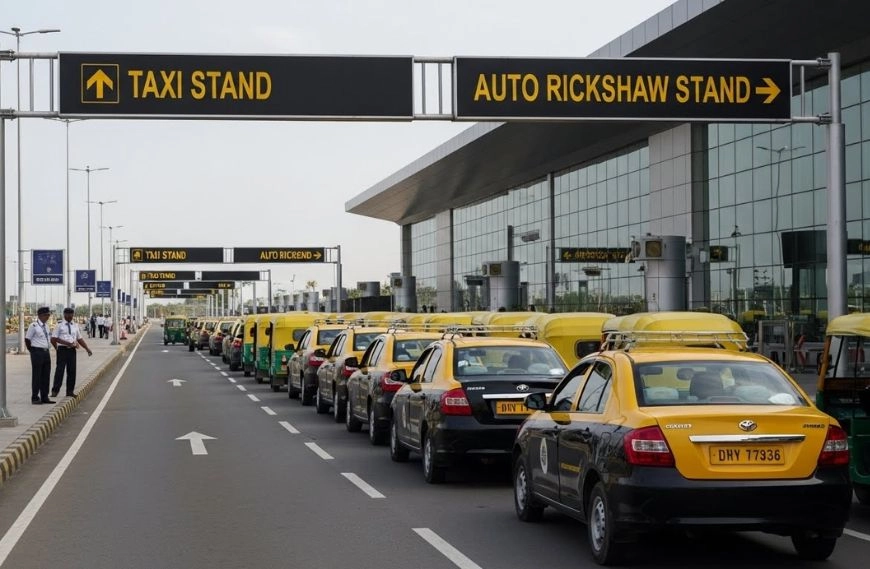
The newly launched Navi Mumbai International Airport has introduced a structured prepaid fare system for taxis and auto-rickshaws in an effort to bring order, clarity, and fairness to ground transport services. The move comes as the airport sees a rapid rise in passenger numbers and increased reliance on last-mile connectivity for domestic travellers arriving in the city.
Since commercial operations commenced late last month, the airport has recorded more than 26,000 passengers in just five days. With demand for on-ground transport rising at a similar pace, authorities have implemented a fixed pricing model to deter arbitrary charges and ensure visitors are met with transparent, regulated options the moment they leave the terminal.
Under a tariff framework approved by the Assistant Regional Transport Officer in Panvel, prepaid counters and digital booking points will now offer clearly displayed fares for all authorised vehicles. For taxis, the base charge has been set at ₹20.66 per kilometre, with short journeys up to six kilometres priced at ₹155 including incentives. Distances beyond that are categorised in stepped brackets from 6.1 km to 14 km, allowing passengers to verify costs before committing to a ride.
Auto-rickshaw fares have also been standardized. A rate of ₹17.14 per kilometre underpins the system, while trips up to six kilometres will cost ₹129. Beyond this radius, fares are spread across distance slabs stretching to 42 km, giving travellers heading towards suburbs or neighbouring cities a clearer expectation of spending.
Airport officials say the transition to prepaid pricing is not merely about financial fairness but also about improving the overall arrival experience. Signage, counter visibility, and digital booking access points are being prioritised to minimise confusion and avoid the confrontations that are often reported at busy metropolitan airports.
Transport analysts believe the step signals a long-overdue shift towards accountable airport mobility. With the introduction of Navi Mumbai Airport fixed prepaid taxi fares, experts argue that reliable pricing could encourage more passengers to use official services rather than seeking informal alternatives.
The measure has been welcomed by industry observers, who describe the system as an opportunity to set a new standard for regional transport governance. There has long been criticism of airports where pricing inconsistency, unclear signboards, and disputes over fare meters have led to a poor first impression for travellers unfamiliar with the city.
Navi Mumbai’s decision to formalise pricing is being viewed as a benchmark model, particularly with expansion plans and additional flight routes expected later this year. Authorities have confirmed that continuous monitoring will take place to ensure compliance, while improvements in inter-modal links with buses, metros, and private shuttle services remain a priority.
With Navi Mumbai Airport fixed prepaid taxi fares now officially active, the administration is shifting focus toward refining passenger amenities inside terminals and strengthening onward travel routes. As footfall grows, officials anticipate greater pressure on infrastructure but remain confident that the fare reforms will reduce congestion and disputes while encouraging a smoother flow of traffic.
Subscribe Deshwale on YouTube
