



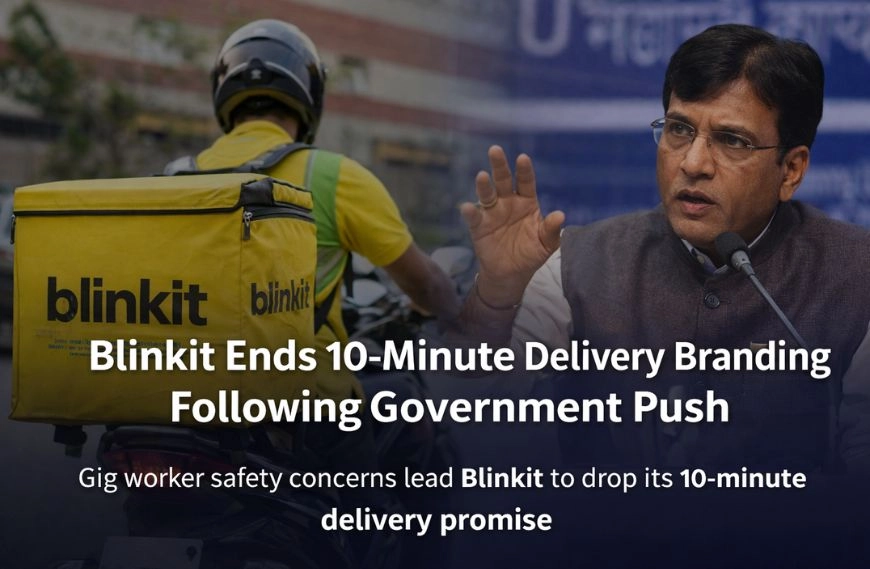
As concerns over gig worker safety intensify, Blinkit has announced it will remove all references to its 10-minute delivery promise from branding and promotions. The move follows intervention by the Ministry of Labour, highlighting the growing scrutiny of working conditions and delivery pressures in India’s quick-commerce sector.
The decision comes in the wake of nationwide strikes by delivery personnel across platforms in late December, who cited unsafe working conditions, excessive time pressure, and inadequate social security. Sources close to Blinkit told India Today that the company will eliminate all public-facing references to the ultra-fast 10-minute delivery promise from advertisements, social media, and promotional campaigns. Importantly, the change does not imply that deliveries will be slower, but rather that the focus will shift away from fixed delivery commitments that could encourage unsafe practices.
Union Labour Minister Mansukh Mandaviya has been actively engaging with major quick commerce and food delivery companies, including Blinkit, Zepto, Swiggy, and Zomato. During discussions, Mandaviya emphasised the removal of rigid delivery timelines from branding, arguing that such promises can place undue pressure on workers, even if operational systems support rapid deliveries.
The December strikes, called on 25 and 31 December, drew national attention to the challenges faced by gig workers. Unions criticised platforms for pushing aggressive delivery models, reducing earnings, and offering limited social protection. Although delivery services largely continued during the strikes, the protests reignited debate over the sustainability and safety of hyper-fast deliveries.
Platform executives, including Zomato CEO Deepinder Goyal, have defended rapid delivery models, noting that system design and insurance measures safeguard delivery partners. Nevertheless, the government’s intervention reflects a cautious approach to public promises of fixed delivery timelines.
Blinkit’s decision to discontinue 10-minute delivery branding marks a shift in the sector’s messaging strategy. While competition remains intense, companies are now balancing marketing ambitions with worker welfare, regulatory guidance, and public perception. The change signals that even as technology enables rapid fulfilment, platforms are increasingly mindful of the human cost behind lightning-fast deliveries.
Subscribe Deshwale on YouTube
