



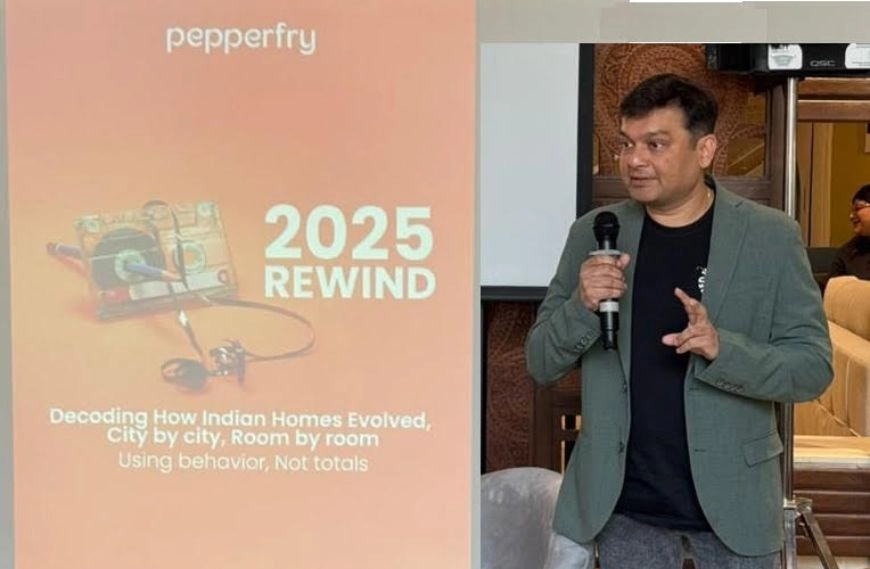
India’s home and furniture market is witnessing a notable transformation, driven by changing consumer behaviour and evolving lifestyle aspirations. Pepperfry’s recently released Home Report Card 2025 provides a detailed, data-backed view of this shift, analysing purchasing patterns from over 700 cities across the country.
The report highlights a move away from traditional, one-time home renovations towards gradual, year-round upgrades. Modern Indian households are increasingly investing in smaller, targeted purchases that enhance both functionality and aesthetics, rather than waiting for major projects or festive periods.
A standout trend is the growing dominance of the home goods category, which now records nearly twice the purchase volume compared to furniture. Items such as storage solutions, kitchen essentials, lighting, and organisers are becoming the key drivers of frequent purchases. In rapidly growing cities like Bengaluru, Pune, and Jaipur, over 50 percent of home-related expenditure is directed towards these products, signalling a clear shift in consumer priorities and brand strategies.
The report also emphasises the living room as the central space for self-expression. Consumers are making deliberate choices across sofas, coffee tables, and storage solutions, with the average sofa replacement cycle now reduced to four years. This trend reflects a move towards lifestyle-oriented decision-making, offering opportunities for premiumisation and repeat demand.
Ashish Shah, Co-founder and CEO of Pepperfry, commented, “The Home Report Card 2025 does not predict trends; it reflects real purchasing behaviour. It shows that Indian homes are becoming more personal, practical, and thoughtfully designed.”
Tier-2 cities are emerging as critical growth markets, contributing over 40 percent of total home demand. The rise of remote work has also influenced consumer choices, with office chairs now among the fastest-growing furniture categories. Kulbhushan Atkar, Head of Marketing and Furniture Category at Pepperfry, noted, “Consumers are no longer waiting for festivals or new homes to make upgrades. They are making small, confident decisions throughout the year, reflecting a more dynamic and engaged home economy.”
Overall, the Home Report Card 2025 offers a strategic roadmap for brands and retailers. Success in the evolving Indian market will depend on continuous engagement, intelligent product portfolios, and innovations that align with lifestyle-driven consumer preferences.
Subscribe Deshwale on YouTube
