



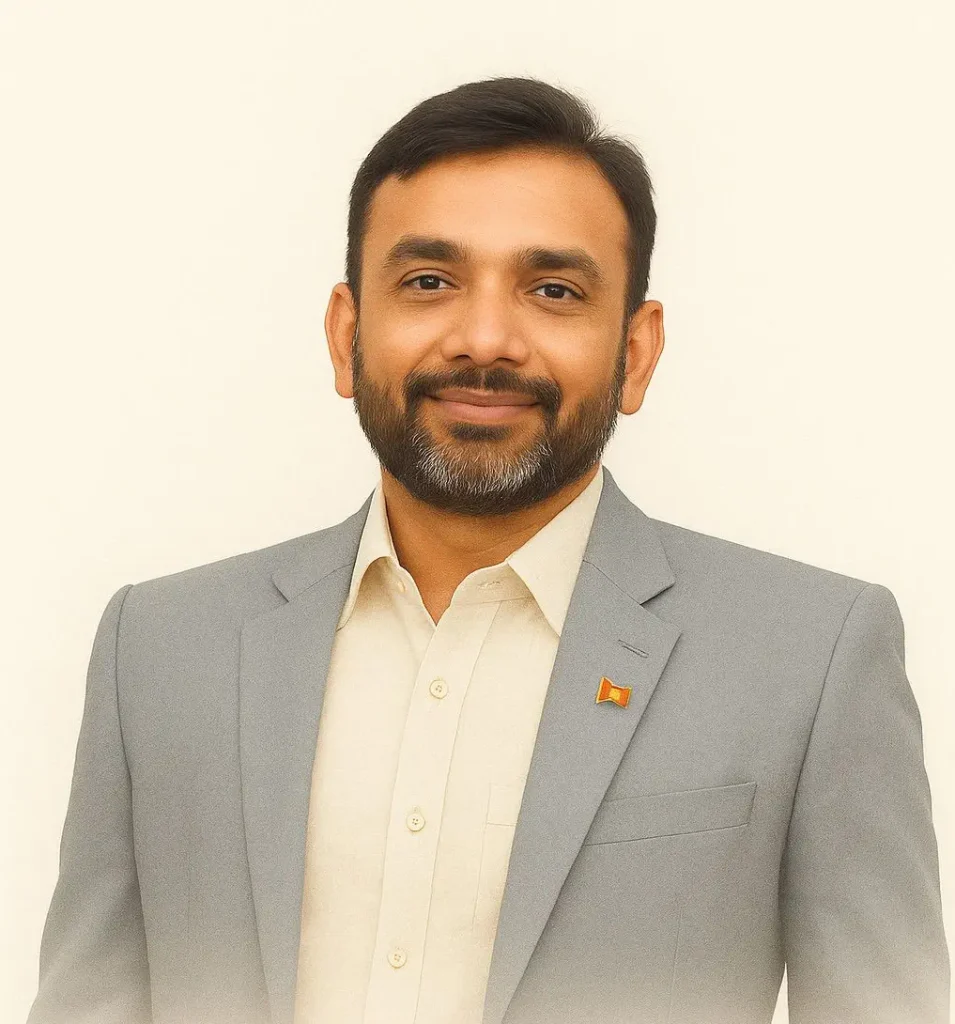
By: Hiren Gandhi
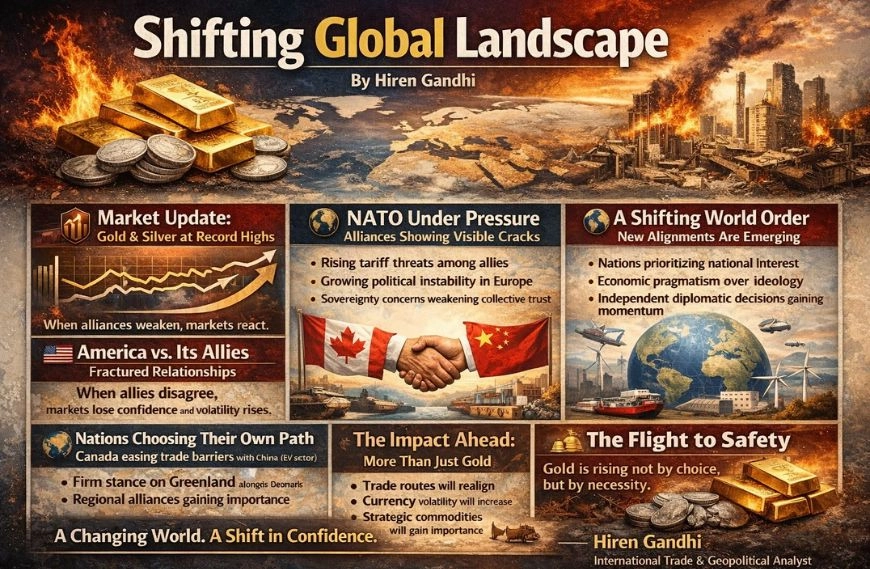
Global financial markets witnessed heightened volatility as gold and silver surged to record levels while equity markets faced fresh selling pressure. Rising geopolitical tensions, weakening global alliances, and growing economic uncertainty have driven investors away from risk assets and towards traditional safe-haven investments.
Market analysts point to increasing pressure within NATO and other Western alliances as a major factor contributing to market nervousness. Visible cracks have emerged due to rising tariff threats among partner nations, political instability across parts of Europe, and growing concerns over national sovereignty. As collective trust weakens, financial markets have responded with caution.
At the same time, the global order is undergoing a noticeable shift. Countries are increasingly prioritising national interests over ideological alignments. Economic pragmatism and independent diplomatic strategies are becoming more common, signalling a move towards a multipolar world structure. Experts suggest that the era of unquestioned global leadership by any single power bloc is gradually fading.
Tensions between the United States and several of its allies have also added to market uncertainty. Disagreements on trade policies, regional security matters, and strategic priorities have created friction, further impacting investor sentiment. When diplomatic relationships strain, markets tend to experience higher volatility and reduced confidence.
Several nations are now charting independent economic and diplomatic paths. Canada has taken steps to ease trade barriers with China, particularly in the electric vehicle sector. European nations continue to maintain firm positions on territorial and sovereignty issues, including Greenland in coordination with Denmark. Meanwhile, regional alliances are gaining importance as countries seek greater self-reliance and diversified partnerships.
The continued rise in gold prices reflects a growing demand for financial safety rather than speculative interest. Analysts note that in periods of diplomatic instability and geopolitical uncertainty, investors increasingly turn to precious metals as a store of value.
Looking ahead, experts warn that the impact will extend beyond commodity markets. Global trade routes may undergo realignment, currency volatility is expected to increase, strategic commodities could gain further importance, and spending on defence and domestic manufacturing capabilities is likely to rise.
As the world adapts to shifting power dynamics, market confidence continues to evolve, signalling a period of long-term structural change in the global economy.
Secretary — InGlobal Business Foundation (IBF)
Director — ReNis Agro International LLP, Ahmedabad, India
Subscribe Deshwale on YouTube
