



By: Hiren Gandhi
Pune, India: The global commodity and spice trade is entering a decisive phase, with climate variability, geopolitical shifts, and changing consumption patterns reshaping traditional trade dynamics. According to trade expert Hiren Gandhi, the era of volume-driven exports is giving way to strategy-driven commerce, requiring producers and traders to prioritise quality, traceability, and long-term partnerships.
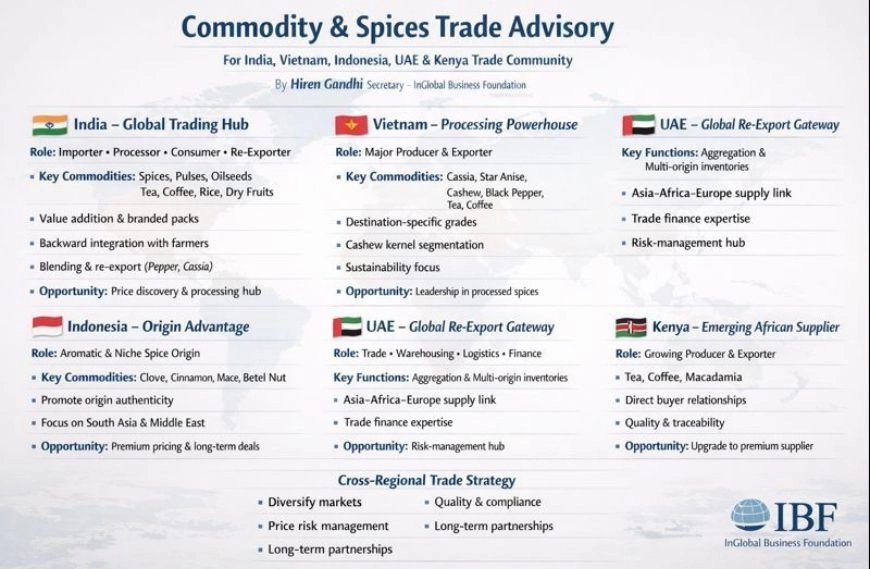
India: The Global Trading Hub
India, serving as an importer, processor, consumer, and re-exporter, remains central to the Asian and African spice trade. Key commodities include spices, pulses, oilseeds, tea, coffee, rice, and dry fruits. Experts advise focusing on value addition, strengthening farmer linkages, and leveraging India’s expertise in blending and re-export, particularly for pepper, cassia, cloves, and nutmeg. Close monitoring of INR fluctuations can also create margin opportunities.
Vietnam: The Processing Powerhouse
Vietnam continues to dominate as a producer and exporter of cassia, star anise, cashew, black pepper, tea, and coffee. Trade recommendations include moving beyond bulk exports, targeting destination-specific grades, and investing in sustainability certification to appeal to European and North American buyers. Experts highlight opportunities for Vietnam to lead processed spice and nut exports.
Indonesia: Leveraging Origin Identity
Indonesia, strong in aromatic and niche spices such as clove, cinnamon, mace, and betel nut, can command premium pricing through authenticity and quality. Traders are encouraged to improve post-harvest handling, focus on South Asian and Middle Eastern demand, and secure long-term contracts rather than relying solely on spot sales.
UAE: The Global Re-Export Gateway
The UAE remains a key hub for aggregation, re-export, warehousing, and trade finance. Strengthening links across Asia, Africa, and Europe, maintaining multi-origin inventories, and offering private-label sourcing are central strategies. Analysts note the UAE’s potential as a global risk-management and redistribution centre for spices.
Kenya: Africa’s Emerging Supplier
Kenya is expanding its presence as a supplier of tea, coffee, macadamia, and emerging spices. Trade guidance includes direct buyer engagement, investment in quality consistency, and partnerships with Indian and UAE traders. Value addition at origin is expected to define Kenya’s competitive edge in future global markets.
Cross-Regional Strategy
Experts stress the importance of market diversification, strict compliance with quality and safety standards, price risk management, and building long-term, reliable partnerships. Traders who integrate origin knowledge, timing, quality, and geopolitics into their strategies are likely to thrive.

Secretary — InGlobal Business Foundation (IBF)
Director — ReNis Agro International LLP, Ahmedabad, India
Subscribe Deshwale on YouTube
