



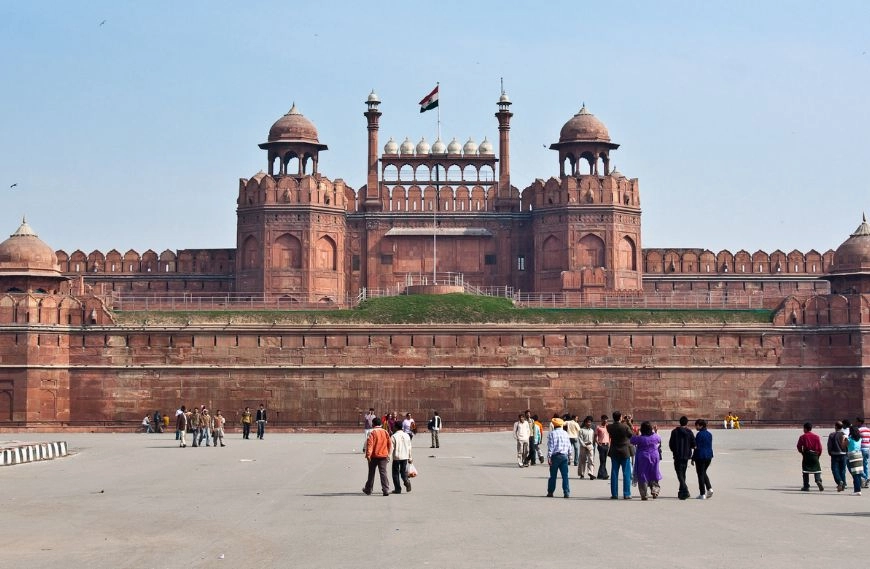
On November 10, 2025 car bomb explosion near Delhi’s historic Red Fort was initially seen as a singular act of terror. However, investigations have revealed that the blast was only the tip of a much larger and meticulously planned conspiracy that extended far beyond the attack itself. Security agencies discovered that the module behind the incident had plans for multiple high-profile strikes, including attacks on outlets of a global coffee chain in Delhi and other major Indian cities, highlighting the expansive reach of the network.
Authorities have described the group as a “white-collar terror module,” comprising highly educated professionals, including doctors, who allegedly played key roles in planning terror activities. The network had reportedly been active for nearly four years, and the Red Fort blast appears to have been a hastily executed part of a broader strategy. The planned attacks on international coffee chain outlets were not random but carried symbolic political motivations. The conspirators perceived the brand as linked to Israel and intended the attacks as a protest against Israel’s military operations in Gaza, reflecting the growing influence of global political grievances on domestic terror plans.
Interrogations of the arrested individuals revealed internal disagreements about target selection. Some members wanted to focus on security forces in Jammu and Kashmir, while others pushed for attacks in high-visibility civilian spaces outside the region to maximize attention and impact. Investigators also found that the group had connections with banned extremist outfits, including the Pakistan-based Jaish-e-Mohammed and the Ansar Ghazwat-ul-Hind (AGuH), and was attempting to revive extremist ideologies within India. There were indications that foreign handlers had provided guidance and support, further underlining the international dimension of the plot.
The suspects employed sophisticated methods to evade detection, using ghost SIM cards, encrypted messaging apps, and dual phones to separate everyday communications from covert operations. During searches at locations including Faridabad, authorities seized materials believed to be used for bomb-making and logistics. Investigators found that the group had studied online sources to learn improvised explosive device fabrication and experimented with homemade explosive mixtures.
The Red Fort explosion, which resulted in multiple civilian casualties, appears to have occurred amid increasing pressure on the module. Investigators suggest that heightened scrutiny and arrests within the network may have forced the conspirators to act prematurely, executing the blast earlier than originally intended. Thanks to proactive intelligence and coordination with state police, several planned attacks in Delhi, Uttar Pradesh, and Haryana were successfully prevented, averting potentially more devastating incidents.
The National Investigation Agency has since taken over the case and is continuing to probe the full extent of the network. Multiple arrests have been made, including professionals implicated in broader conspiracy planning. The investigation demonstrates that the Red Fort blast was not an isolated act but part of a complex terror architecture that combined local recruits, international guidance, ideological mobilization, and meticulous target planning. Linking a high-profile blast with planned attacks on commercial spaces across the country underscores the evolving ambition and tactics of extremist networks, highlighting the importance of persistent and coordinated investigative efforts to protect national security.
Subscribe Deshwale on YouTube
