



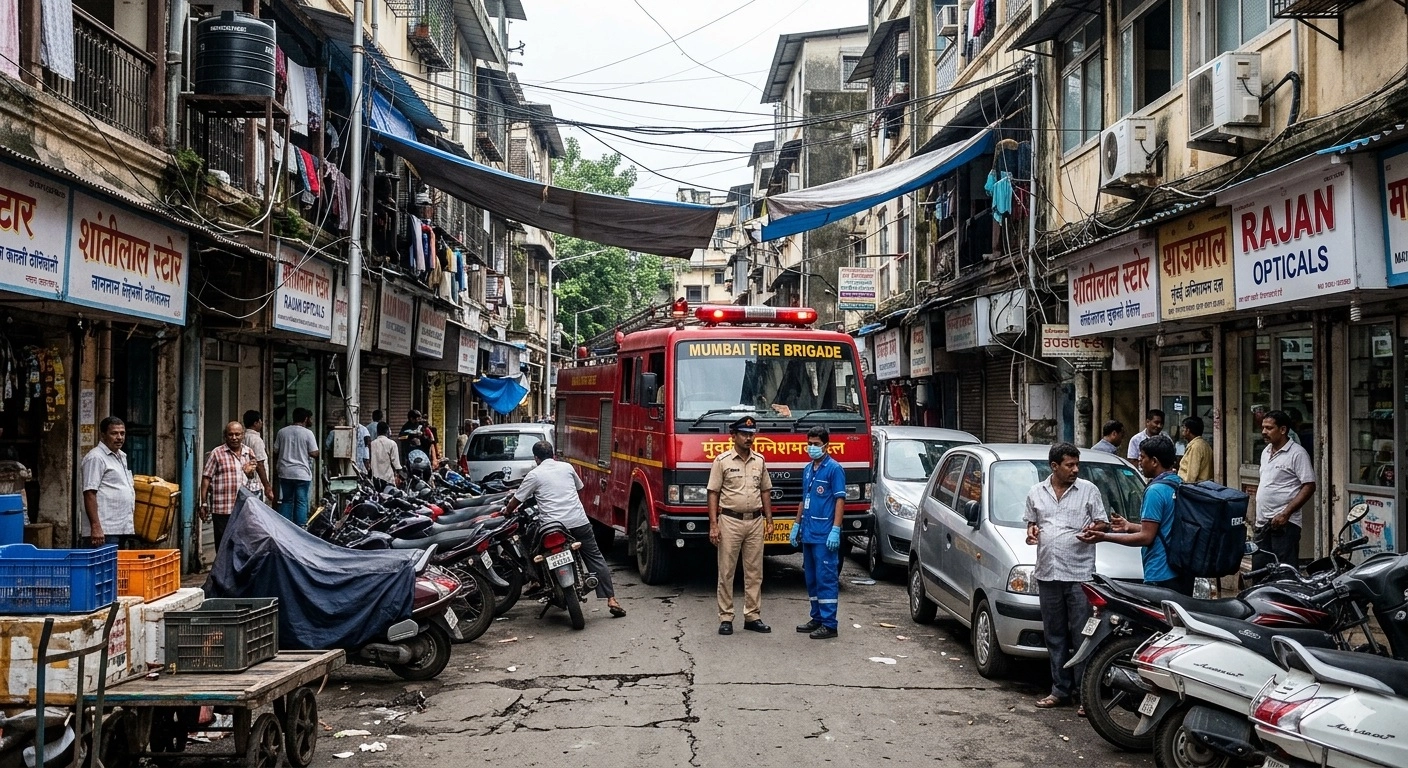
Mumbai is preparing to introduce strict parking regulations in several congested neighbourhoods to ensure smoother movement for emergency services. According to reports, the Mumbai Municipal Corporation is likely to enforce restrictions in narrow lanes where indiscriminate parking has become a major obstacle for fire engines and ambulances.
The move comes amid growing concern that unregulated parking in high-density areas is delaying emergency response times. In several parts of the city, vehicles parked on both sides of already narrow lanes leave little to no room for larger emergency vehicles to pass. Civic officials believe that regulating parking is essential to prevent avoidable risks to life and property.
Localities such as Chandanwadi, Girgaon, Kalbadevi, Gaondevi, Tardeo, Mumbai Central, Nagpada, Agripada and Byculla are among the worst affected. Together, these areas have more than 240 narrow lanes, with nearly 35 to 40 so tight that only one vehicle can pass at a time. In many of these lanes, illegal or haphazard parking has turned daily commuting into a challenge and emergency access into a serious concern.
The situation is particularly critical in commercial hubs like Kalbadevi and Zaveri Bazaar. These areas witness heavy traffic throughout the day due to wholesale trading activities. During emergencies, the congestion caused by parked vehicles can significantly delay response efforts, raising the risk of severe damage and casualties.
To address the issue, authorities are considering measures such as odd-even parking rules in select lanes and complete no-parking zones in others. Strict penalties are also expected for violators. However, residents and local businesses have expressed concerns over the lack of alternative parking arrangements. Many fear that sudden enforcement without adequate infrastructure could lead to inconvenience and economic strain.
Industry experts have highlighted that the problem goes beyond enforcement and requires long-term planning. Prashant Sharma, President of NAREDCO Maharashtra, pointed out that illegal parking reflects a deeper gap between rising vehicle ownership and limited parking infrastructure. He stressed the need for better urban planning and integration of organised parking solutions within both city design and new real estate projects.
Similarly, Ashish Majithia, Founder and CEO of Nextkraft Parking Technologies, emphasised the importance of adopting innovative solutions such as automated and multi-level parking systems. He noted that mechanised parking can significantly increase capacity and reduce reliance on roadside parking, thereby keeping critical access routes clear.
As Mumbai continues to grow, the challenge of balancing vehicle numbers with limited urban space remains pressing. While regulatory steps may offer immediate relief, experts agree that sustainable, technology-driven infrastructure will be key to ensuring long-term urban mobility and safety.
