




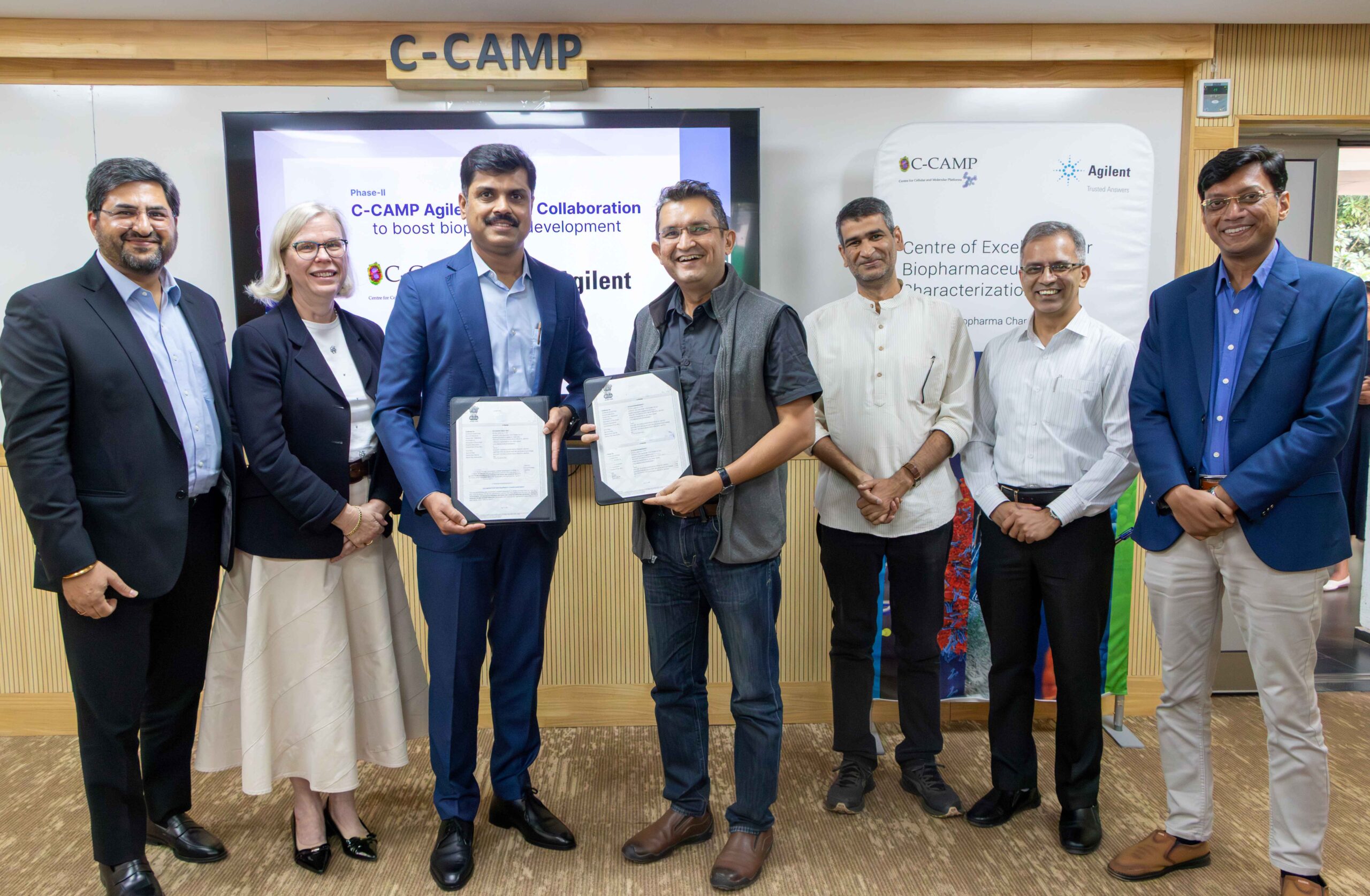
Agilent Technologies has announced an expansion of its collaboration with C-CAMP to improve access to advanced life sciences and analytical research capabilities across India. The expanded partnership aims to strengthen India’s growing biopharma and therapeutic research ecosystem by making high-end scientific infrastructure more accessible to startups, academic researchers and industry innovators.
The announcement was made in Bengaluru on May 12, 2026, marking another important step in India’s efforts to become a globally competitive hub for biotechnology and pharmaceutical innovation.
Under the expanded collaboration, researchers will gain access to advanced analytical and mass spectrometry-based platforms through C-CAMP’s shared scientific infrastructure. These technologies will support key research areas such as biotherapeutic characterisation, oligonucleotide research and quantitative biomolecular analysis. The initiative is expected to help scientists and startups conduct high-quality research without the burden of investing heavily in expensive laboratory instruments and specialised facilities.
As India continues to invest in translational research and next-generation therapeutics, the demand for reliable analytical infrastructure has increased significantly. By widening access to advanced scientific workflows, Agilent and C-CAMP aim to reduce barriers for researchers while encouraging reproducible and globally aligned scientific practices.
The collaboration is also expected to support India’s rapidly evolving biopharma sector. Over the years, Agilent and C-CAMP have worked together to enable regulatory-aligned characterisation of biologics and biosimilars used in therapeutic applications. With the expanded engagement, both organisations are now looking to accelerate innovation in advanced biotherapeutics and reinforce India’s ambitions in the global pharmaceutical landscape.
According to company officials, the initiative reflects a broader shift towards collaborative and shared infrastructure models in scientific research. Such models allow researchers from different backgrounds to access world-class facilities while promoting faster innovation and technology development.
Nandakumar Kalathil said India remains a strategic priority for Agilent and partnerships like the one with C-CAMP are essential for expanding scientific capabilities. He noted that the collaboration enables a wider community of researchers to access advanced analytical workflows that support high-quality science across both discovery and translational research.
Bharat Bhardwaj highlighted that collaborative research ecosystems are becoming increasingly important across the Asia Pacific region. He said the expanded engagement with C-CAMP reflects Agilent’s commitment to building inclusive innovation ecosystems where academia, startups and industry can work together to transform scientific research into meaningful impact.
Meanwhile, Dr Taslimarif Saiyed described the partnership as an important step towards building cutting-edge scientific capabilities in India. He said collaborations with global science and technology leaders such as Agilent will help support innovators and researchers across the country while accelerating science-led innovation and technology development.
The expanded partnership further reinforces Agilent’s long-term commitment to India’s life sciences sector and highlights the growing importance of shared scientific infrastructure in advancing research, innovation and healthcare development in the country.
Subscribe Deshwale on YouTube
