



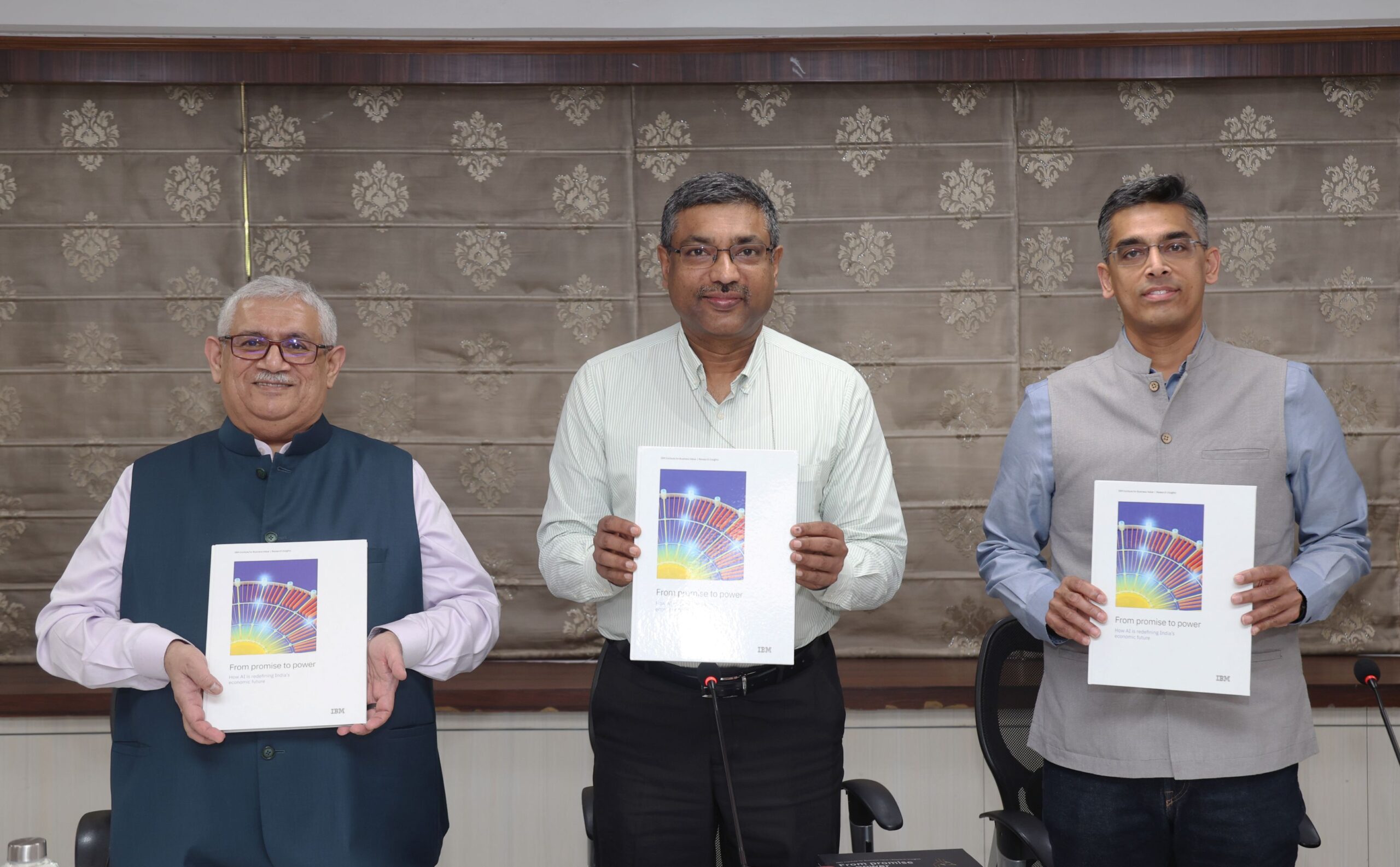
Artificial intelligence is steadily moving from being an emerging technology trend to becoming a major force that could redefine India’s economic future. A new study by IBM and IndiaAI suggests that AI may contribute more than 500 billion dollars to India’s economy by 2030, placing the country among the world’s leading AI-driven economies.
The report, titled From Promise to Power: How AI is Redefining India’s Economic Future, highlights growing confidence among business leaders regarding AI’s role in shaping the country’s growth story. According to the study, nearly 80 percent of Indian business leaders believe AI investments will directly influence India’s economic trajectory, while 73 percent expect India to emerge as a leading global AI nation by the end of this decade.
The findings indicate that India is reaching a significant turning point where AI is expected to shift from isolated experiments and pilot projects to becoming a critical component of business operations, public systems, and economic development.
However, despite the growing optimism, the report also highlights an important challenge. Around 72 percent of surveyed organisations believe they are currently behind global peers in AI adoption. This gap between ambition and implementation may become one of the key factors determining India’s future competitiveness in the global AI landscape.
Speaking at the launch of the study, S Krishnan said that India is no longer simply participating in global discussions around AI but is increasingly helping shape them. He stressed that AI should evolve in a way that supports people’s aspirations and contributes to inclusive national development.
The report also points to the growing importance of sovereign AI models and hybrid cloud systems. In sectors where sensitive data and public systems are involved, maintaining control over information has become increasingly important. According to the findings, 74 percent of executives believe control over data location is essential.
Rather than creating isolated systems, experts suggest that hybrid models can help India balance innovation, security, and flexibility. Around 70 percent of surveyed executives believe hybrid systems improve control over data without creating significant additional costs.
The study also highlights that India’s AI ambitions depend heavily on stronger infrastructure and data quality. While enthusiasm around AI technologies continues to rise, many organisations still face practical challenges. Around 57 percent of respondents identified uneven data quality as a major obstacle, while 77 percent pointed to a lack of accessible and secure cloud infrastructure.
Another major issue identified in the report is the need for a larger AI-skilled workforce. Although India has made progress in developing digital talent, only around 30 percent of employees currently possess the AI literacy levels companies require.
By 2030, the report suggests this figure may need to rise to nearly 57 percent, meaning India could require more than 350 million AI-skilled professionals over the coming years.
The study also found that only 15 percent of organisations are currently scaling AI through major investments, while most companies remain in the experimental stage.
As AI adoption accelerates globally, experts believe India’s future success may depend not only on technology itself but also on investments in talent, governance, infrastructure, and trusted systems that can turn ambition into long-term economic growth.
Subscribe Deshwale on YouTube
