



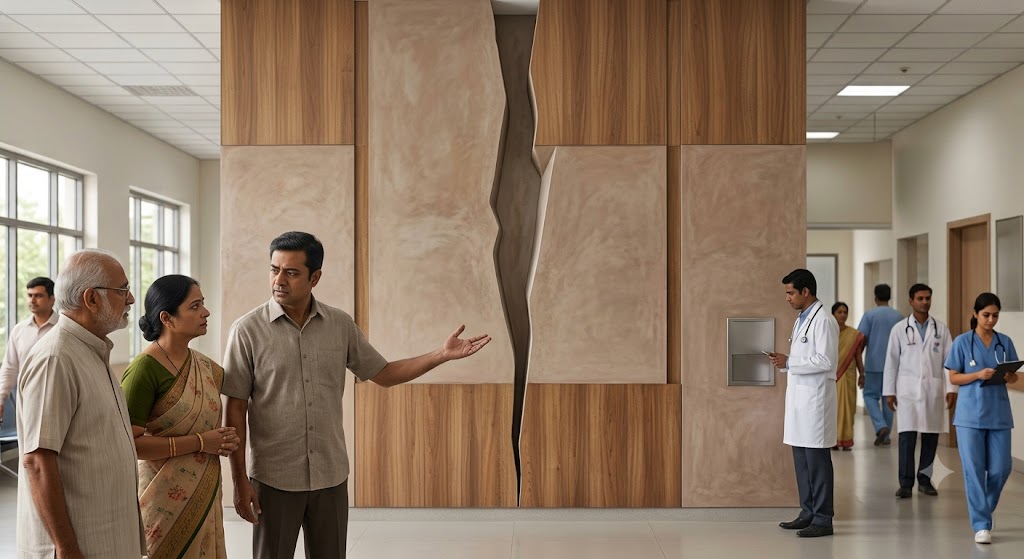
When a family rushes to a hospital, the first question is rarely about money. Someone is ill, an accident has happened or a loved one needs urgent treatment. In that moment, getting medical help comes first. The worry about the bill often comes later.
Maharashtra’s new healthcare Bill is trying to change at least one part of that experience.
The Maharashtra Clinical Establishments (Registration and Regulation) Bill, 2026 seeks to bring clinical establishments under a common regulatory framework. It proposes registration, minimum standards, inspections and stronger attention to patient rights.
One important provision is simple: patients should be able to see the charges. Clinical establishments will have to display their rates and charges, while the proposed Patient Rights Charter includes a patient’s right to information about the diagnosis, treatment plan and estimated cost.
That could make a difference when a family is trying to understand what it is paying for.
The Bill also addresses one of the most sensitive moments in healthcare: an emergency. It provides for emergency stabilisation during the golden hour regardless of a patient’s financial status. In simple terms, lack of money should not become a reason to delay essential emergency stabilisation.
This matters because emergencies rarely give families time to plan.
But there is another question that cannot be ignored.
What if the price displayed is simply too high?
This is where health rights groups have raised concerns. Their argument is straightforward: displaying a price and controlling a price are two different things.
If one hospital charges ₹5,000 for a service and another charges ₹15,000, transparency tells the patient about the difference. But it does not explain why the difference exists, whether the higher charge is reasonable or whether there should be a limit.
And healthcare is not always something people can shop around for.
A family facing an emergency may not have time to compare hospitals or search for a cheaper option. The decision is often made under stress, with one priority in mind: getting the patient treated.
That is why the Bill could be an important step, but not necessarily the end.
Knowing the cost is better than being kept in the dark. But knowing the cost does not automatically make treatment affordable.
For Maharashtra’s patients, the proposed law could bring more clarity to hospital billing and strengthen accountability. It could also give families a clearer picture of treatment costs before they agree to them, wherever circumstances allow.
But the larger question of affordability remains.
For a family already dealing with illness, a hospital bill can become another source of fear. The Bill may reduce some uncertainty around that bill. Whether it can also make healthcare less expensive is a much bigger question.
Perhaps that is the real test: not just whether patients can see the price, but whether that price becomes easier for ordinary families to bear.
Subscribe Deshwale on YouTube
