



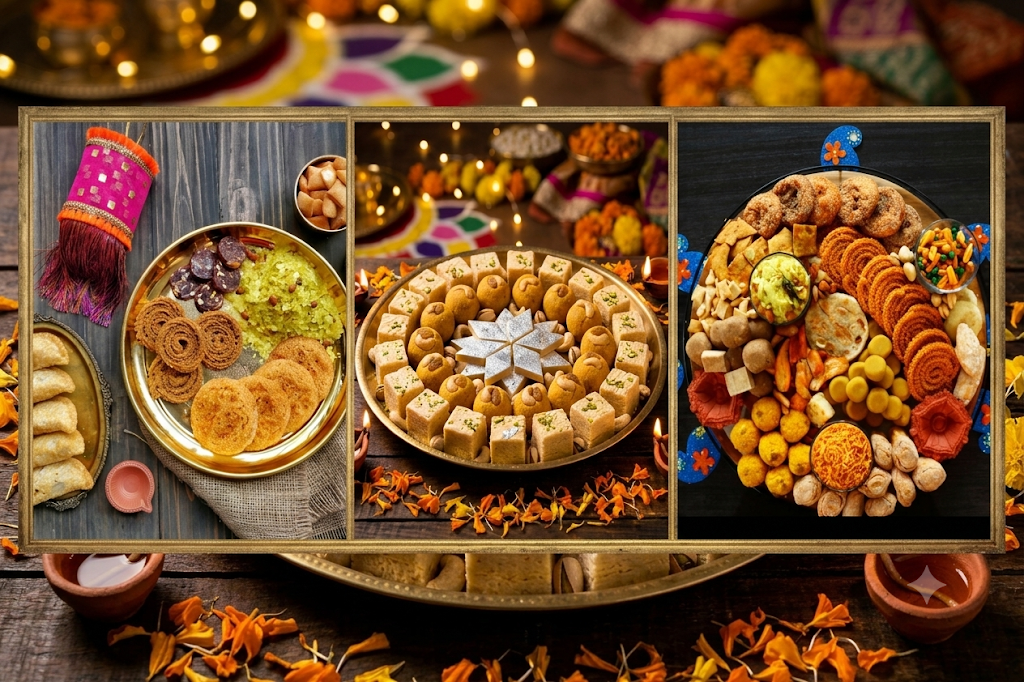
Diwali is a festival of lights, but in Indian homes, its celebrations are equally remembered through the aroma of freshly prepared sweets and snacks. From the sound of chakli being fried in the kitchen to beautifully arranged boxes of mithai exchanged among relatives and friends, food has always been an important part of the festive season. Every region has its own special recipes, ingredients and traditions, making Diwali a celebration of India’s rich and diverse food culture.
For many families, Diwali preparations begin days before the festival. Kitchens become busy places where family members come together to prepare traditional delicacies. Some recipes are followed exactly as they were taught by grandparents, while others are adapted to suit changing tastes. These preparations are not just about cooking; they are about sharing responsibilities, spending time together and keeping family traditions alive.
India’s Diverse Collection of Diwali Sweets
One of the most interesting aspects of Diwali food is the variety of sweets prepared across the country. Although the ingredients and cooking methods may differ, the purpose remains the same: to make the celebration sweeter.
In Maharashtra, Diwali faral is an essential part of the festivities. Karanji, anarsa, besan ladoo, rava ladoo and shankarpali are among the popular preparations. Karanji, with its sweet filling of coconut and sugar, is a festive favourite in many households. In Gujarat, sweets such as mohanthal, ghughra and sukhdi bring their own traditional flavours to the celebration. Mohanthal, prepared with gram flour, ghee and sugar, is particularly loved for its rich taste.
Moving towards Rajasthan, ghevar, churma ladoo and mawa kachori reflect the region’s fondness for rich and flavourful sweets. In Uttar Pradesh, peda, gujiya and balushahi are popular festive treats. Bengal offers a different experience with its delicate sandesh and narkel naru, while Karnataka is known for Mysore pak and holige. In Tamil Nadu, adhirasam, jangiri and payasam are enjoyed during festive occasions. Andhra Pradesh and Telangana have traditional delicacies such as ariselu and pootharekulu, while Punjab’s festive food culture includes pinni and panjiri ladoo.
Each sweet has its own identity, preparation method and regional connection. Together, they show how India’s food traditions reflect the diversity of its people.
Beyond Sweets: The Importance of Diwali Faral
Diwali celebrations are not limited to mithai. Savoury snacks also have a special place in festive preparations, particularly in Maharashtra, where the traditional faral is eagerly awaited.
Chakli, chivda, shankarpali, karanji and anarse are among the most popular items prepared at home. While some are sweet, others offer a crunchy and savoury taste that balances the festive spread. Families often prepare these snacks in large quantities so that they can be enjoyed over several days and shared with guests.
The tradition of exchanging faral with neighbours, relatives and friends adds another layer of warmth to the celebrations. A box of homemade snacks is more than a festive gift; it is a simple way of expressing affection and maintaining relationships. Similar food-sharing traditions can be found in different parts of India, where people exchange sweets and delicacies as a gesture of goodwill.
Homemade Recipes and the Changing Food Culture
For generations, homemade sweets have been an important part of Diwali. Many families continue to follow recipes passed down by mothers and grandmothers. The exact quantity of ingredients, the right consistency of the mixture and the traditional cooking method are often learned through observation and experience.
However, modern lifestyles have changed the way people prepare for the festival. With busy schedules and limited time, many families now prefer buying sweets and snacks from local sweet shops and bakeries. Traditional halwais also prepare extensively for the festive season, making thousands of sweets to meet the demand.
At the same time, the festive food market is introducing new choices. Millet-based sweets, dry-fruit ladoos, jaggery-based preparations and baked snacks are finding their place alongside traditional delicacies. Fusion mithai, with new flavours and combinations, is also attracting attention, particularly among younger consumers.
These changes do not necessarily mean that traditional food is losing its importance. Instead, they show how Indian food culture continues to evolve while retaining its connection with familiar flavours.
The Memories Behind Every Recipe
Beyond ingredients and recipes, Diwali food carries memories that often stay with people for years. For many, the smell of freshly prepared karanji or the taste of homemade ladoos brings back memories of childhood celebrations. Children helping their parents in the kitchen, grandparents sharing cooking tips and family members sitting together to prepare faral are experiences that make the festival special.
For people living away from their hometowns, festive food can also bring a sense of connection with home. Some order sweets from their favourite local shops, while others make an effort to prepare traditional recipes themselves. A familiar taste can remind them of family gatherings, childhood celebrations and the warmth of their hometown.
Traditional sweet shops have their own stories too. Some family-run establishments have served the same neighbourhoods for decades, becoming an important part of local celebrations. Their recipes, preparation methods and relationships with customers are often passed down through generations.
A Celebration That Brings Everyone Together
Diwali food is not simply about what is prepared or served. It represents hospitality, family bonds, regional identity and the joy of sharing. Whether it is a homemade plate of Maharashtra’s faral, a box of Gujarati mohanthal or a serving of traditional Mysore pak, every delicacy has a story behind it.
As food habits continue to change, India’s festive kitchens are finding ways to balance tradition with modern preferences. New recipes may enter the celebration, but the feeling associated with sharing food remains unchanged.
After all, the true sweetness of Diwali lies not only in the mithai on the plate but also in the memories created, relationships strengthened and traditions carried forward with every celebration.
Subscribe Deshwale on YouTube
