



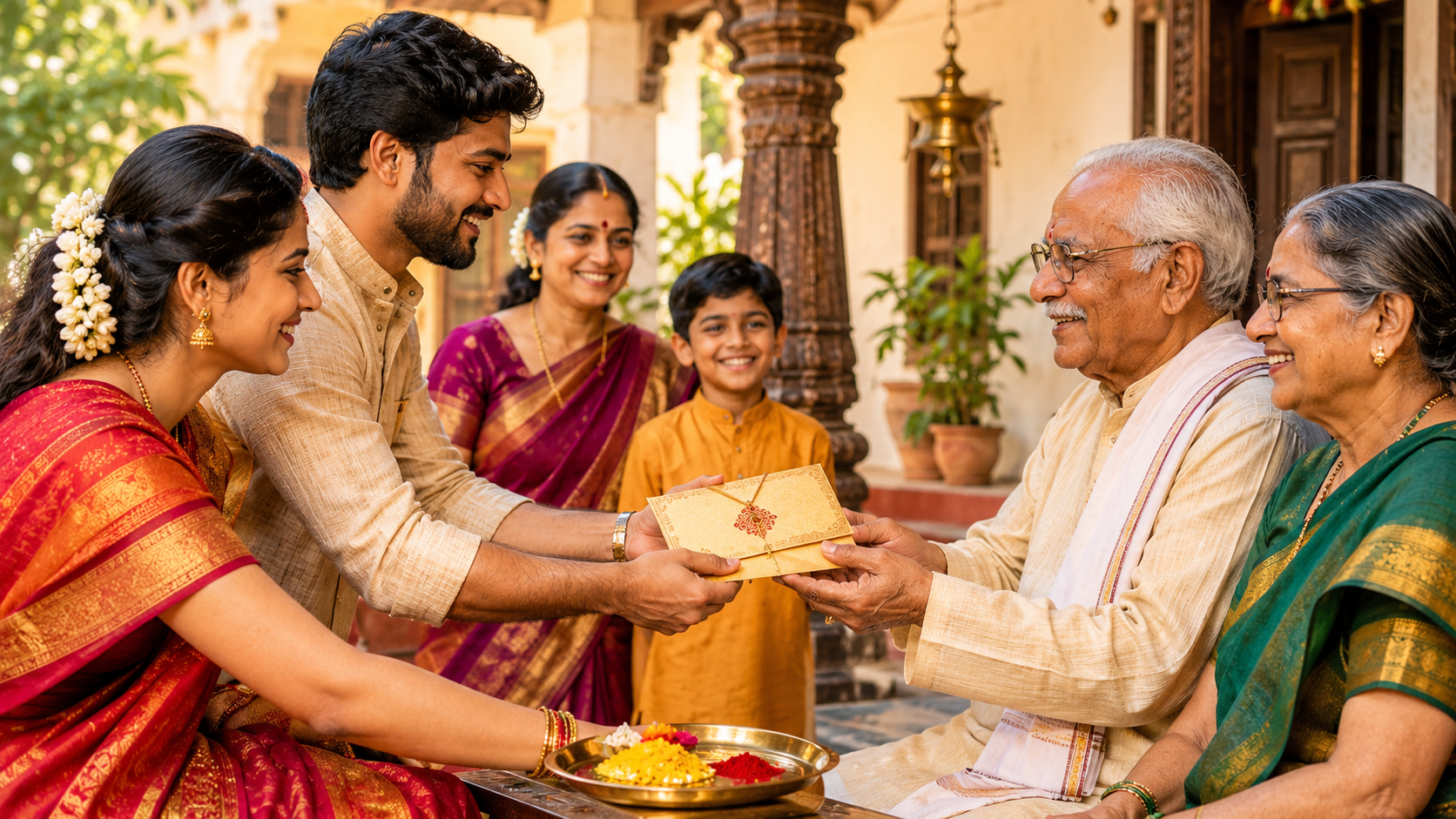
Today, inviting someone to a wedding can take less than a minute. A family creates a digital invitation, shares it on WhatsApp, adds the wedding location and sends it to relatives and friends. Even someone living thousands of kilometres away can receive the invitation instantly.
But imagine a time when there were no mobile phones, internet connections or digital cards. How did a family make sure that relatives in another village, old friends and distant family members knew about an upcoming wedding?
The answer was not always a printed invitation. In many parts of India, inviting someone was a personal responsibility. Families visited homes, relatives carried messages and, in some communities, even simple ingredients such as rice and turmeric became part of the invitation. It was not just about informing people about a wedding. It was about making them feel included in the family’s happiness.
When Families Took the Invitation Personally
Before printed wedding cards became common, personal visits played an important role in inviting relatives and friends. A family member would visit someone’s home, share the wedding news and request their presence at the celebration.
In smaller towns and villages, this was often easier because people lived within familiar community networks. Relatives knew one another, neighbours shared everyday connections and news travelled through conversations. If someone lived in another village, a trusted relative or messenger could help carry the invitation.
For close family members, especially elders, a personal visit also carried a special meaning. Receiving an invitation face to face showed respect and made the occasion feel more personal.
In some families, the invitation was therefore not treated as a task to finish quickly. It was an opportunity to reconnect with people before the wedding celebrations began.
When Rice and Turmeric Became an Invitation
One interesting example comes from traditional Rajput wedding customs, where Peela Chawal, meaning yellow rice, was used to invite relatives and friends.
Rice mixed with turmeric was prepared as part of a traditional ceremony. The yellow rice was associated with the beginning of wedding celebrations and was used to communicate the invitation. It was more than an ordinary message. It carried the family’s intention to share an important occasion with others.
Another interesting practice was Bhaat Nyotna. In this Rajput custom, the mother of the bride or groom traditionally visited her parental home to invite her father and brothers to the wedding. The visit involved traditional offerings and ceremonies, making the invitation a meaningful family occasion.
These customs remind us that an invitation could involve relationships and rituals, not just a date and venue.
The Invitation That Also Recorded Family History
Another interesting tradition was the Lagan Patrika, documented by the Indian National Trust for Art and Cultural Heritage (INTACH) in its research on Rajput marriage customs.
Unlike an ordinary invitation, this document recorded details of the marriage alliance. It included the names of seven generations from both families, along with the wedding date and auspicious time.
The patrika was traditionally presented to the groom as part of the marriage arrangements. It served as a record of the alliance between the two families and also invited the groom to arrive with the wedding procession.
This shows how a wedding invitation could carry family history and social importance along with the details of the ceremony.
How Printed Cards Changed the Tradition
As families moved to towns and cities and relatives began living farther apart, personally visiting everyone became more difficult. Printed wedding invitations gradually offered a practical way to share wedding details.
According to historian Arundhati Virmani’s research, Indian wedding cards emerged in the early twentieth century, initially among princes and urban elites. The practice gradually reached wider sections of society.
However, printed cards did not immediately replace personal invitations. Their popularity grew gradually as printing became more accessible. Many families continued to invite close relatives and neighbours personally, while using printed cards to share details with a wider circle.
An interesting glimpse of this change comes from Tamil Nadu. Muthiah Velaiya, a railway employee, began preserving wedding invitations he received in 1943. His collection eventually included hundreds of cards, documenting changes in language, design and wedding arrangements over several decades.
The early cards were often simple, single-page invitations. Over time, they became more elaborate, with different languages, designs and details about wedding venues.
His collection is a reminder that even an ordinary wedding card can become a record of how society changes.
The Way We Invite Has Changed, but the Feeling Remains
Today, digital invitations have made wedding planning easier. Families can reach relatives abroad, share updates about different ceremonies and provide directions without making repeated visits.
Yet, personal invitations have not disappeared. Many people still visit close relatives and elders to invite them personally, even after sending a WhatsApp card.
Perhaps that is because some moments deserve more than a notification. A family may send hundreds of digital invitations, but visiting an elderly relative, sitting together and sharing the wedding news still has its own warmth.
The methods have changed from personal visits and traditional rituals to printed cards and phone screens. But the reason behind every invitation remains familiar. Families want their loved ones to be present, share their happiness and bless the couple.
After all, a wedding invitation has never been only about telling someone where to come and when. It has always been about telling them that their presence matters.
Subscribe Deshwale on YouTube
