



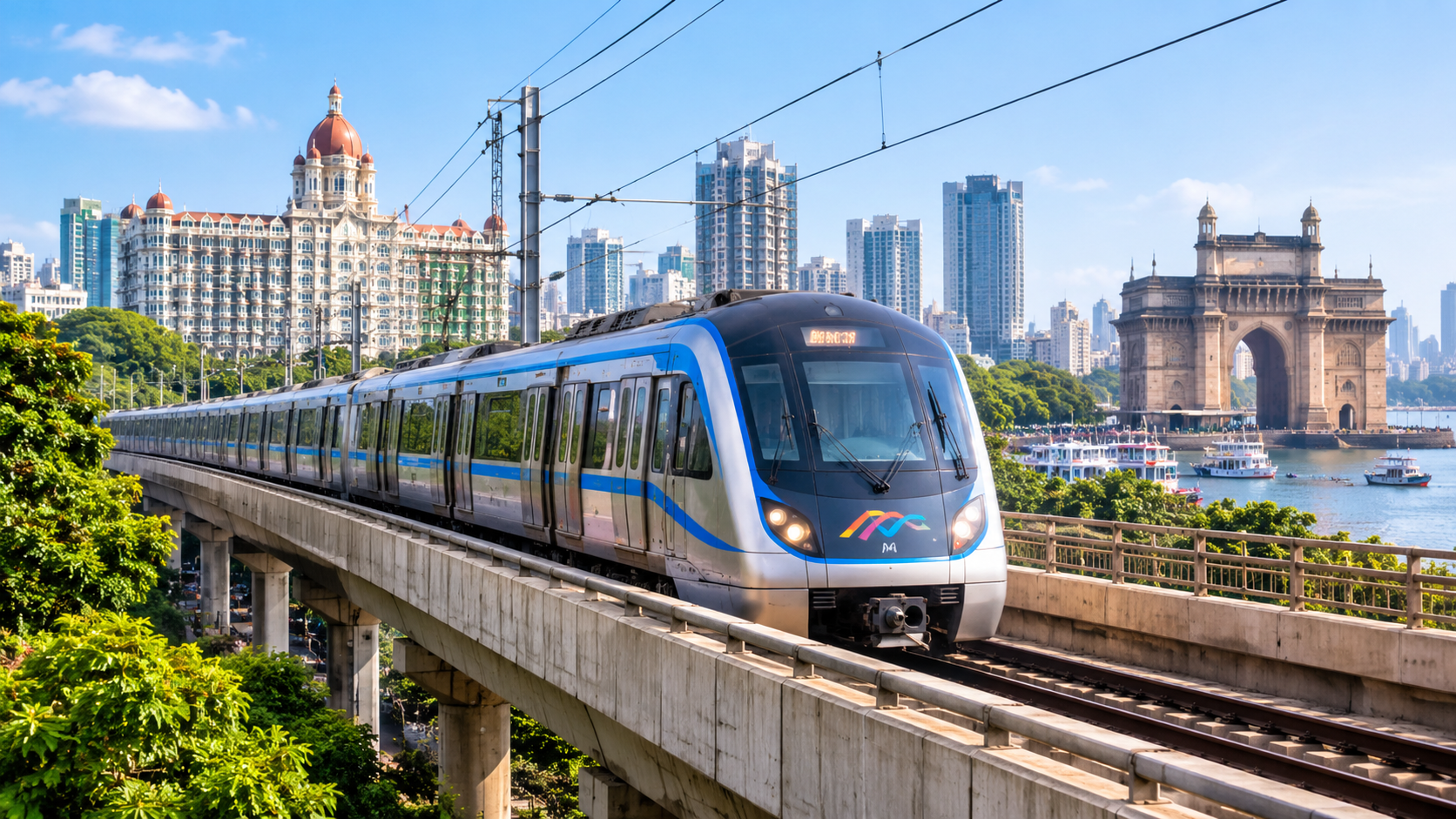
A metro journey may seem like an ordinary part of city life. People board trains, find a seat, check their phones and get off at their destinations. For some, it is a daily journey to work. For others, it is a convenient way to travel across a busy city. But sometimes, an ordinary journey can remind us of something much bigger: the way we travel today can shape the cities we live in tomorrow.
On November 16, Mumbai witnessed one such moment when Britain’s Prince William and Princess Kate joined commuters on the Mumbai Metro. The Princess made a surprise appearance, joining her husband for a journey that was originally scheduled for him alone. The couple travelled from Vidhan Bhavan station to Bandra-Kurla Complex, highlighting the importance of sustainable public transport.
What made the visit interesting was not simply the presence of two royal visitors on a metro train. It was the message behind their journey. Their visit brought attention to cleaner transport, opportunities for women and the role of practical solutions in building better cities.
The People Who Keep the City Moving
During their metro journey, William and Kate met female train pilots and discussed opportunities for a more inclusive workforce.
When passengers enter a metro station, they usually think about their destination. They may not always notice the people operating trains, managing stations and keeping the transport system running smoothly. Yet, every journey depends on the people who make it possible.
For women working in the transport sector, such opportunities represent professional growth, independence and the chance to take on important responsibilities. Their presence also reminds us that modern transport is not built only with technology and infrastructure. It depends on people working behind the scenes every day.
A Cleaner Journey for a Growing City
Anyone who has travelled through Mumbai knows how much time people spend moving from one part of the city to another. Office workers, students, shopkeepers and families all depend on transport to manage their daily routines.
As cities grow, finding better ways to travel becomes increasingly important. Metro trains can carry large numbers of passengers and offer an alternative to travelling in individual vehicles.
The larger idea is simple. A cleaner city is not built through one announcement. It also grows through better transport facilities, cleaner vehicles and everyday choices that make sustainable living easier.
When Indian Ideas Find Wider Support
The metro journey was only one part of the larger Earthshot Prize Impact Assembly held in Mumbai. On November 16, several new partnerships and developments were announced to help environmental solutions reach more people.
One important development involved Mahindra Last Mile Mobility and Uber. Their partnership aims to support the adoption of 5,000 Mahindra electric three-wheelers over the next 12 months. Through their EV Auto Advantage programme, they plan to improve access to financing and make it easier for drivers to switch to electric vehicles.
Another encouraging development came from Ahmedabad-based Mahila Housing Trust. Along with the NGO HERA, it announced HERA Materna, an insurance scheme designed to protect pregnant women from extreme heat. The initiative also aims to provide access to cooling, medical care, heatwave warnings and health advice.
There was good news for farmers too. The organisation Pula announced new support from Amazon and joined NVIDIA’s Inception programme. Through NVIDIA’s weather and climate technology, Pula aims to improve its ability to understand extreme weather risks. Its goal is to protect 100 million smallholder farmers from extreme weather by 2030.
Meanwhile, IKEA and environmental technology company Matter are working on technology to capture harmful microfibres from wastewater. Their first planned installation will be at an IKEA textile supplier in India, helping explore how the solution can work in real industrial conditions.
Gujarat’s Idea Could Benefit More People
India also has an important environmental achievement to share through Gujarat. The state pioneered an industrial emissions trading scheme that encourages factories to reduce harmful particulate pollution.
Under this system, factories receive limits on the pollution they can release. Those that reduce their emissions can sell their unused allowances, giving industries a financial reason to adopt cleaner practices.
Now, the Earthshot Prize has announced plans to expand this model to more Indian states, starting with Maharashtra and followed by Rajasthan. According to the organisation, the expansion could potentially benefit another 210 million people by helping improve air quality.
This is an interesting example of how an idea developed in one state can create opportunities for cleaner air in other parts of the country.
A Better Future Begins with Practical Ideas
These developments may sound like large business and environmental projects, but their purpose connects with everyday life.
Cleaner vehicles matter to people travelling through crowded streets. Better protection from heat matters to women working in difficult conditions. Weather support matters to farmers who depend on their crops for their livelihoods. Cleaner water and air matter to everyone.
We often imagine environmental change as something that requires enormous efforts from governments and international organisations. Their role is certainly important, but meaningful progress also depends on practical solutions that people can use in their daily lives.
A metro train carrying thousands of passengers, an electric rickshaw replacing a polluting vehicle or a scheme helping factories reduce emissions may appear to be separate developments. Yet, each represents the same thought: progress should make everyday life better.
Perhaps that is the most meaningful takeaway from the Mumbai metro ride. The journey towards a greener future does not always begin with a grand announcement. Sometimes, it begins with a simple decision about how we travel, work and care for the places we call home.
Subscribe Deshwale on YouTube
