



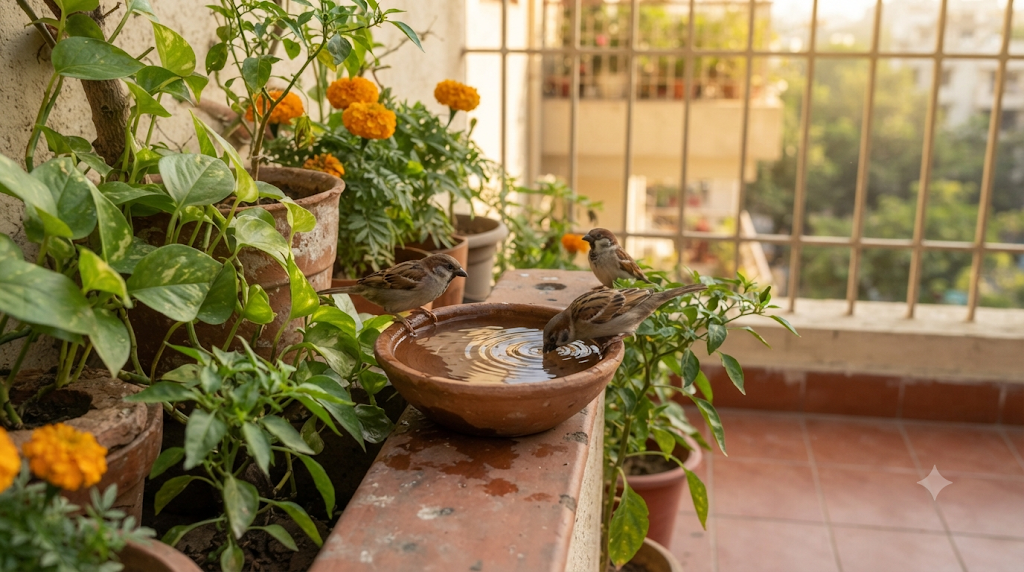
On a warm summer morning, someone in a home opens the balcony door, picks up a small bowl and fills it with fresh water. They place it near a flowerpot, on a windowsill or in a quiet corner of the terrace. A little later, a bird arrives, looks around for a moment and takes a few sips.
For the person who keeps the bowl, it may be just another part of the morning routine. But there is a special kind of happiness in seeing a little bird return to a place where it finds water.
Across many Indian homes, this simple habit has become a lovely way of welcoming nature into everyday life. It does not require a garden, a large terrace or expensive equipment. Sometimes, all it takes is a small bowl and a little care.
A Familiar Sight on Indian Balconies
Walk through a residential neighbourhood during summer and you may notice something interesting. Alongside flowerpots, clotheslines and small gardens, some balconies have a shallow bowl filled with water.
In some homes, it is an old steel plate. In others, it is a traditional earthen bowl or a simple plant saucer. The material may differ, but the thought behind it remains the same.
As temperatures rise, birds need access to water for drinking and bathing. In crowded urban areas, a small, accessible water source can offer them another place to drink, particularly when natural water sources are limited.
For families, keeping the bowl filled often becomes a simple daily responsibility. Someone checks it while watering plants, another person fills it before leaving for work, and sometimes children take charge of it.
When Children Start Looking Out for Birds
There is something lovely about the way children react when a bird visits their balcony.
A child who once paid little attention to the flowerpots may suddenly become interested in what is happening outside. They begin noticing the birds, their colours, their sounds and the different times they appear.
“Look, a sparrow has come!”
Such little announcements can bring an unexpected smile to a family morning. Children may start asking what the bird eats, where it lives and why it returns to the same place.
Without a classroom lesson or a long explanation, they begin observing nature more closely. They also learn that caring for another living creature can start with something very simple.
For parents and grandparents, it becomes an opportunity to share their own childhood memories of birds visiting rooftops, trees and courtyards. A small bowl of water can therefore bring together two generations through a shared experience.
A Little Nature in the Middle of City Life
Life in a city often moves around office timings, school schedules, traffic and household responsibilities. Many families spend their days indoors or travelling between places.
In such surroundings, a balcony can become a small connection with the natural world.
A few plants, the sound of birds and a bowl of fresh water can make that little corner feel more alive. People may begin noticing things they previously overlooked: a bird sitting on a railing, another searching among the leaves or the sound of wings early in the morning.
Not every home has enough outdoor space, and not every balcony attracts birds. Still, even a small effort can encourage people to pay more attention to the living creatures around them.
A Small Bowl Needs a Little Care
Keeping water for birds is simple, but doing it responsibly is equally important. A shallow, stable bowl with gently sloping sides is a good choice. Adding a few clean pebbles or small stones gives birds places to stand and perch.
It is best to keep the bowl in a shaded, open spot where birds can see their surroundings. Some nearby plants can offer shelter, but avoid placing it beside dense bushes where cats may hide and approach unnoticed.
The water should be replaced with fresh water every day, and the bowl should be scrubbed regularly, ideally once a week. This helps prevent dirt, algae and harmful germs from building up. Regular cleaning also reduces the chances of mosquitoes breeding in standing water. These simple precautions make the arrangement safer for visiting birds.
The Happiness of a Small Return Visit
Perhaps the most beautiful part of this routine is that it asks for very little in return.
There is no guarantee that a bird will visit every morning. Some days, the bowl may remain untouched. On other days, a familiar visitor may arrive just when someone is sitting with a cup of tea.
And when it does happen, even an ordinary morning can feel a little special.
We often think that caring for nature requires big projects or major changes. But sometimes, it begins right outside our homes, with a small gesture that takes only a few minutes.
A bowl of water may look like an ordinary object on a balcony. Yet, for a thirsty bird, it can become a welcome stop. And for the family that fills it, it can become a gentle reminder that even in a busy city, there is always room for a little kindness.
Subscribe Deshwale on YouTube
