











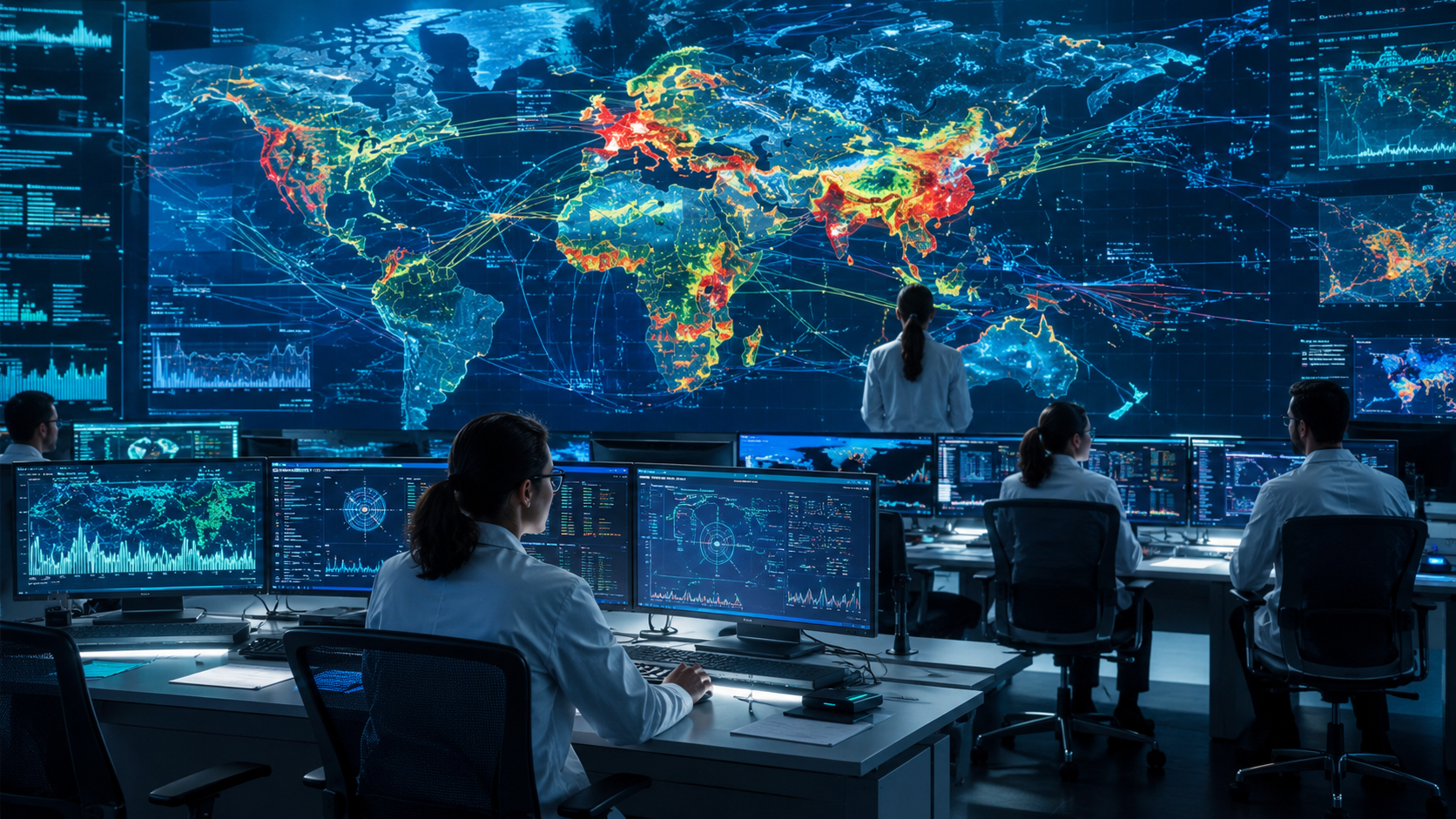
For years, the question hanging over global health wasn’t if another pandemic would happen, but when. Climate change is reshaping wildlife habitats, pushing animals and the viruses they carry into closer contact with humans. International travel means a pathogen can cross continents in hours, not weeks. Given all this, health agencies have started asking a bolder question: can artificial intelligence actually predict the next pandemic before it starts?
The answer, increasingly, seems to be yes. Not perfectly, and not with certainty. But well enough to matter.
Moving from reacting to predicting
For most of modern history, disease surveillance has worked the same way. A patient falls sick, a doctor makes a diagnosis, a report gets filed, and that report slowly moves through government channels before anyone outside a hospital even knows something is wrong. By the time officials notice a pattern, the outbreak may already be spreading.
AI is trying to change that timeline entirely. Instead of waiting for clinical reports, these systems scan huge amounts of data from outside the traditional healthcare system, looking for warning signs before patients ever show up at hospitals in noticeable numbers.
What the machines are actually watching
The data going into these systems is more varied than most people would expect.
One major source is natural language processing, where algorithms scan local news reports, public health bulletins, and online forums in multiple languages, watching for mentions of unusual symptoms like unexplained fevers or atypical pneumonia clusters.
Another is anonymised search data. Researchers can track spikes in certain health-related searches across a region, sometimes catching the first hints of an outbreak before any official diagnosis has been recorded.
Global travel patterns matter too. By analysing commercial flight paths and ticketing data, researchers can map how a virus emerging in one city might travel to major transit hubs around the world.
Even climate and environmental data plays a role. Machine learning tools factor in temperature shifts, rainfall changes, and deforestation patterns to predict where diseases spread by mosquitoes and other vectors, such as dengue or malaria, are likely to expand next.
When you put all of this together, you get something close to a live map of the world’s viral risk, constantly updating.
The maps that watch the world
Several organisations have already built systems around this idea. The Coalition for Epidemic Preparedness Innovations, known as CEPI, runs a pandemic preparedness engine that tracks real-time global epidemiology data. It works almost like a digital radar, helping researchers figure out which known virus families are most likely to jump from animals to humans next.
Other platforms, like BlueDot and Boston Children’s Hospital’s HealthMap, do something similar. They use automated tracking algorithms to flag unusual health patterns around the world and generate short-term projections of how a local outbreak might spread. That gives hospitals and health systems a head start, time to organise medical supplies, free up beds, and plan a response before local transmission gets out of hand.
These aren’t just tracking tools that show where a virus already is. The bigger shift is that they try to show where it’s going next.
Where the system still struggles
None of this works perfectly, and researchers are upfront about that. Predictive AI is only as good as the data it receives. Countries don’t share health information consistently. Medical records are often fragmented. Clinical reporting can be delayed for all kinds of reasons, from bureaucracy to under-resourced health systems. Any of these gaps can weaken the accuracy of the predictions.
Experts are also careful to point out that AI isn’t meant to replace public health workers. Its real value lies in supporting human decision-making, especially during the early, critical window when a fast response can prevent a local outbreak from becoming a global emergency.
Speeding up vaccines too
Prediction is only half the story. AI is also being used to shorten how long it takes to develop vaccines and treatments once a new pathogen is identified.
Building a vaccine used to take years of trial and error in a lab. Now, machine learning models can simulate biological interactions at a cellular level, cutting down much of that time. Through CEPI’s 100-Day Mission, for instance, AI is being used to analyse the genetic sequencing of emerging pathogens and identify stable targets for mRNA vaccine design. The goal is ambitious: compress a process that once took years into a matter of months.
A more prepared world, not a guaranteed one
None of this means pandemics will simply stop happening. AI cannot prevent a new virus from emerging in the first place. What it can do is give scientists and health systems more time, more warning, and more clarity before a local outbreak turns into a global crisis.
That shift, from reacting after the fact to spotting trouble early, marks a genuine change in how the world prepares for its next major health threat. Whether these systems will be fast and accurate enough when it truly matters is something only a real crisis will test. But for now, the machines are already watching, already guessing, and already learning.
Subscribe Deshwale on YouTube


