









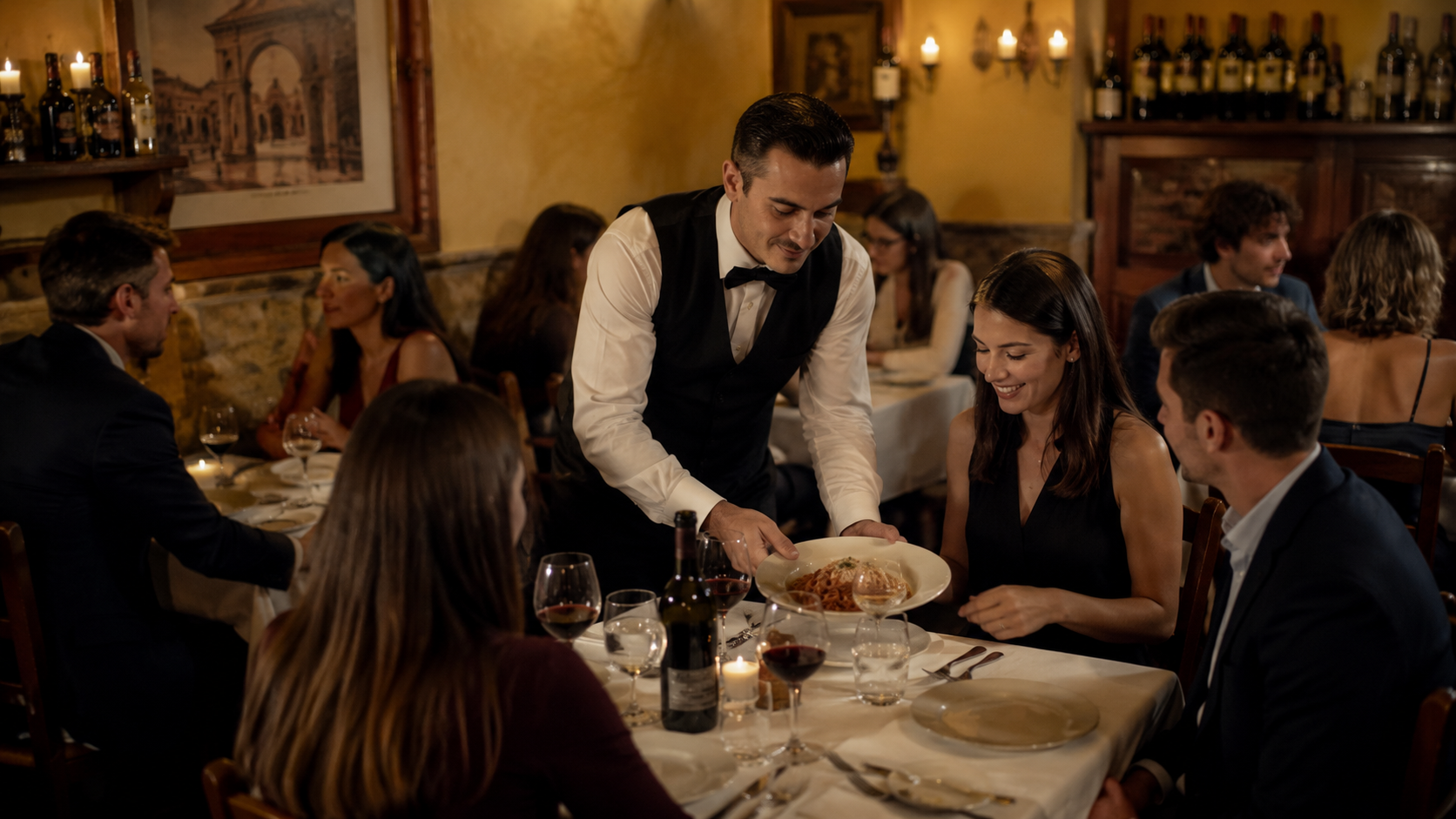
Picture this. It’s late evening in Rome. You’re deep into a plate of pasta, wine glasses are being refilled, and someone at a nearby table asks for a cappuccino. Forks pause mid-air. A quiet judgement passes through the room.
What just happened?
The tourist didn’t do anything illegal. They just broke one of Italy’s many unspoken dining rules. And if you’re planning a trip to Italy anytime soon, you’ll want to know these rules before you sit down at a restaurant.
Italian food itself is simple. It isn’t heavily spiced, and it relies on seasonal, local ingredients. But around this simplicity, Italians have built a set of customs that protect how a meal is meant to be enjoyed. Break one of these customs, and you might get a horrified stare. Follow them, and you might just earn an approving nod from the locals.
Here are seven things you should never do at an Italian restaurant.
1. Never order a cappuccino after breakfast
Many people have heard that Italians don’t drink cappuccino late in the day, but the exact cutoff time is often misunderstood.
Here’s the simple rule: don’t order cappuccino at a restaurant at all. It belongs at the coffee bar with breakfast, alongside a light pastry or brioche. Italians consider it too rich to pair with heavier meals later in the day. After breakfast, coffee means espresso or macchiato.
2. Never disturb the order of the meal
An Italian restaurant meal moves in a set sequence, almost like a piece of music. It starts with antipasto (starters), moves to primo (a pasta course), then secondo e contorni (meat or seafood with vegetable sides), followed by dolce (something sweet), and finally caffè e amaro (coffee and a digestive drink).
You’re allowed to skip courses. You are not allowed to rearrange them. Asking for everything to be brought out together is considered unusual. Salad, for instance, isn’t a starter in Italy. It’s a side dish eaten with the main course, and it usually comes as simple greens with oil, salt, and lemon.
3. Never mix seafood and cheese
This is one rule that confuses many visitors. Why can’t you sprinkle Parmesan on a seafood pasta if you want to?
In Italian food culture, seafood and cheese are treated as two separate traditions that developed apart from each other. Their flavours are believed to clash, so seafood dishes rarely include strong aged cheese. This idea extends to entire meals too. A seafood starter is usually followed by more seafood, not a heavy meat dish.
There are exceptions on menus, like pasta with mussels and pecorino cheese, but these are specific, traditional recipes. As a general rule, asking for Parmesan on a seafood pasta will likely raise a few eyebrows.
4. Never ask for substitutions
In most Italian restaurants, dishes are not built to be customised. Certain ingredients are paired together for a reason, and asking to swap one out can feel like a challenge to the chef’s judgement.
Even the shape of pasta matters here. Short pasta shapes are usually paired with thicker sauces that stick to their ridges, while long or stuffed pasta goes with smoother, silkier sauces.
That said, allergies and dietary needs are respected. You can ask for an ingredient to be left out if it doesn’t suit you. What isn’t appreciated is asking for a dish to be redesigned entirely.
5. Never treat Italy as one single cuisine
“Italy” as a unified country is a fairly recent idea, dating back only to the late 1800s. Before that, it was a collection of independent kingdoms and states. Even today, many Italians identify with their region first and their nationality second.
This regional pride shows up strongly in food. Pizza belongs to Naples. Limoncello comes from the Amalfi Coast. Pesto is native to Genoa. Rome is known for cacio e pepe and carbonara, Florence for its thick steaks, and Venice for its aperitivo culture with small bites called cicchetti.
Every town has something it’s known for. Visiting a place without trying its signature dish is considered a missed opportunity.
6. Never rush through a meal
In Italy, eating out is a social event, not just a way to fill your stomach. A full meal, with its many courses, can stretch across hours, filled with conversation, laughter, and more wine.
If you show up for dinner around 9pm, which is common in Italy, don’t be surprised if you’re still at the table close to midnight.
7. Never skip the amaro
A meal in Italy typically ends with something sweet, a coffee, and an amaro, a bitter digestive drink.
The name itself means “bitter” in Italian. Amari are often made with citrus peel, walnut shells, or medicinal herbs, and their flavour is something of an acquired taste. They’re also deeply regional, so it’s worth asking what the local specialty is, or whether a homemade version is available.
These unwritten rules aren’t about making tourists feel unwelcome. They exist because, for Italians, a meal is one of life’s genuine pleasures, and these customs are what make sure it’s enjoyed exactly the way it’s meant to be.
Subscribe Deshwale on YouTube


