



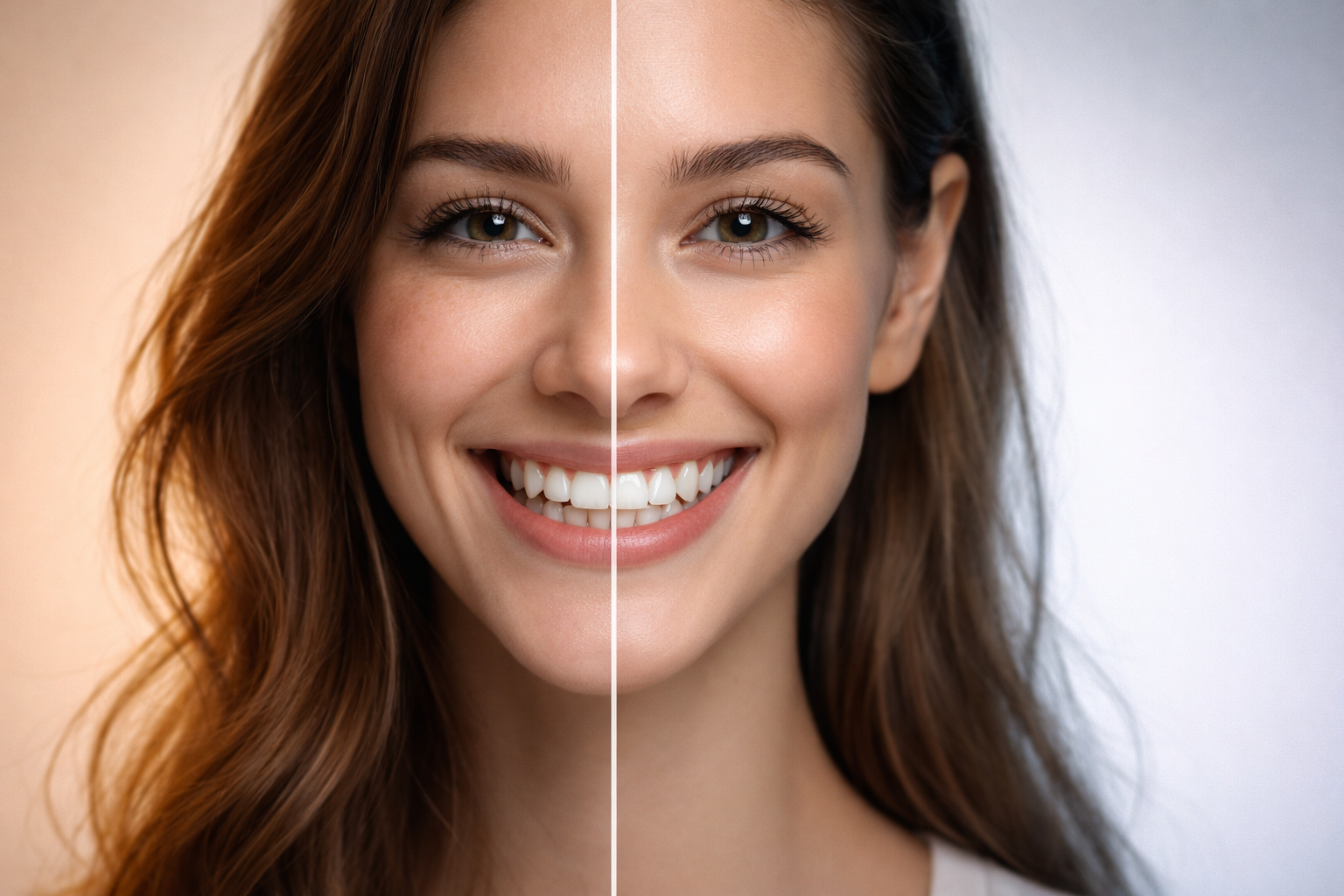
There was a time when teeth were simply part of the human body, instruments meant for biting, chewing and speaking. If they functioned well and did not cause pain, most people were content. A slightly crooked tooth or a small gap between the incisors was considered a personal quirk, something that added character to the face.
That era is quietly disappearing.
Walk through the corridors of a modern college in India and a new visual pattern becomes unmistakable. Smiles are no longer accidental, they are engineered. Metal brackets glint on the teeth of teenagers, ceramic braces hide discreetly behind carefully posed smiles, and an increasing number of young professionals wear transparent aligners that promise to straighten their teeth without anyone noticing.
Orthodontics, the branch of dentistry that deals with correcting the alignment of teeth and jaws, has moved far beyond the confines of a specialised medical correction. It has entered the realm of lifestyle, aspiration and commerce. For many urban families, fitting braces on a child has become almost as routine as enrolling them in coaching classes or buying them their first smartphone.
In other words, the world is entering the age of the managed smile.
Globally, orthodontics has transformed into a formidable healthcare industry. What was once a modest clinical speciality now operates within a market worth several billions of dollars. Analysts estimate that the global orthodontics sector, valued at around six to seven billion dollars today, may more than double in the coming decade as cosmetic dentistry expands across continents. The business stretches across a wide ecosystem, manufacturers of braces and aligners, dental technology companies, specialised clinics, imaging systems, digital treatment planning software and insurance networks.
The United States has long been the epicentre of this culture. For decades, braces have been a near universal rite of passage among American adolescents. Photographs of teenagers with metallic smiles have appeared so frequently in American popular culture that they scarcely attract attention anymore. In many parts of the country, children between the ages of nine and fourteen routinely undergo orthodontic treatment as a preventive or aesthetic measure. For American families, a straight smile is almost regarded as part of responsible parenting.
Europe followed with its own variations, often supported by structured public healthcare systems that include orthodontic treatments for children where medically necessary. But in the last decade, a new frontier has opened with astonishing speed, India.
The Indian orthodontics market, once small and largely limited to severe dental cases, is now expanding at a remarkable pace. Urban prosperity, private healthcare growth and the explosion of social media have together created a fertile environment for cosmetic dentistry. Invisible aligners, transparent plastic trays designed through digital modelling to gradually reposition teeth, have become particularly popular among young professionals who want correction without the visible presence of metal braces. Market forecasts suggest that India’s invisible orthodontics sector alone could cross the billion dollar threshold within this decade.
Dental clinics specialising in orthodontic procedures are appearing across metropolitan India with increasing frequency. In neighbourhoods of Mumbai, Delhi, Ahmedabad and Bengaluru, new orthodontic studios advertise smile design, digital smile correction and aligner therapy in the same tone that beauty salons once used to advertise hair styling.
The shift reflects deeper cultural forces.
The first of these is the camera. Social media has turned the human face into a permanently displayed public object. A generation raised on selfies, video calls and profile photographs sees its own smile hundreds of times a day on screens. Minor dental imperfections that would once have gone unnoticed in casual conversation are now magnified and archived in high resolution images.
The smile has become a brand asset.
Secondly, modern medicine itself is evolving. Increasingly, healthcare does not merely treat disease, it also offers enhancement. Dermatology smoothens skin that was never diseased. Cosmetic surgery reshapes features that were never dysfunctional. Orthodontics has entered the same grey zone, where the line between therapy and beautification grows indistinct.
A generation ago, braces were prescribed primarily for significant problems, severe crowding of teeth, abnormal jaw alignment, or difficulties in chewing and speech. Today, many orthodontic treatments address much milder irregularities, a small gap between two teeth, a slightly rotated incisor, or a minor asymmetry visible only in close up photographs.
The third driving force is technological glamour. Digital dentistry has transformed orthodontics in ways that were unimaginable a few decades ago. Three dimensional scanning systems capture detailed images of a patient’s mouth, software predicts the gradual movement of each tooth, and customised aligners are manufactured through advanced fabrication processes. Patients can often see a simulated version of their future smile even before treatment begins.
Technology has made orthodontics appear precise, scientific and almost futuristic.
And finally, there is marketing. Global dental corporations have recognised the enormous commercial potential of the smile. Clear aligners, in particular, are promoted aggressively through advertising campaigns, celebrity endorsements and social media influencers. Orthodontic treatment is no longer presented merely as a medical intervention, it is packaged as a lifestyle upgrade.
In fairness, orthodontics does provide genuine health benefits in many cases. Misaligned teeth can cause significant problems, difficulty in chewing, strain on the jaw joints, speech complications, increased risk of gum disease and uneven wear of enamel over time. Correcting these issues can improve both comfort and long term dental health. For many children and adolescents with pronounced alignment issues, orthodontic treatment is not a luxury but a sensible preventive measure.
Yet the expansion of the industry has inevitably created a grey zone where medical necessity blends into aesthetic perfectionism. A subtle but powerful cultural shift has occurred, the natural variation of human teeth is increasingly interpreted as a defect requiring correction.
What once would have been considered a charming irregularity now becomes a case.
This transformation has given rise to an elaborate economic ecosystem. Manufacturers produce a wide range of orthodontic appliances. Dental clinics specialise in alignment treatments. Technology firms develop imaging and simulation tools. Large dental chains standardise orthodontic services across cities. Insurance products and financing schemes make treatments more accessible, and therefore more widespread.
In effect, the human smile has become industrialised.
Critics within the dental profession occasionally express concern about this trend. In some countries, controversial mail order aligner services have attempted to bypass traditional dental supervision, offering remote orthodontic treatments through mailed kits and online monitoring. Professional dental bodies have warned that such practices may carry significant risks if patients are not properly examined.
These developments raise a broader philosophical question that extends beyond dentistry.
What exactly constitutes a perfect smile?
For most of human history, teeth were judged primarily by their ability to perform their essential function, eating without pain, speaking clearly and maintaining basic oral health. Slight irregularities were common and widely accepted. Faces were expected to carry traces of individuality.
The modern aesthetic ideal, however, emphasises symmetry, uniformity and geometric precision. Teeth must line up in flawless arcs, equally spaced and perfectly aligned. The smile is expected to resemble a carefully designed architectural structure rather than a naturally evolved arrangement.
Orthodontic science now possesses the tools to produce such precision. But whether every smile truly requires it remains a question open to debate.
India, like many other societies undergoing rapid modernisation, stands at an interesting moment in this story. Rising incomes, digital lifestyles and expanding private healthcare systems will almost certainly ensure that orthodontic treatments become more common in the years ahead.
The braces generation has arrived.
What remains uncertain is whether the future smile will be healthier, or simply more engineered.
