 Deshwale
Engineering After Class 10: NMIMS Offers a New Pathway from Diploma to B Tech
In brief · AI summary NMIMS's Mukesh Patel School of Technology Management and Engineering has opened admissions for its three-year Diploma in Engineering programme for 2027–28, which offers four specialisations and lets eligible students progress to a B Tech at NMIMS without a separate common entrance test. Students who complete the first two years can exit with a Diploma of Vocation, though progression to the degree is subject to academic requirements and is not automatic. The programme emphasises practical, industry-oriented learning, and the institution says its first batch of 57 students all opted for the B Tech pathway.
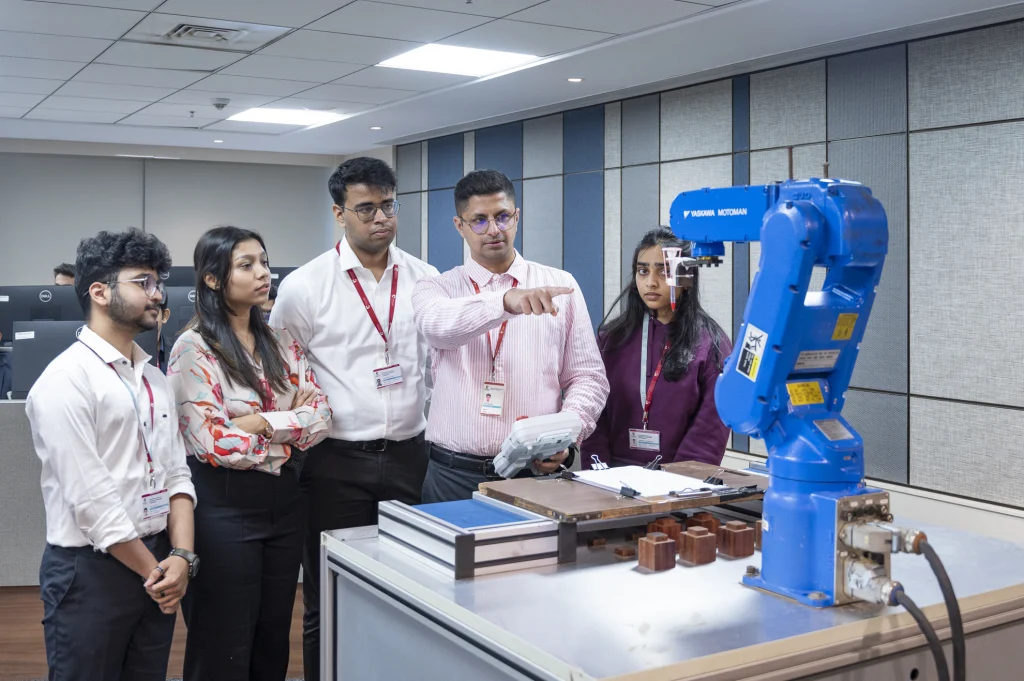
The three-year Diploma in Engineering programme offers four specialisations and a progression route to B Tech without a separate common entrance test, subject to eligibility requirements.
Students interested in engineering traditionally follow the route of completing Class 12 before pursuing a degree. However, alternative educational pathways are creating opportunities for students who wish to begin technical learning earlier. Recognising this interest, the Mukesh Patel School of Technology Management and Engineering (MPSTME), part of NMIMS, has opened admissions for its three-year Diploma in Engineering programme for the 2027–28 academic year.
The programme offers students an opportunity to enter the field of engineering immediately after completing Class 10. More importantly, it provides a structured pathway towards a B Tech degree at NMIMS, allowing eligible students to continue their education without appearing for a separate common entrance test, subject to the prescribed academic and progression requirements.
Registrations for the programme opened on November 21, 2026. The initiative is aimed at students who want to develop technical knowledge and practical skills at an earlier stage rather than waiting until they complete their higher secondary education.
Four specialisations to choose from
The diploma programme offers four engineering specialisations: Computer Engineering, Computer Science and Engineering, Information Technology and Mechanical Engineering.
These disciplines cover areas that are increasingly important in today’s technology-driven economy. Computer-related programmes introduce students to computing, software and digital technologies, while Mechanical Engineering provides a foundation in engineering design, machines and manufacturing-related concepts.
By offering different specialisations, the programme allows students to begin developing subject-specific knowledge according to their interests and career aspirations.
A pathway from diploma to degree
One of the programme’s key features is its diploma-to-B Tech progression structure.
Students completing the first two years can exit with a Diploma of Vocation. Those who meet the prescribed eligibility and progression requirements can continue towards a B Tech degree at NMIMS MPSTME without appearing for a separate entrance test.
This provides students with an opportunity to pursue technical education through a structured academic route. It also gives them flexibility at an important stage of their education, allowing them to assess their interests and future plans as they progress through the programme.
However, progression to the degree programme is subject to the institution’s applicable academic requirements and should not be considered automatic.
Learning beyond textbooks
The programme places emphasis on practical and industry-oriented learning. Laboratory sessions, technical assignments, projects and department-specific Massive Open Online Courses (MOOCs) form part of its learning approach.
Such exposure is important in engineering education because understanding technical concepts often requires more than classroom instruction. Students need opportunities to experiment, solve problems, work on projects and apply what they learn.
Early exposure to practical engineering activities can also help students understand the demands of their chosen specialisation and develop confidence in handling technical challenges.
Students already making their mark
The achievements of existing diploma students offer an indication of the programme’s practical orientation.
According to NMIMS, diploma students qualified for the Grand Finale of the Smart India Hackathon 2025, securing sixth position nationally. They also won the Adapt 2024 competition organised by the IETE Students’ Forum.
Another noteworthy development is the progression record of the programme’s first batch. All 57 students from that batch opted for the B Tech progression pathway, reflecting their interest in continuing towards a full engineering degree.
The programme is approved by the All India Council for Technical Education (AICTE), an important regulatory recognition for technical education programmes in India.
An alternative beginning to an engineering career
Choosing an educational pathway after Class 10 is an important decision for students and their families. While the conventional Class 12 route remains popular, diploma-based programmes offer another option for those who are keen to explore technical education earlier.
NMIMS MPSTME’s three-year Diploma in Engineering programme seeks to combine foundational technical learning, practical exposure and a route towards higher education within one academic structure.
For students considering this option, it is important to understand the specialisation choices, diploma exit provisions, academic progression criteria and applicable admission requirements before enrolling.
The larger idea is to make engineering education accessible through different learning pathways. By allowing students to begin developing technical skills after Class 10, the programme offers an alternative route for young learners who already have an interest in understanding how technology, machines and engineering systems shape the world around them.
Subscribe Deshwale on YouTube