 Deshwale
India Launches National Drive to Eliminate Measles and Rubella by 2026
In brief · AI summary India has launched the National Zero Measles-Rubella Elimination Campaign for 2025–26, aiming for total elimination of these diseases by 2026. Health Minister J P Nadda said the campaign offers a chance to reach 100 percent immunisation for children with two doses of the measles-rubella vaccine, and he urged states to keep surveillance teams active and focus on remote and hard-to-reach communities. The government has also shared awareness materials in multiple languages to support local vaccination drives.
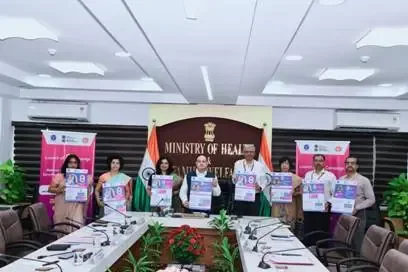
India has stepped up its fight against measles and rubella with the launch of the National Zero Measles-Rubella Elimination Campaign for 2025–26. Health Minister J P Nadda announced the campaign virtually on the opening day of World Immunisation Week, aiming to push the country towards total elimination of these two highly contagious childhood diseases by 2026.
Speaking at the launch, the minister said the campaign presents a strong opportunity to achieve 100 percent immunisation for children by giving them two doses of the measles-rubella vaccine. He reminded everyone that measles and rubella do not just affect children, but also cause immense distress for families. His message was clear – no child should be left behind.
At present, India’s measles-rubella vaccine coverage stands at 93.7 percent for the first dose and 92.2 percent for the second dose, based on 2024–25 health data.
The new campaign builds on strong progress. From January to March 2025, 332 districts reported zero measles cases, and 487 districts saw no rubella cases at all. Nadda credited this to the ongoing efforts across states and said the focus now must shift to tightening surveillance, staying alert to outbreaks, and involving local communities more directly.
He asked all states and Union Territories to keep their health surveillance teams fully active and to follow the “ACT NOW” approach, just like the successful elimination of polio and maternal and neonatal tetanus in the past.
To spread awareness, new information materials including posters, radio messages, and a launch film were shared with states in multiple languages. These are meant to help with local-level campaigns during the vaccination drive.
The Health Minister also urged district officers and health departments to organise public meetings and engage local leaders, from MPs and MLAs to village panchayats, to increase awareness and participation. He also called on frontline health workers to focus on remote and hard-to-reach communities such as slums, migratory populations, and outbreak-prone zones.
Why This Matters
Measles and rubella are viral infections that can lead to serious complications, lifelong disabilities, and in some cases, death. To prevent this, India provides two doses of the measles-rubella vaccine free of cost under its Universal Immunisation Programme. These are given to children between 9–12 months and again at 16–24 months of age.
The country has already seen a 73 percent drop in measles cases and a 17 percent reduction in rubella compared to last year. The goal now is to push these numbers to zero nationwide by 2026.
India’s plan includes strong vaccination coverage in every district, timely response to outbreaks, continuous disease monitoring, and large-scale awareness efforts to counter vaccine hesitancy.
In March 2024, India received the prestigious Measles and Rubella Champion Award at the American Red Cross Headquarters in Washington D.C., recognising its strong commitment to eradicating these diseases.
Under the wider immunisation programme, India runs the world’s largest vaccination initiative, reaching nearly 2.9 crore pregnant women and 2.6 crore newborns every year. This includes protection from 12 vaccine-preventable diseases such as polio, diphtheria, tetanus, rotavirus, and hepatitis B.
The government is also using the U-WIN digital platform to track vaccinations, issue certificates, and help families book appointments. This tech-led approach supports accurate record-keeping and easier access for citizens.
India’s immunisation efforts have already helped reduce child mortality rates. From 2014 to 2020, the number of children dying before the age of five dropped from 45 to 32 per 1,000 live births.
With the new campaign now in motion, the focus is clear – every child, in every part of the country, must be protected from measles and rubella.