








From raw food in the refrigerator to forgotten leftovers, these simple storage habits can make your kitchen more organised.
A refrigerator can hide a surprising number of problems.
A container pushed to the back may be forgotten. Raw food may be stored above cooked food. A leaking packet may contaminate the shelf below.
Good food storage is therefore not just about saving space.
It is about knowing what goes where.
Here are 10 practical habits worth adopting.
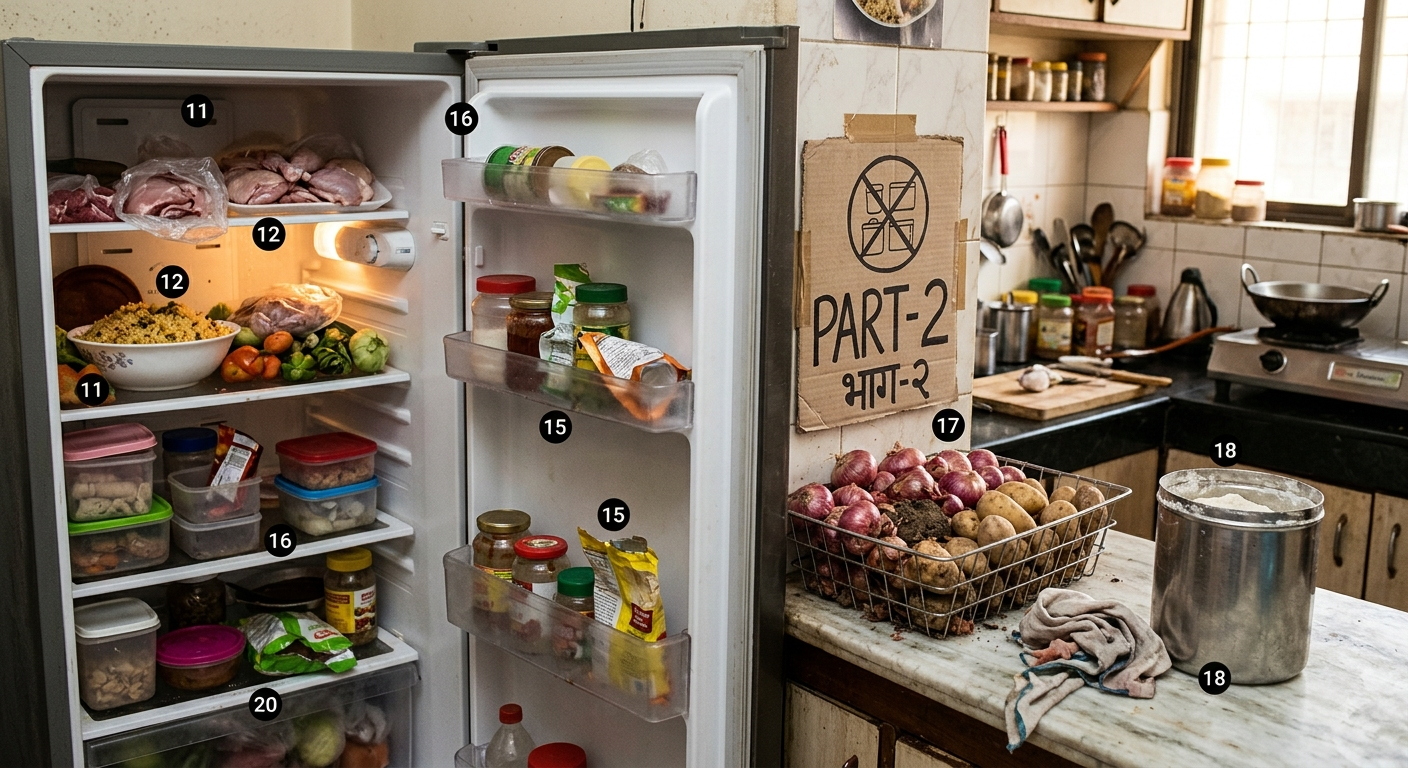
11. Store Raw Meat Below Ready-To-Eat Food
If you keep raw meat, poultry or seafood in the refrigerator, place it in a sealed container on a lower shelf.
This helps prevent raw juices from dripping onto cooked food or fresh produce.
It is a simple way to reduce cross-contamination.
12. Don’t Wash Raw Chicken
Washing raw chicken does not make it safer.
Cooking it properly does.
Water can splash microorganisms from raw poultry onto the sink, worktop, utensils and nearby food.
Handle raw chicken carefully and clean contaminated surfaces afterwards.
13. Never Trust Smell Alone
Food can sometimes look and smell perfectly normal while still being unsafe to eat.
Do not use smell as your only safety check.
If food has been stored incorrectly or left at an unsafe temperature for too long, it is better not to take the risk.
14. Label Leftovers
If your refrigerator regularly contains leftovers, label the containers with the date.
You do not need a complicated system.
A small piece of masking tape and a pen can do the job.
This makes it easier to identify older food before it gets forgotten.
15. Keep Containers Covered
Do not leave cooked food uncovered in the refrigerator.
Use a suitable container or cover.
This helps prevent spills, odour transfer and unnecessary exposure to other foods.
16. Don’t Keep Vegetables Wherever There Is Space
Different fruits and vegetables have different storage requirements.
Some do better in the refrigerator. Others are better kept in a cool, dry and ventilated place.
Instead of putting everything in the fridge automatically, check the appropriate storage method for each food.
17. Keep Onions And Potatoes Apart
Onions and potatoes are often stored together in Indian kitchens.
However, keeping them separately in dry, well-ventilated storage can help reduce premature spoilage.
Check both regularly and remove any produce showing signs of deterioration.
18. Keep Your Atta Container Dry
Before adding fresh flour, make sure the container is clean and completely dry.
Periodically empty the container and inspect it for insects or old flour.
Do not continuously add new atta on top of the old supply without cleaning the container.
19. Check Your Vegetable Basket
Onions, potatoes and other stored vegetables can leave behind soil, peels and spoiled pieces.
Empty the basket regularly.
Remove damaged produce and clean the container before returning fresh vegetables.
One forgotten rotten vegetable can quickly create an unpleasant smell.
20. Use A “First In, First Out” Habit
When buying groceries, put older items where you can see them first.
Place newer packets behind them.
This simple system encourages you to use older products before opening new ones.
It can reduce both clutter and food waste.
Good Storage Saves More Than Space
A well-organised kitchen is not about making every shelf look perfect.
It is about knowing what you have, where it belongs and when it should be used.
Once these habits become routine, the refrigerator and cupboards become much easier to manage.
Subscribe Deshwale on YouTube


