 Deshwale
Sealed Does Not Mean Safe: The Truth Behind Your Bottled Water
In brief · AI summary FSSAI has sanctioned prosecution against Bisleri International over a bromate result from a September 2025 Goa sample, which Bisleri disputes, and the sanction is not a finding of guilt or a conviction. Bisleri says the referral lab found bromate within the limit, that it appealed, and that it has not received a formal notice of the sanction. The company says the matter concerns one batch, GO 270, none of which is on the market, while FSSAI reportedly clarified that only this batch was non-compliant and asked for a root cause analysis.
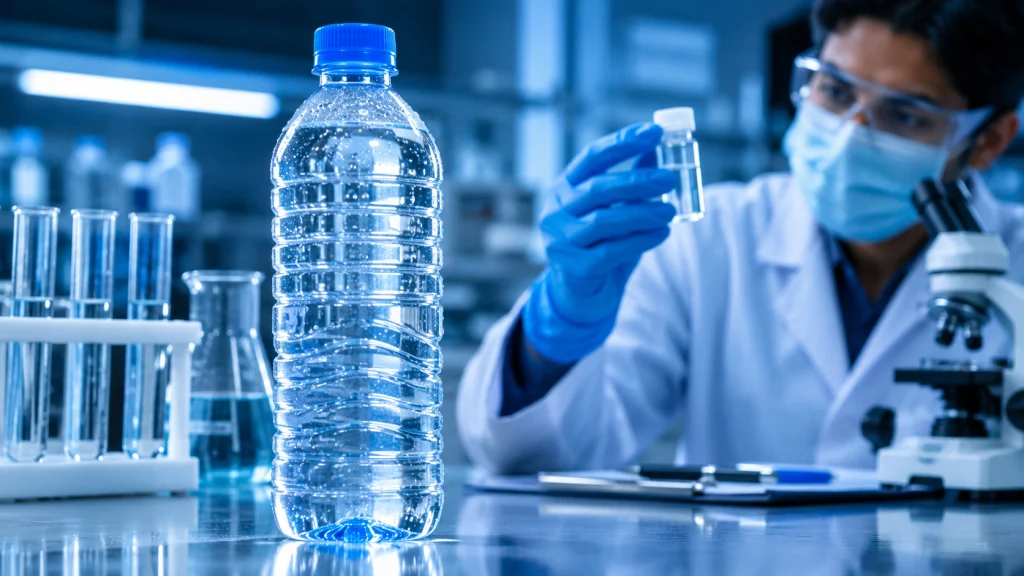
You know that little crack you hear when you twist open a fresh bottle of water? On a hot railway platform, in an airport queue or at a highway eatery, it is oddly comforting. Nobody has touched this. It is clean. We hear that click, and we stop thinking about it.
Over the weekend, that tiny moment of trust landed in the middle of a very public argument. On Sunday, November 22, India’s food safety regulator, FSSAI, announced that it had sanctioned prosecution against Bisleri International, one of the country’s best-known bottled water brands.
Let us be clear about what that means, and what it does not. A sanction for prosecution only allows legal proceedings to begin. It is not a finding of guilt, and it is not a conviction. Bisleri says its water is safe, and says it will defend its position.
So how did we get here? The story, as Bisleri tells it, begins in Goa in September 2025. FSSAI collected six water samples from the company’s plant there on September 30. Five passed. The sixth did not. It showed bromate, a chemical that is limited in drinking water, at 12 micrograms per litre when the limit is 10. On paper, that is a small gap. But in food safety, a limit is a limit, and the sample was declared unsafe.
Bisleri appealed, so the sample went to a Referral Food Laboratory for a second opinion. FSSAI says that lab also declared it unsafe, but for a different reason: it detected PAHs, short for polynuclear aromatic hydrocarbons.
This is where the two versions split. Bisleri says the referral lab actually found bromate within the limit, and flagged PAHs separately. It says it then had the same sample checked at an FSSAI-approved lab, which also found bromate within limits, and sent those results to FSSAI’s Western Regional Office on February 2, 2026. After that, the company says, there was silence. It believed the matter was closed, and says it still has not received a formal notice of the sanction.
The company stresses that this concerns one batch, numbered GO 270, made in Goa on September 27, 2025, at one of its 143 plants, and that none of it is on the market. The next day, according to news reports, FSSAI clarified that the referral lab’s report is final in an appeal, that only this batch was non-compliant, and that Bisleri has been asked for a root cause analysis. Bisleri adds that the regulator also confirmed bromate was below the limit on retesting. If that is right, the fight has moved from bromate to PAHs, which the company puts at 0.144 micrograms per litre in one sample. Since several of these details come from Bisleri itself, the regulator’s full report will matter.
What are these chemicals, anyway? Bromate is a by-product. It forms mostly during water treatment, when ozone meets a naturally occurring substance called bromide in the source water. Potassium bromate is classed as a possible human carcinogen, based on tumours seen in rats and mice. PAHs come from smoke and burning, from vehicle exhaust to wood fires, and some are linked to cancer after long exposure. The key word there is long. With some substances, the risk comes from prolonged exposure, so one sample cannot tell us how much risk, if any, a consumer faced.
And this goes well beyond one brand. In 2023, bottled water was the main source of drinking water for 15 per cent of urban households and 6 per cent of rural ones, according to Data For India. Yet figures placed before Parliament in February 2025 showed that 333 of 1,300 enforcement samples of packaged water failed the standards in 2023-24, and 650 of 1,776 the year before. That is about one in four, and then over a third. These are enforcement samples, so they cannot tell us how many bottles on a shelf are unsafe. But they make one thing plain: failures are not rare.
The case leaves some questions hanging. If Bisleri’s February letter really went unanswered, what happened in the months before Sunday? And what exactly did the PAH test find? Packaged water in India comes in two kinds, treated “packaged drinking water” and “natural mineral water” from protected underground sources, and both must meet chemical and microbiological standards. But standards only work when the testing behind them is clear.
So the next time you hear that crack, remember what it really tells you. A seal says nobody has opened the bottle since it was filled. It cannot tell you what went in. Water cannot be judged by its look, taste or smell, so check the seal, read the label, note the batch and date, and report anything suspicious to the food safety authorities. The courts will decide this case. But one lesson already stands: the real trust is not in the cap. It is in the testing behind it.
Subscribe Deshwale on YouTube