



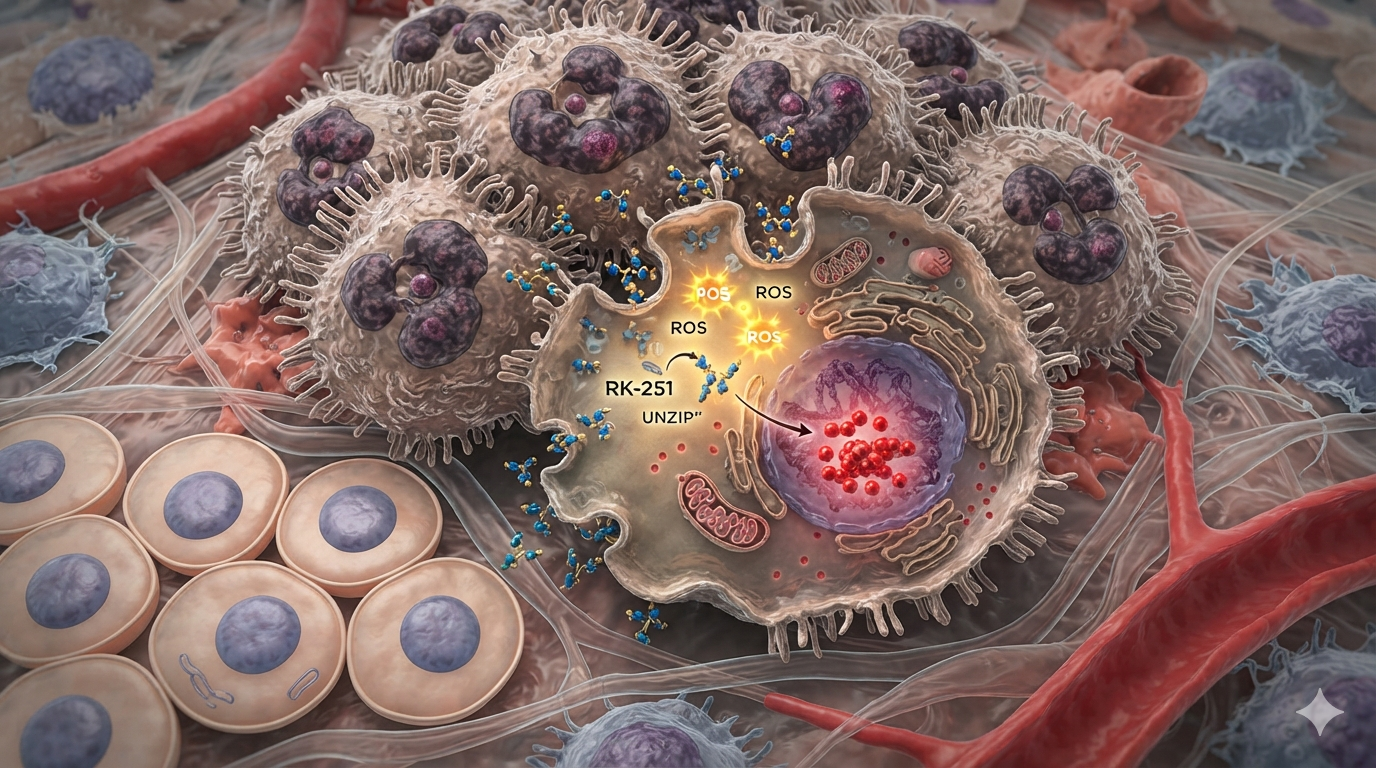
Scientists have developed a new “smart” cancer drug designed to activate primarily inside cancer cells, offering a potential approach that could reduce the damage caused to healthy cells during cancer treatment. The drug, named RK-251, remains inactive while travelling through the body and is designed to become active when it encounters conditions found inside cancer cells.
Traditional cancer treatment can affect healthy cells along with cancer cells. This can lead to significant adverse effects and side effects. The development of treatments that can target cancer cells more precisely has therefore become an important area of research.
The new research has brought scientists closer to this goal. The study was led jointly by Dr. Asis Bala from the Institute of Advanced Study in Science and Technology (IASST), an autonomous institute under the Department of Science & Technology, Government of India, and Dr. K.P. Bhabak from the Indian Institute of Technology-Guwahati.
Their work has resulted in the development of RK-251, a drug candidate designed to activate primarily within cancer cells while having much less effect on healthy cells.
The approach is based on a difference between cancer cells and normal cells. Cancer cells often produce high levels of reactive oxygen species (ROS). These are harmful molecules that are present at higher levels in many cancer cells.
RK-251 is designed to use this difference as a trigger. When the drug enters a cancer cell, the high levels of ROS activate it. This activation releases a powerful anticancer compound called “NBDHEX”.
The released compound then works against target proteins that many cancer cells use to survive and resist treatment. By activating the drug primarily in cancer cells, the approach aims to deliver the anticancer effect where it is needed while limiting its impact on healthy cells.
This targeted mechanism is particularly important because reducing damage to normal cells is one of the key challenges in cancer treatment. Instead of remaining active throughout the body, RK-251 is designed to respond to the specific chemical environment found inside cancer cells.
In preclinical studies, the drug candidate showed strong activity against aggressive triple-negative breast cancer cells. At the same time, it showed much less effect on healthy cells.
Triple-negative breast cancer is therefore one of the cancer types against which RK-251 has demonstrated promising activity at the preclinical stage. These findings provide an important basis for further research into the drug candidate and its potential use as a targeted cancer treatment.
Researchers also studied the behaviour of RK-251 in zebrafish embryos (Danio rerio). The study showed no obvious signs of toxicity in the embryos. The drug also displayed the desired fluorescence when reactive oxygen species were present.
The fluorescence response provided evidence of the intended interaction with reactive oxygen species. Together with the absence of obvious toxicity in the zebrafish embryo study, these findings support further research and validation of the drug candidate.
However, the research remains at the preclinical stage. More studies are needed before RK-251 can be considered for testing in patients. The current findings show the potential of the approach, but they do not establish that the drug is ready for use in humans.
The development of RK-251 highlights the growing focus on designing cancer treatments that can distinguish between cancer cells and healthy cells. By using the higher levels of reactive oxygen species found in cancer cells as an activation trigger, the researchers have developed a drug candidate with a targeted mechanism of action.
The research was carried out through collaboration between IASST and IIT-Guwahati. It represents an effort to develop a more selective approach to cancer treatment, with the aim of limiting the effects on healthy cells.
The work has been published in the ACS Journal of Medicinal Chemistry. The findings now provide a basis for further studies to assess the drug’s safety, activity and potential before any future evaluation in patients.
RK-251 is not yet a patient treatment, but its preclinical results offer an encouraging direction for the development of targeted cancer therapies. Its ability to activate in response to reactive oxygen species and show strong activity against aggressive triple-negative breast cancer cells makes it a candidate for further scientific investigation.
Subscribe Deshwale on YouTube
