








The long travel hours and constant worry about finding vegetarian food dissolved the moment I arrived. In their place came an endless stream of unforgettable experiences.
Last February, I found myself in Denmark’s Faroe Islands. Tucked away in the North Atlantic between Iceland and Scotland, this archipelago had been on my bucket list for years. The dramatic sea cliffs plunging straight into the ocean, rolling green hills, tiny hamlets, and houses crowned with grass roofs every picture I had seen practically begged me to visit.
When I finally landed, my emotions were crashing like the ocean waves. The lack of crowds was a massive plus, even if the weather was famously erratic. You could get brilliant sunshine one minute and a sudden downpour the next, but honestly, that wild moodiness is part of the islands’ charm. Temperatures hovered between 4°C and 8°C. Snow blankets the region for about four months starting in December, with Nature gradually melting it away come March.
My journey kicked off in Tórshavn, the capital. Right off the bat, I picked up a pre-booked self-drive rental car, an absolute essential if you want to explore these islands properly. You can drive on an Indian license here, though carrying an International Driving Permit (IDP) is smart since our licenses are in English while the local official language is Faroese. Public buses exist, but their schedules are sparse.
The roads, however, are top-notch. Undersea tunnels link the islands seamlessly, making island-hopping a breeze. Sheep outnumber people here by a mile; it’s completely normal for one to wander right into the middle of the road. Between dodging wandering sheep and navigating dense fog, driving demands your full attention. I had packed waterproof gear, sturdy hiking boots, and heavy thermals for the higher altitudes, a bit of advanced research that paid off big time.
Chasing cliffs and coastal villages
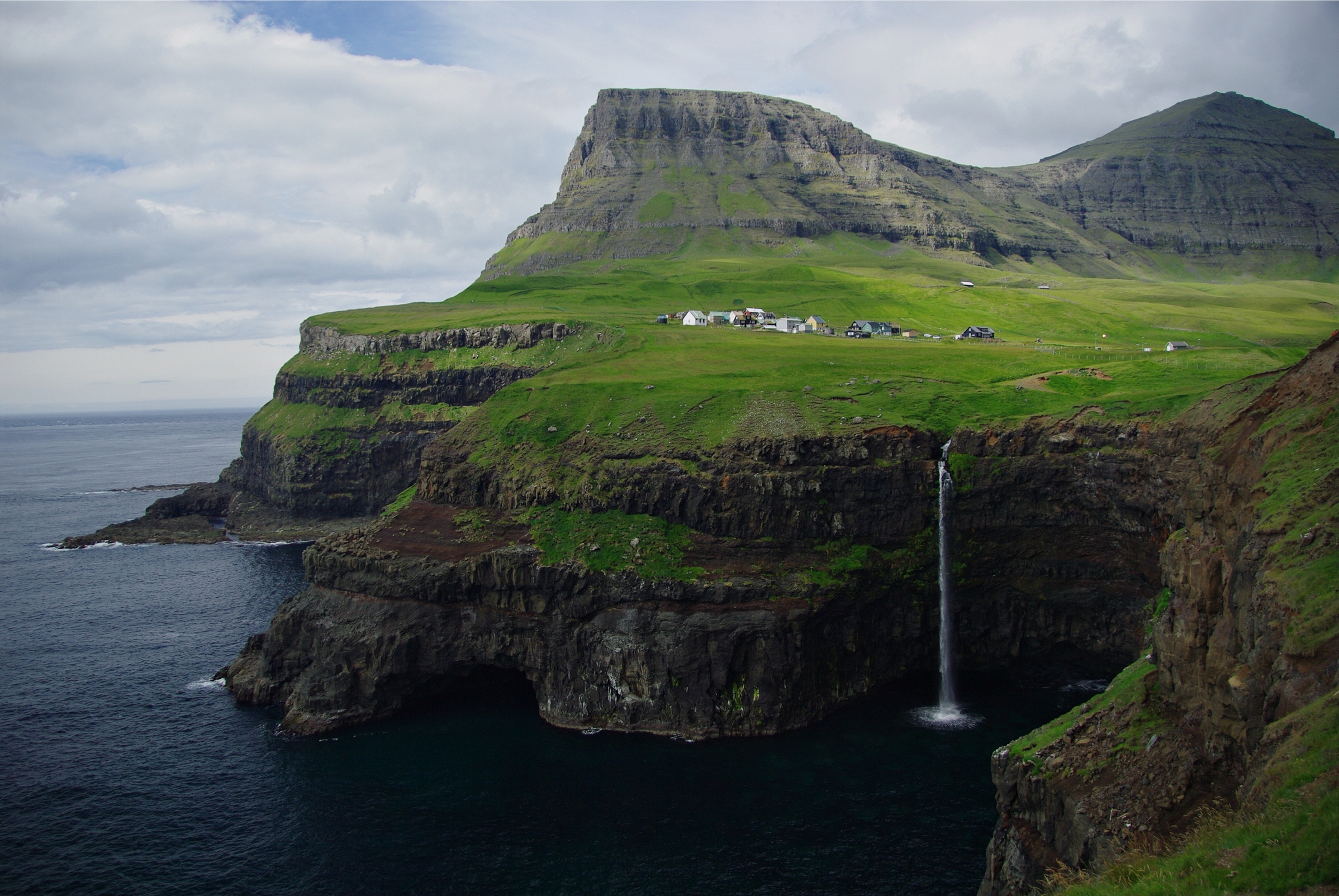
Múlafossur Waterfall was a pure showstopper. Located on Vágar Island in the tiny village of Gásadalur population: barely eighteen the waterfall drops dramatically off sheer rock faces directly into the Atlantic Ocean. Since it was February, a fresh layer of snow dusted the hills. Taking in the white landscape, mist, roaring ocean, jagged cliffs, and a sudden rainbow all at once was magical. The walk from the village to the viewpoint is easy, and while Gásadalur has only a handful of homes, every single one looks straight out of a postcard.
Lake Sørvágsvatn was another stunner, especially paired with the hike to the Trælanípa cliff. Standing there, watching a massive freshwater lake perch high above the crashing ocean waves below with only a narrow rock wall separating the two was mind-bending. I hired a local guide for the cliff trek, which was mandatory but ended up adding so much depth to the trip. My guide shared brutal legends of the Vikings, including how they used to push condemned slaves off those very cliffs into the sea.
The village of Saksun on Streymoy Island claimed the spot as my absolute favorite. Reaching it meant driving past black-sand beaches and a serene lagoon. With its grass-roofed cottages, an ancient church, and a heritage farm museum, it offered a fascinating glimpse into traditional island life. Just keep an eye on the tides the access roads flood during high tide, so checking tide charts beforehand is crucial.
Two other coastal gems that stole my heart were Tjørnuvík and Gjógv in northern Streymoy. Their natural harbors, colorful boats bobbing in the water, quiet lanes, and cozy cafés are etched into my memory.
Heading to Kallur Lighthouse on Kalsoy Island was another highlight. After taking a short ferry ride over, I hiked up to the iconic lighthouse. The climb takes a bit of effort, but the sweeping 360-degree panorama of raw sea cliffs and open ocean at the top is something I will never forget.
Capital vibe & vegetarian eats
Back in Tórshavn, exploring Tinganes and the Old Town was a highlight. Tinganes is home to one of the world’s oldest parliamentary sites, famous for its iconic red wooden buildings and turf roofs. Strolling through Tórshavn in the evening is the best way to soak in its relaxed, cozy vibe.
Food was one of my biggest concerns heading into the trip being vegetarian on a remote Scandinavian island group sounded like a recipe for starvation! To my surprise, Tórshavn had plenty of solid plant-based options. I grabbed great burgers at Café Umami, fresh greens at Sistrar, and loaded sandwiches and salads at Bitin. Options get sparse once you head out into the rural villages, but knowing this in advance, I stocked up on bread, milk, and snacks from local supermarkets. In a pinch, fresh bread and herbal tea were readily available almost anywhere.
The verdict
My route involved flying out of Mumbai to Copenhagen via Dubai (around 12 hours), followed by an Atlantic Airways connection to the Faroes, bringing total travel time to roughly 24 hours. The round-trip flights set me back about ₹1,00,000 (~$1,200 USD). But considering the sheer magic of the experience? Worth every single penny.
Subscribe Deshwale on YouTube


