











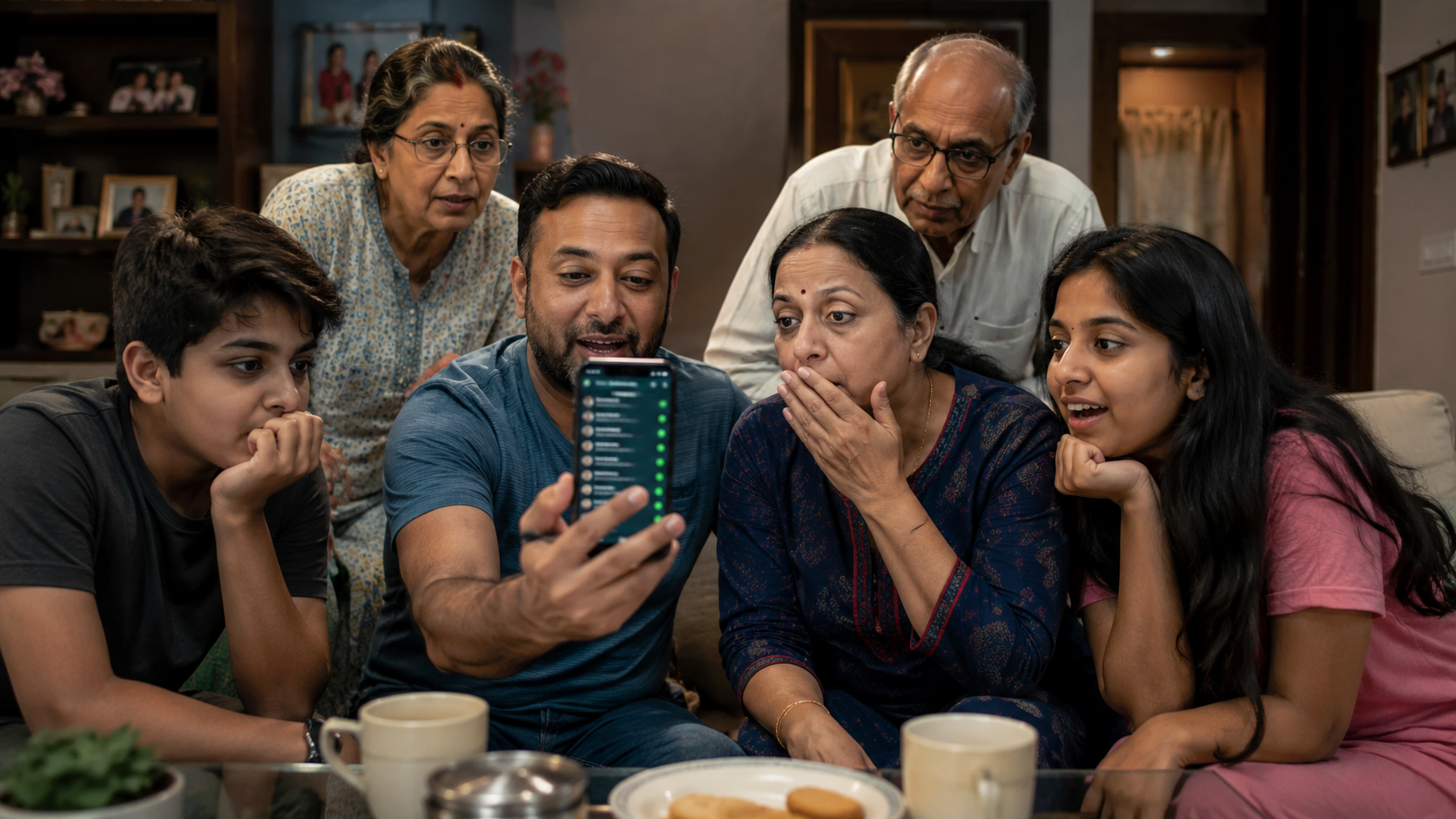
Every Indian household eventually reaches a strange milestone.
It is not a wedding, not a promotion, not even a new car in the parking lot. It is the day someone in the family creates a WhatsApp group with a name like “Sharma Family ” or “Building No. 4 Residents.”
From that day onward, nothing in the neighbourhood happens quietly again.
Television news channels like to believe they invented the red banner and the urgent tone. They did not. Every Indian family group had already perfected this format years before any anchor thought of it.
The only difference is that our uncles and aunties do not need a studio, a graphics team, or even correct spelling to declare an emergency.
Consider a normal Tuesday evening. The building’s water tanker is running fifteen minutes late. Within seconds, the group lights up.
“URGENT: Water tanker not yet coming. Please fill buckets.”
Somewhere, a mother reads this message with the same seriousness she once reserved for exam results. The tanker eventually arrives, as it always does. But by then the group had already generated forty replies, three voice notes, and one unrelated forward about a health tip involving turmeric.
This is the real breaking news network of India. It does not report wars or elections. It reports missing slippers on the third floor, a car parked in the wrong spot, and the eternal mystery of who did not pay their maintenance bill this month.
And unlike television, where the anchor eventually moves to the next story, the family group treats every issue as a rolling investigation that can last for days.
The Anchors We Never Asked For
Every group has its own version of a news anchor. Usually a relative who has taken it upon himself to be the primary source of updates, regardless of accuracy.
He forwards messages with total conviction, often beginning with “As per reliable sources” or “Confirmed news.” This happens even when the source is a random forward that has already been debunked four times that year.
Fact-checking rarely happens. Once uncle has spoken, the matter is considered closed.
Then there is the aunty correspondent, who specialises in soft news. Her beat includes the neighbour’s new curtains, someone’s daughter getting engaged, and detailed weather updates delivered with the urgency of a cyclone warning.
Her reports usually end with a folded-hands emoji and a reminder to drink more water.
Every group also has a silent majority, the read-but-never-reply members, who absorb hundreds of notifications a day without ever contributing a single word. They are the loyal audience, watching the channel but never calling in.
When the Group Becomes the Only News That Matters
What makes these groups genuinely powerful is that they often outperform actual news channels in speed and detail, at least on things that matter locally.
A power cut. A stray dog issue. An unexpected guest. A society meeting that ran forty minutes over time.
None of this reaches a television studio. But all of it reaches the family group within minutes, along with photographic evidence and at least one heated debate about who is to blame.
There is something oddly comforting about this chaos. Unlike the flattened, scroll-past nature of social media feeds, where a war and a wedding photo receive the same passing glance, a family group forces a kind of forced intimacy.
You cannot simply swipe past your mother’s voice note asking why you have not replied in three hours. You cannot ignore the fortieth message about Sunday’s lunch plans. The group demands a response, whether you want to give one or not.
Of course, not everything shared here is true. Misinformation travels through these groups with alarming speed, often disguised as concern or urgent advice.
A health tip with no scientific backing can spread faster than any actual breaking news story, simply because it came from someone we trust rather than someone we verify.
Perhaps that is the real story hidden in all this noise. We built our own competing news network out of love, worry, and mild nosiness. One that runs without producers, editorials, or fact-checkers.
It reports the water tanker delay with the same seriousness some newsrooms reserve for national emergencies. And somehow, that feels more honest.
The next time your phone buzzes fifteen times in ten minutes, know this. Somewhere in your family group, breaking news is happening.
It may only be about a missing umbrella or a debate over what to cook for dinner. But for that group, at that moment, it is the only story that matters.
Subscribe Deshwale on YouTube


