




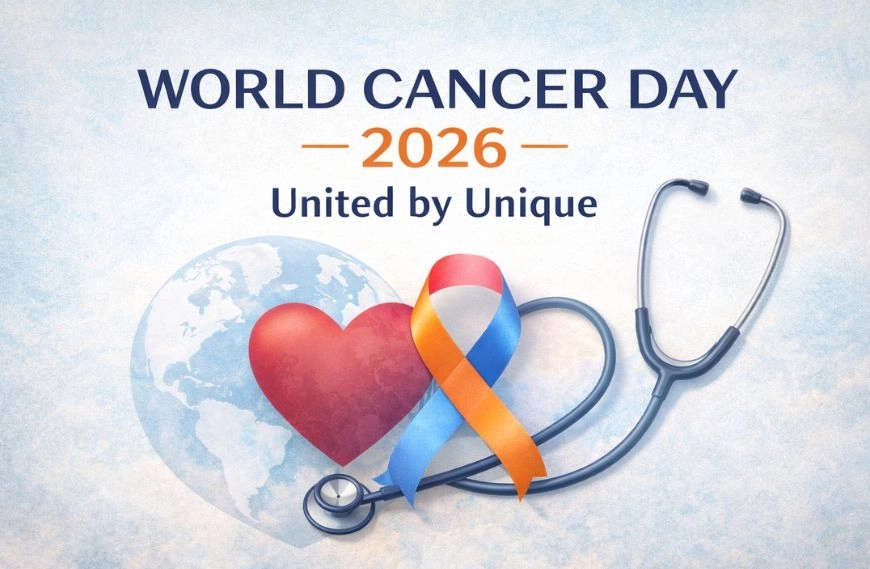
World Cancer Day 2026 is being marked across countries with a renewed call for awareness, compassion and collective action, as health organisations, governments and communities join hands to confront one of the world’s most pressing health challenges. Observed every year on 4 February, the global campaign continues to remind people that cancer is not only a medical issue but also a social and emotional one that affects millions of families.
This year’s observance builds on the “United by Unique” campaign, which highlights the personal stories behind cancer statistics. Health advocates say the theme reflects a growing understanding that every patient’s journey is different and that care must go beyond treatment alone. Emotional support, dignity and access to reliable healthcare services are now seen as equally important elements of recovery.
World Cancer Day was first established in 2000 following the signing of the Paris Charter Against Cancer. Since then, it has grown into one of the largest international health awareness movements, led by the Union for International Cancer Control with support from the World Health Organization and partner institutions. Over the years, the campaign has helped push cancer prevention and early diagnosis into mainstream public discussion.
Doctors and public health experts continue to emphasise that awareness remains the strongest defence against cancer. Early screening, timely medical consultation and healthier lifestyle choices can significantly reduce risks and improve survival rates. In 2026, awareness drives are focusing strongly on preventive measures such as tobacco control, balanced nutrition, regular physical activity and routine health check-ups.
Across social media platforms and community programmes, messages of hope and resilience are playing a central role in the campaign. Survivors, caregivers and volunteers are sharing their experiences to encourage others not to delay seeking medical help. These personal stories, campaign organisers say, help reduce fear and stigma while strengthening public engagement.
Digital outreach has become a powerful tool in expanding the reach of World Cancer Day. Online events, awareness videos and interactive campaigns are allowing people from different regions to participate in conversations about cancer care and prevention. Smaller organisations and community groups are also using digital platforms to highlight local challenges and success stories.
At the policy level, health experts are urging governments to treat World Cancer Day as more than a symbolic event. Calls for increased investment in cancer research, improved hospital infrastructure and affordable treatment access are growing louder. Advocacy groups argue that long-term planning and funding are essential to address inequalities in healthcare delivery, especially in developing regions.
Despite medical advances, global cancer cases continue to rise, making sustained awareness efforts more important than ever. Specialists warn that delayed diagnosis remains a major concern, particularly in rural and underserved areas. Strengthening primary healthcare systems and expanding screening programmes are seen as key priorities moving forward.
As World Cancer Day 2026 is observed worldwide, the message remains clear. The fight against cancer requires shared responsibility, consistent education and compassionate care. While progress has been made, the journey continues. Through collective action, informed communities and stronger healthcare systems, the global goal remains to build a future where quality cancer care is accessible to everyone.
Subscribe Deshwale on YouTube
