



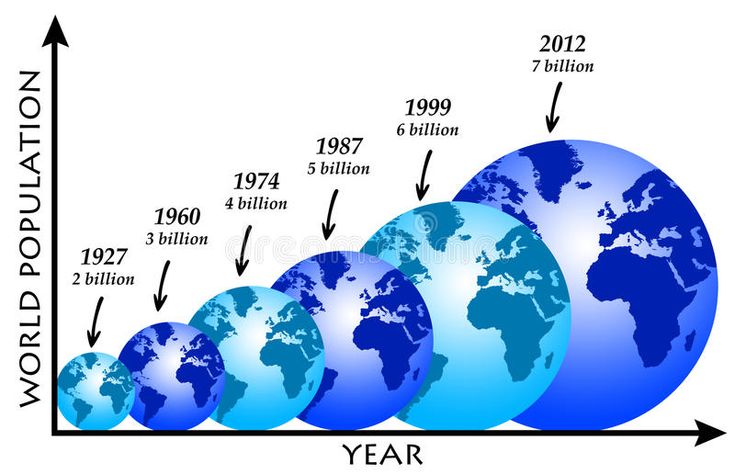
The human population has experienced incredible growth over centuries, shaping civilizations, economies, and ecosystems. From a few million people in ancient times to over 8 billion today, our species has witnessed rapid expansion due to medical advancements, agriculture, and industrialization. However, this growth comes with challenges, including resource depletion, environmental impact, and social inequalities.
This article explores the history of population growth, the factors driving change, and what the future may hold for humanity.
1. The History of Human Population Growth
Early Human Populations (Prehistoric Era – 10,000 BCE)
- Early humans were hunter-gatherers, with populations growing slowly due to high mortality rates.
- The global population was estimated to be only a few million people.
- Life expectancy was low due to harsh environmental conditions, disease, and food scarcity.
The Agricultural Revolution (10,000 BCE – 1700 CE)
- The shift to agriculture allowed human populations to settle and expand.
- Cities and civilizations emerged, leading to population booms in fertile regions.
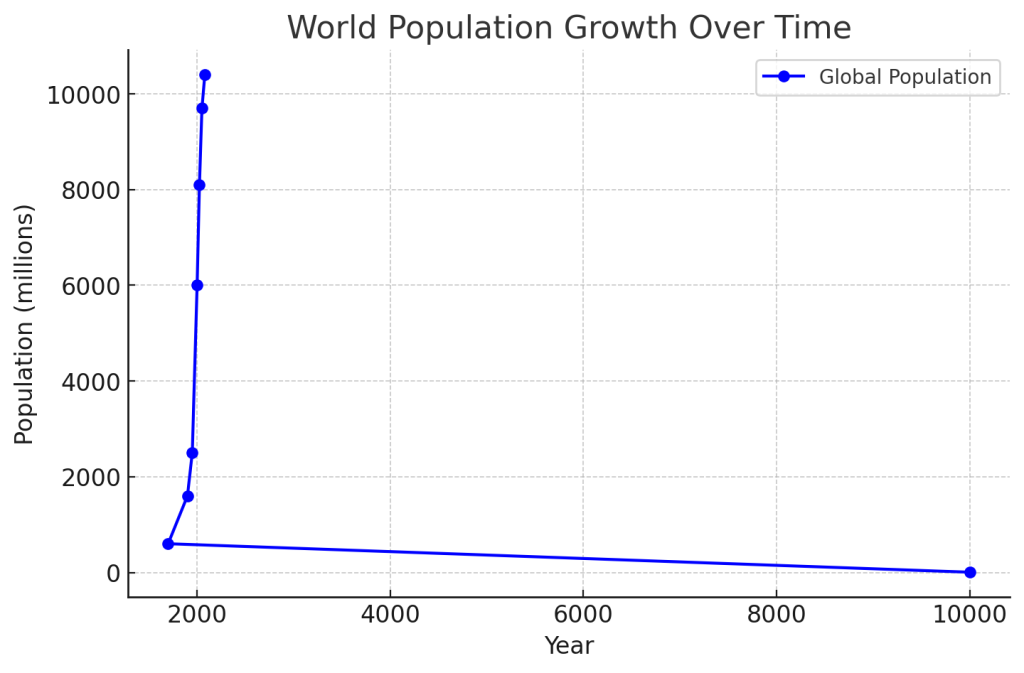
- By 1700, the world population was around 600 million people.
The Industrial Revolution and Population Explosion (1700 – 1900)
- Advances in medicine, sanitation, and agriculture led to declining death rates.
- The population surged, reaching 1.6 billion by 1900.
- Urbanization increased as people moved to cities for work and better living conditions.
The 20th Century Boom (1900 – 2000)
- Rapid improvements in healthcare, vaccines, and food production fueled massive growth.
- By 1950, the global population was 2.5 billion.
- By 2000, it had surged past 6 billion.
2. The World’s Population Today (2024)
Current Population Size and Growth Rate

- As of 2024, the global population is estimated at 8.1 billion people.
- Growth rates have slowed, but some regions still experience rapid increases.
- The United Nations predicts that the population will reach 9.7 billion by 2050.
Top 10 Most Populous Countries (2024 Estimates)
1. India – 1.43 billion (recently surpassed China)
2. China – 1.42 billion
3. United States – 340 million
4. Indonesia – 280 million
5. Pakistan – 240 million
6. Brazil – 220 million
7. Nigeria – 215 million
8. Bangladesh – 170 million
9. Russia – 145 million
10. Mexico – 130 million
Urbanization Trends
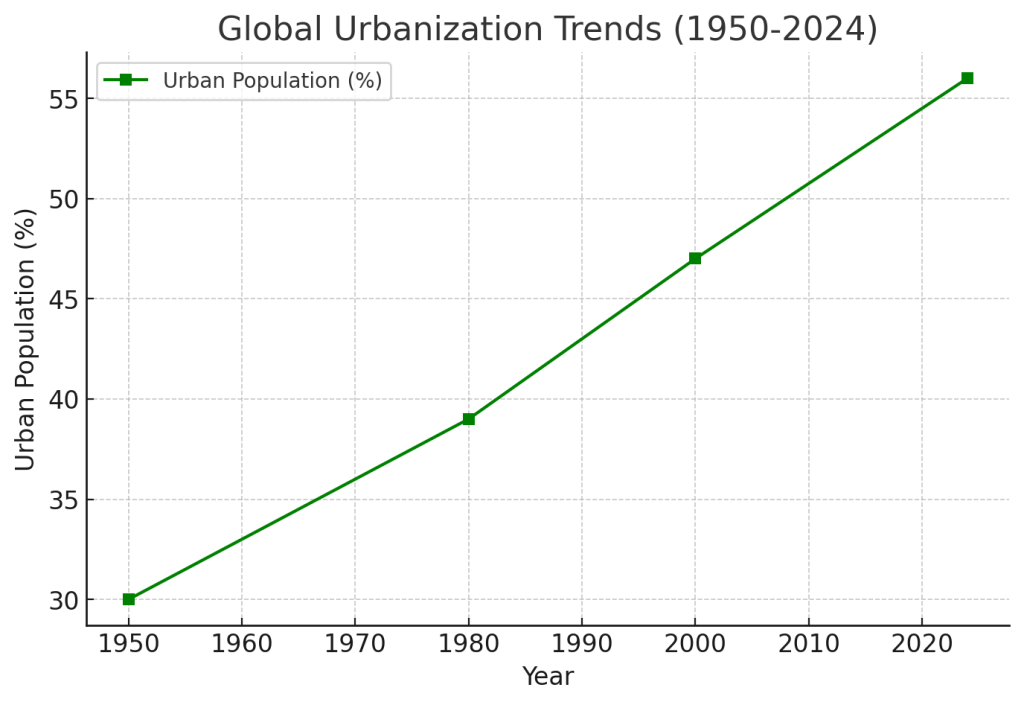
- Over 56% of the world’s population now lives in cities.
- Megacities (cities with over 10 million people) are growing rapidly, with Tokyo, Delhi, and Shanghai leading the way.
Aging Populations and Fertility Declines
– Many developed nations (Japan, Germany, Italy) face population decline due to low birth rates.
– In contrast, African nations have high fertility rates, contributing to rapid growth.
3. Challenges of a Growing Population
1. Overpopulation and Resource Scarcity
– More people mean more demand for food, water, and energy.
– Climate change and environmental degradation make resource management critical.
2. Economic Inequality
– Population growth is uneven, with wealthier nations stabilizing while poorer regions experience high growth.
– Limited access to healthcare, education, and jobs creates poverty cycles.
3. Environmental Impact
– More people result in deforestation, pollution, and loss of biodiversity.
– The carbon footprint of a growing population contributes to climate change.
4. Urban Overcrowding
– Rapid urbanization leads to housing shortages, traffic congestion, and strained infrastructure.
– Megacities in Asia and Africa are struggling to keep up with demand.
4. The Future of Human Population Growth
1. Will the Population Keep Growing?
– The UN predicts that growth will slow after 2060, with a peak of 10.4 billion by 2080.
– Some countries (Japan, South Korea, Eastern Europe) are already experiencing population decline.
2. The Role of Technology
– Advances in AI, automation, and renewable energy could support larger populations more efficiently.
– Improved agricultural techniques (vertical farming, lab-grown meat) may help feed billions.
3. The Impact of Climate Change
– Rising temperatures and sea levels could displace millions, leading to climate migration.
– Resource conflicts may increase as nations compete for water and arable land.
4. The Shift to a Global Aging Population
– By 2050, nearly 2.1 billion people will be over 60 years old.
– Nations will need policies for healthcare, pensions, and workforce challenges.
5. Potential Solutions for a Sustainable Future
1. Promoting Sustainable Development
– Investing in renewable energy and eco-friendly technologies can reduce resource strain.
– Governments must balance economic growth with environmental preservation.
2. Family Planning and Education
– Access to education and contraception can help control rapid population growth.
– Empowering women leads to lower fertility rates and improved economic stability.
3. Urban Planning Innovations
– Smart cities with efficient transport, housing, and infrastructure can support growing populations.
– Sustainable agriculture and water management are key to preventing shortages.
4. Global Cooperation
– Nations must work together to address challenges like climate change, food security, and migration.
– Policies should focus on balancing population growth with economic and environmental sustainability.
The world’s population has grown from small prehistoric groups to over 8 billion people today. While this growth has fueled economic and technological progress, it has also brought challenges like resource scarcity, urbanization, and environmental degradation.
The future of humanity will depend on how we manage our resources, adopt new technologies, and implement sustainable policies. Whether the population continues to rise or stabilizes, the way we adapt will determine the fate of our planet.
