



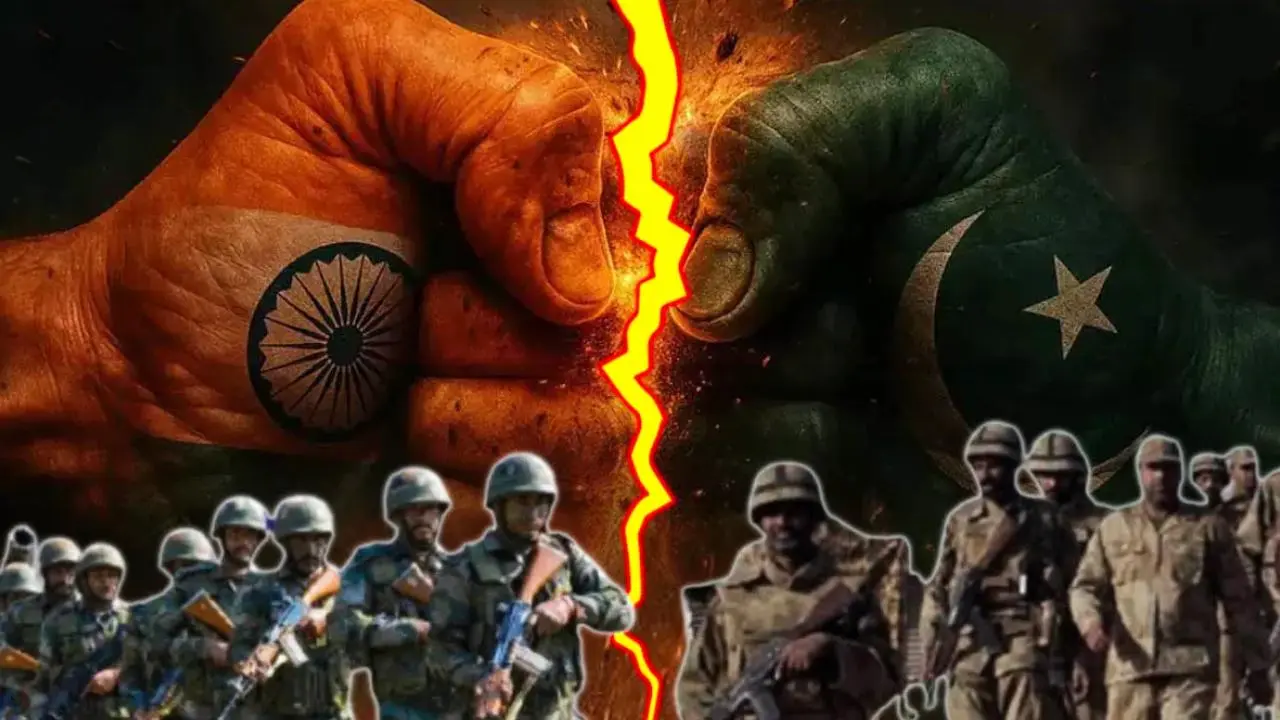
India has issued a firm ultimatum to Pakistan amid rising cross-border tensions, demanding immediate de-escalation and the handover of wanted terrorist leaders Masood Azhar and Hafiz Saeed. The warning, which came just days after the launch of India’s decisive military response under “Operation Sindoor,” signals a sharp escalation in the country’s counter-terrorism strategy.
According to top sources, India has clearly communicated that continued support to terror groups will not go unanswered. New Delhi’s message to Islamabad is blunt: shut down proxy wars, dismantle terror infrastructure, and surrender internationally designated terrorists, or be prepared to face the consequences.
This message follows a series of targeted air and drone strikes by Indian forces on May 8 under Operation Sindoor. In a three-hour operation, Indian defence systems successfully intercepted and neutralised multiple drones and missiles launched from across the border. The retaliatory strikes targeted terror launchpads and communication hubs in Pakistan-occupied Kashmir and key regions in Punjab and Sindh.
The Indian Air Force’s swift action was praised for its precision and restraint, underlining India’s capability to defend its airspace without escalating to a full-blown war. Officials stated that India has sent a “clear and unmistakable signal” that it maintains full control over its skies and will not tolerate attacks on its citizens.
India’s diplomatic channels have also conveyed the seriousness of its position to the international community. While New Delhi has maintained that it does not seek a wider conflict, it insists that peace can only prevail if Pakistan stops harbouring terror elements. The Indian government has specifically demanded the extradition of Masood Azhar, the founder of Jaish-e-Mohammed, and Hafiz Saeed, the mastermind behind the 2008 Mumbai attacks and head of Lashkar-e-Taiba.
Both Azhar and Saeed are United Nations-designated terrorists, with bounties on their heads by international agencies. Their continued presence and activity in Pakistan have long been points of tension between the two countries.
India’s External Affairs Ministry has reinforced that this is a critical moment for Islamabad to prove its willingness to act against terrorism. The message is being echoed widely across Indian strategic and diplomatic circles: this is not just about retaliation, but about setting a new threshold for national security.
As tensions remain high, global powers have urged both countries to exercise restraint and prioritise dialogue. However, India’s latest actions and demands make it clear that the status quo will no longer be tolerated. The era of silent tolerance, many believe, is over — and what replaces it is a doctrine of swift, focused, and uncompromising defence.
