



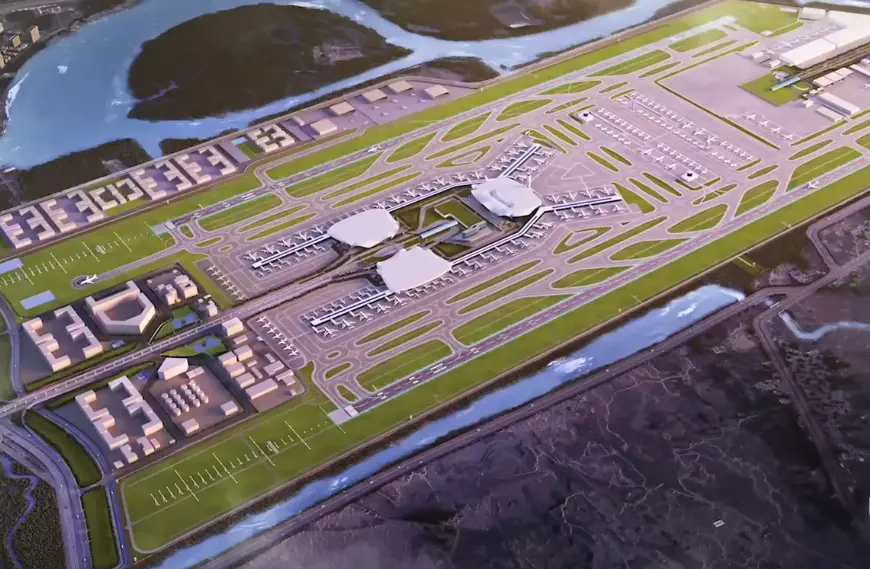
In the past month, the Navi Mumbai International Airport (NMIA) has made significant strides towards its anticipated opening in August 2025, cementing its role as a transformative addition to Mumbai’s aviation landscape. With 98% of construction completed and a successful trial landing conducted, NMIA is poised to alleviate pressure on Mumbai’s overburdened Chhatrapati Shivaji Maharaj International Airport (CSMIA). This article explores the latest updates, innovative features, and the broader impact of this £1.6 billion project, designed to elevate Mumbai into a global aviation hub.
Recent Milestones in NMIA’s Journey
June 2025 marked a pivotal moment for NMIA, with construction reaching near completion. A trial landing by an IndiGo Airbus A320 in December 2024, reported by The Times of India, confirmed the airport’s operational readiness. This milestone, coupled with ongoing pre-commissioning activities, positions NMIA to commence commercial operations by late August. The Adani Group, leading the project, also secured a £770 million refinancing deal in June 2025, led by Apollo Global Management, reinforcing global confidence in the airport’s potential despite unrelated controversies surrounding the group.
Innovative Passenger Experiences
A standout announcement from the Free Press Journal highlights NMIA’s plan to replace the traditional food court with a curated food hall, offering a taste of Mumbai’s vibrant culinary scene. This innovative dining space will cater to diverse dietary needs, including vegan, diabetic, and Jain options, ensuring accessibility for all passengers, including non-travellers accompanying loved ones. The food hall promises premium quality at affordable prices, rivalling high-street restaurant chains.
Additionally, NMIA introduces a unique pre-boarding experience: curated sightseeing tours to Lonavala and nearby areas. Designed for passengers with layovers or short visits, these trips allow travellers to explore the scenic hill station and return within five to six hours, making NMIA the first Indian airport to blend aviation with tourism.
Architectural and Environmental Excellence
Designed by Zaha Hadid Architects, NMIA’s lotus-inspired terminal is a visual masterpiece, visible from the air. Spanning 1,160 hectares, the airport will feature four terminals and two runways, with a VVIP terminal planned for 2030. Sustainability is central, with solar power and electric vehicles minimising the carbon footprint. Recent environmental efforts include the completion of land reclamation and river diversion, ensuring harmony with the local ecosystem.
Enhanced Connectivity and Economic Boost
NMIA’s location in Ulwe, 22 miles southeast of CSMIA, enhances accessibility via the Mumbai Trans Harbour Link, Navi Mumbai Metro Line 1, and a planned Metro Line 8. A new link road on the Mumbai-Pune Expressway, bypassing Lonavala, will reduce travel time from Pune by two and a half hours. Economically, NMIA is driving growth, with Adani Realty planning a 1,000-acre township in Panvel, poised to rival major urban redevelopment projects. Low-cost carriers like IndiGo, set to operate 36 daily flights to 15 cities from day one, will lead the transition, with international flights starting in August.
Challenges on the Horizon
Despite progress, challenges remain. The absence of high-speed transit between NMIA and CSMIA has raised concerns, with Metro Line 8 still in planning. Airlines are hesitant to relocate due to higher fees, prompting Adani to seek government approval for unified tariff assessments. The International Air Transport Association has flagged potential “capacity gaming” risks, which could affect flight allocations.
A Vision for Mumbai’s Future
With its August 2025 opening approaching, NMIA is set to redefine air travel in India. Its innovative food hall, eco-conscious design, and unique tourism offerings position it as more than an airport, it’s a gateway to Mumbai’s global ambitions. As Gautam Adani stated, NMIA is “a true gift to India,” promising enhanced connectivity, economic growth, and an unparalleled passenger experience.
