



Introduction to India–Namibia Relations
Prime Minister Narendra Modi’s visit to Namibia on 7–9 July 2025 marks a significant step in India–Namibia relations. Established in 1990 upon Namibia’s independence, this partnership is rooted in India’s support for Namibia’s liberation struggle. Namibia, rich in minerals and a stable democracy, is a key African partner for India. This article explores the historical, economic, strategic, and cultural dimensions of India–Namibia relations, highlighting their potential for growth and collaboration.
Historical Bonds: A Legacy of Support
India played a pivotal role in Namibia’s liberation struggle against South African rule. As a vocal supporter of the South West Africa People’s Organisation (SWAPO), India provided diplomatic and moral support during the 1970s and 1980s. Diplomatic relations were established in 1990, with India opening a High Commission in Windhoek. High-level visits, including President Sam Nujoma’s in 1995 and President Hage Geingob’s in 2016, have strengthened ties. Modi’s 2025 visit, hosted by President Netumbo Nandi-Ndaitwah, is a milestone in this journey.
The two nations share a commitment to multilateralism. Their participation in the Non-Aligned Movement and Commonwealth reflects aligned priorities. Namibia’s support for India’s global governance reform agenda, including UN Security Council expansion, strengthens this partnership.
Economic Cooperation: Trade and Investment
Bilateral trade between India and Namibia reached USD 200 million in 2024, with potential for growth in mining and energy. Namibia exports uranium, diamonds, and copper to India, while India supplies pharmaceuticals, machinery, and textiles. Indian firms, such as Vedanta, have invested in Namibia’s mining sector, creating jobs and fostering technology transfer.
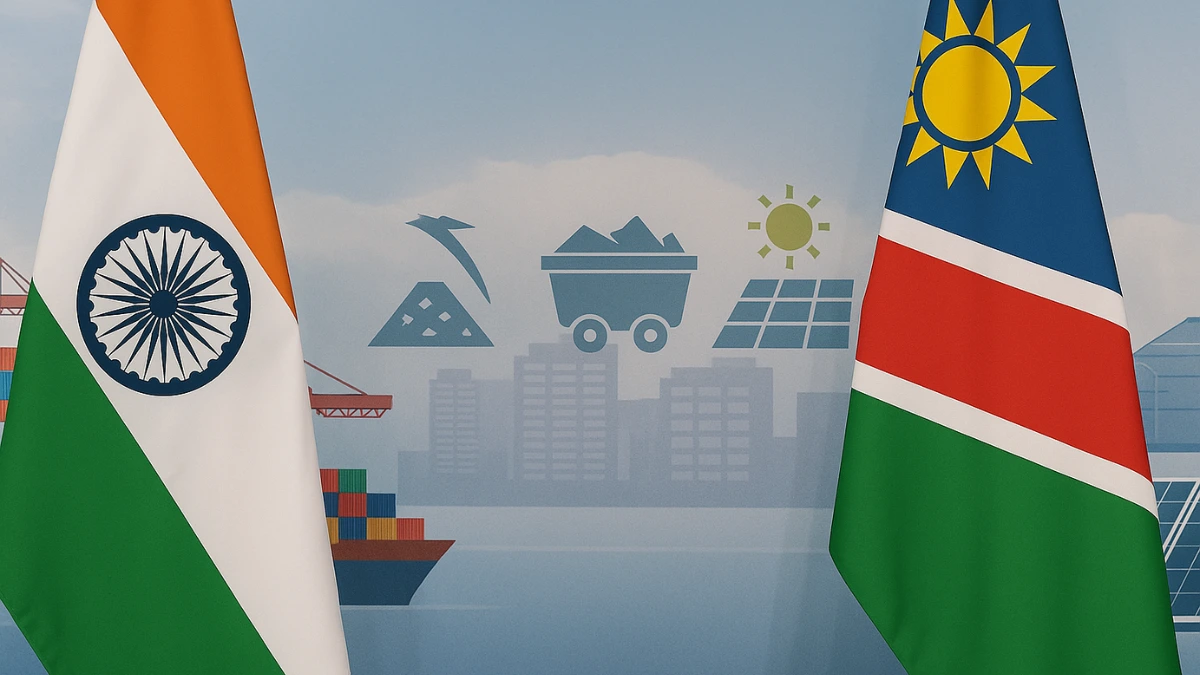
Modi’s visit will focus on expanding economic ties. Discussions with Nandi-Ndaitwah are expected to yield agreements on trade, energy, and critical minerals. Namibia’s uranium and lithium reserves, essential for nuclear and clean energy, attract Indian firms like Khanij Bidesh India Limited (KABIL). India’s development assistance, including ITEC scholarships, supports capacity-building in Namibia’s technical sectors.
The visit also strengthens India’s African presence. It underscores India’s commitment to multilateralism and sustainable development, reinforcing its role as a voice for developing nations.
A Future of Partnership
Modi’s visit to Namibia reaffirms a bond rooted in solidarity and opportunity. India’s support for Namibia’s liberation and shared values drive this partnership. The 2025 visit, with its focus on trade, energy, technology, and multilateralism, promises to deepen this relationship. As Modi engages with Namibian leaders and the diaspora, he will articulate a vision of collaboration, fostering a future of mutual prosperity.
