




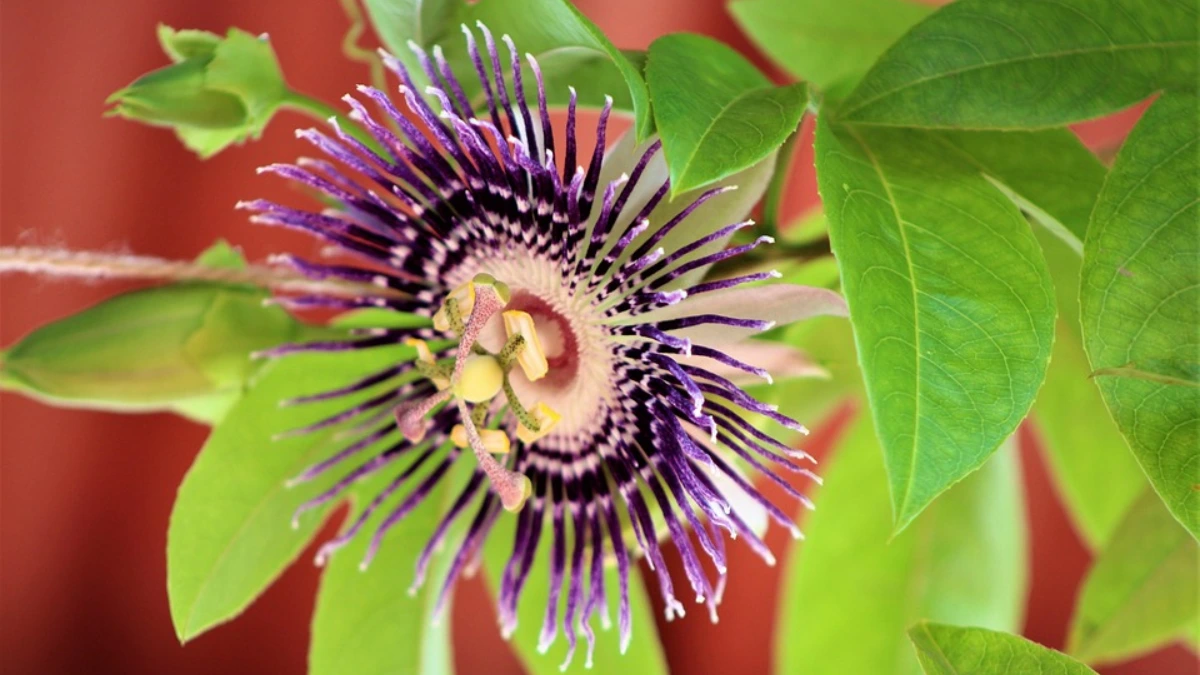
Few flowers on Earth can match the passionflower for its visual complexity, spiritual symbolism, and medicinal value. With a structure that seems crafted by precision rather than nature, the passionflower has captivated the human imagination for centuries. This extraordinary plant not only serves as a pollinator’s paradise but also holds deep religious meaning and health benefits, making it one of the most intriguing botanical species in the world.
A Marvel of Nature
Belonging to the genus Passiflora, passionflowers are mostly found in the Americas and grow as perennial vines or shrubs. Their flowers stand out for their unique, clock-like formation. White, purple, or blue filaments extend outward from a central corona, forming a hypnotic pattern. Above the petals, five stamens stretch outwards, while three strange-looking stigmas hover at the top. This design is not only fascinating to the human eye but also serves a purpose in nature.
The complex architecture of the flower guides various pollinators such as bees, butterflies, hummingbirds, and even bats to specific spots, ensuring efficient pollination and reproduction.
Symbol of Faith and Missionary Tool
The passionflower holds special meaning in Christian symbolism. In the 16th century, Spanish missionaries in South America interpreted the flower’s distinct features as representations of Christ’s crucifixion, known as the Passion of Christ. They used it as a visual teaching tool when spreading Christianity among Indigenous populations.
Each floral part was assigned spiritual symbolism:
- The ten petals and sepals represented the ten faithful apostles.
- Five stamens stood for the five wounds of Christ.
- Three stigmas symbolised the three nails used in the crucifixion.
- The corona filaments were seen as the crown of thorns.
This symbolic reading gave the flower its name and cemented its place in religious teachings and art.
Role in the Ecosystem
Beyond its symbolic beauty, the passionflower is essential to many ecosystems. Its leaves serve as a primary food source for the caterpillars of butterflies like the Gulf fritillary and zebra longwing. The complex flowers also attract a wide array of pollinators, helping to maintain biodiversity in the regions where it grows.
Interestingly, some species of passionflower have developed extrafloral nectaries, glands that release nectar outside the flower. These glands attract ants, which in turn protect the plant from harmful insects, showing the plant’s remarkable evolutionary strategies.
Healing Properties of Passionflower
Passionflower is not just admired for its looks. For centuries, species like Passiflora incarnata have been used in traditional medicine to ease anxiety, treat insomnia, and reduce seizures. Today, scientific studies support some of these age-old practices. Research suggests that passionflower extracts have natural sedative and calming effects.
As a result, herbal teas and supplements containing passionflower are commonly used as natural remedies to relieve stress and improve sleep quality.
Fruits of the Vine
Some passionflower species produce delicious and aromatic fruits known as passionfruits, with Passiflora edulis being the most popular. These fruits are widely used in juices, desserts, and sauces, especially in tropical regions. Their tangy and refreshing flavour makes them a staple in many culinary traditions.
However, not all fruits from this genus are safe to eat. Some species produce toxic fruits, highlighting the importance of proper identification and the plant’s diverse nature.
Facing Threats in the Wild
Despite its benefits, the passionflower faces serious challenges in the wild. Rapid deforestation in South America has led to habitat loss, putting several wild species at risk. Moreover, overharvesting for medicinal purposes adds pressure on natural populations.
To ensure the future of passionflowers, efforts must focus on sustainable farming practices and habitat conservation. Protecting these plants also helps preserve the pollinators and animals that rely on them. As early American naturalist William Bartram wrote in 1791, “The passionflower, or Maypop, presents the most extravagant yet sublime display of floral architecture.” His words remain true today, as this remarkable plant continues to astonish botanists, believers, and herbalists alike.
