



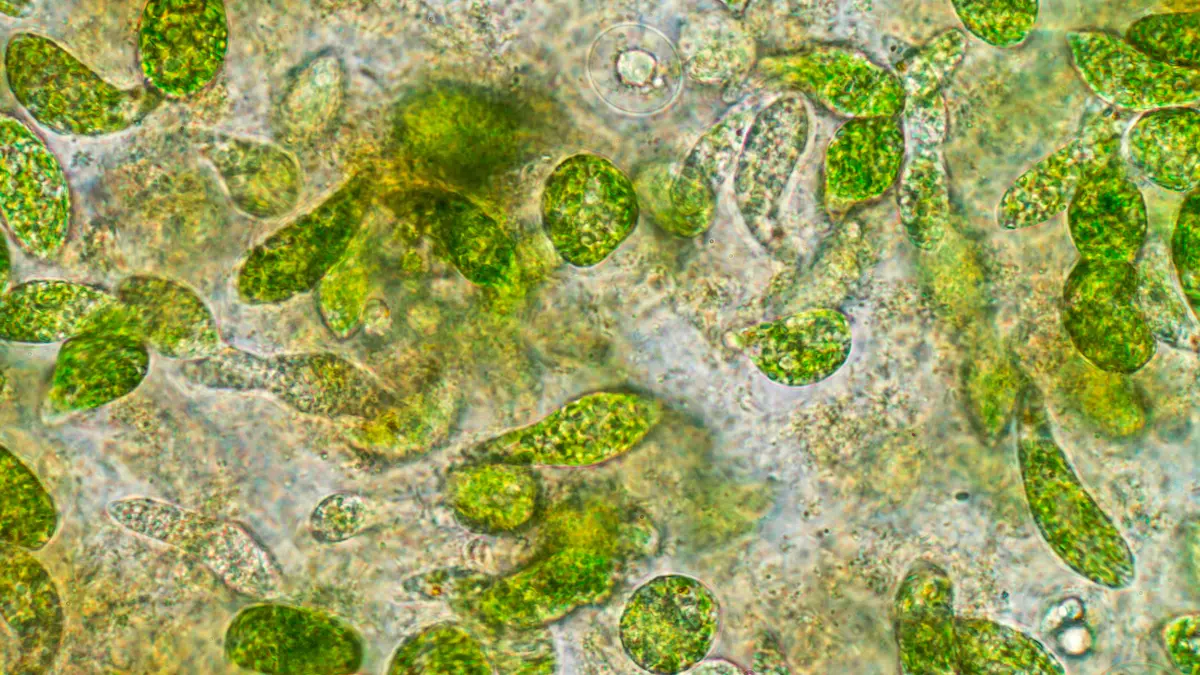
They are invisible to the naked eye yet they produce at least half of Earth’s oxygen. These single-celled plants drifting in sunlit ocean waters, known as phytoplankton, form the foundation of marine food webs. Despite their size, they are among the most important and underestimated life forms on our planet.
What Are Phytoplankton?
Phytoplankton include a wide variety of microscopic organisms such as diatoms, dinoflagellates, and cyanobacteria. They use photosynthesis to convert carbon dioxide and nutrients into organic matter. In doing so, they release oxygen, which makes the very air we breathe possible.
Oxygen Factories of the Planet
Although tropical rainforests are often called the lungs of Earth, the truth is that marine phytoplankton generate more oxygen than all forests combined. They support life both in the oceans and on land. In fact, every second breath you take comes from these tiny floating plants.
The Base of Marine Food Chains
Phytoplankton are the starting point of marine food chains. They are eaten by zooplankton, which are then consumed by small fish. These fish are prey for larger fish, seabirds, and whales. Without phytoplankton, ocean ecosystems would simply collapse. From sardines to sharks, countless species depend on the energy that phytoplankton provide.
Climate Regulators
Phytoplankton also help regulate Earth’s climate by absorbing carbon dioxide. When they die, some sink to the ocean floor, trapping carbon for thousands of years. This natural “biological pump” removes greenhouse gases from the atmosphere.
Moreover, certain species, like coccolithophores, produce compounds that affect cloud formation. In this way, they shape weather patterns and global climate systems.
Seasonal Blooms
Phytoplankton populations can rapidly grow in what scientists call blooms. These appear as vast green or turquoise swirls visible even from space. Such blooms occur when sunlight, nutrients, and water conditions align, especially during spring near polar oceans or coastal upwellings.
These seasonal bursts of life trigger large migrations of marine creatures and play a vital role in sustaining global fisheries.
Growing Threats to Phytoplankton
However, phytoplankton face several modern threats:
- Ocean warming reduces nutrient mixing, starving them of essential resources.
- Acidification, caused by excessive carbon dioxide, harms species with calcium carbonate shells.
- Nutrient pollution from human activity leads to harmful algal blooms (HABs), which release toxins dangerous to marine life and humans alike.
Why They Matter to Everyone
Phytoplankton are more than just the base of ocean life. They connect the atmosphere, climate, and food security. If their numbers decline, oxygen levels would drop, carbon dioxide would rise, fish stocks would decrease, and weather systems would grow unstable.
As oceanographer Dr. Penny Chisholm says: “Phytoplankton are the grass of the sea, and their well-being determines the fate of the entire planet.”
Protecting Earth’s Microscopic Forests
To protect these vital organisms, we must reduce carbon emissions, control chemical and plastic pollution, and maintain balanced nutrient cycles. Protecting phytoplankton means preserving life in our oceans and ensuring the stability of our planet’s ecosystems.
