



A city lost in plain sight
Every great story begins with an unlikely discovery. For Dholavira, that moment came in the 1960s when a villager in Kutch stumbled across weathered stones half-buried in the desert. To the untrained eye, they were nothing more than rubble. Yet those scattered remains carried echoes of an ancient city that once thrived thousands of years ago.
This chance finding set off a chain of events that would eventually rewrite our understanding of India’s deep past. Today, we know Dholavira as one of the most remarkable Harappan sites ever uncovered. Its path from forgotten ruins to global recognition is what makes the story of this lost city’s rediscovery so compelling.
From village whispers to national spotlight
At first, Dholavira’s ruins attracted only curious glances. Farmers saw them daily, but it took persistent local interest and the eventual attention of the Archaeological Survey of India to reveal their true significance. By the 1990s, extensive excavations were underway. Layer by layer, the desert began to give up its secrets: a well-planned city with wide streets, reservoirs, and stone architecture that had survived for nearly 5,000 years.
It is easy to forget that behind this discovery were not just archaeologists, but ordinary people whose awareness kept the site from vanishing into silence. In many ways, Dholavira’s rediscovery is also the story of community memory.
UNESCO puts it on the world map
In 2021, UNESCO added Dholavira to its list of World Heritage Sites. For the people of Kutch, it was a moment of pride. For India, it meant global recognition of a cultural treasure that had quietly endured through centuries of shifting sands.
UNESCO’s nod did more than celebrate the site’s historical importance. It opened new doors for tourism, funding, and international research. Suddenly, the remote desert city was no longer just a chapter in archaeology, it became a global destination, drawing curious travellers from around the world.
Kutch’s hidden treasure
When most people think of Kutch, they picture the white salt desert of the Rann. Dholavira, however, is the region’s hidden crown jewel. Unlike bustling heritage cities such as Jaipur or Hampi, this ancient Harappan site offers a raw, quiet encounter with history. Visitors walk among the same streets and water tanks where people once lived, traded, and thrived more than 4,000 years ago.
Tourism has begun to shift slowly, with Dholavira carving out its identity as a must-visit spot for those who want more than postcard landscapes. Its story adds depth to Gujarat’s cultural appeal, blending natural beauty with layers of ancient heritage.
A city built for trade
One of the most fascinating aspects of Dholavira is its role as a trade hub. Location is everything in history, and Dholavira sat perfectly between inland India and the Arabian Sea. From here, goods could move towards Sindh, Punjab, or even across the waters to Mesopotamia.
Excavations have revealed beads, shells, and semi-precious stones that point to a buzzing trade economy. Dholavira was not just a settlement. It was a city plugged into an international network long before the word ‘globalisation’ existed. Its wealth and survival came from these connections, proving that even in ancient times, trade was the lifeline of great civilisations.
The ingenuity of survival
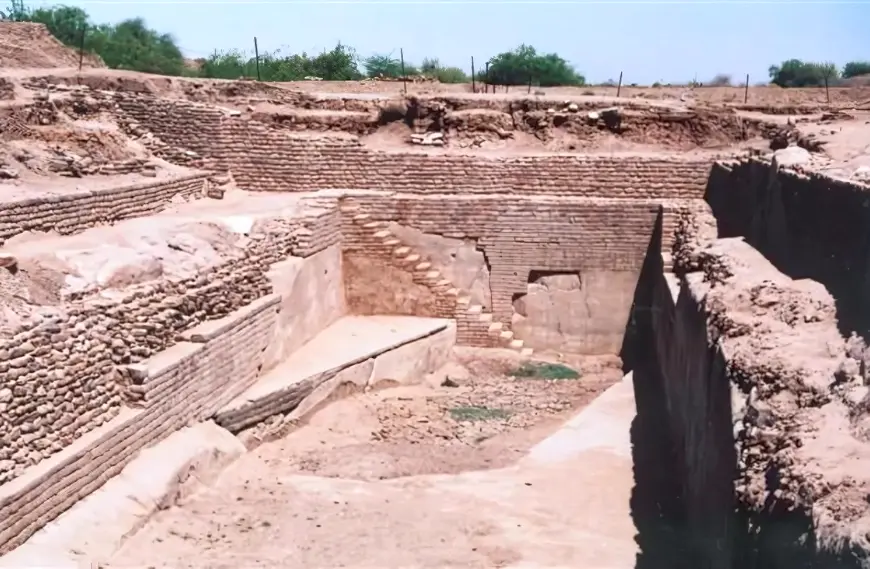
Life in Kutch’s harsh desert has never been easy. Water is scarce, summers burn, and winters bite. Yet Dholavira’s people found ways to thrive. They built massive reservoirs to store rainwater and devised systems to channel every drop into storage. This ingenuity ensured the city’s survival for nearly two millennia.
Such resilience feels strikingly modern. At a time when cities today struggle with water shortages, Dholavira reminds us that sustainable living is not a new idea. It was a necessity mastered long ago.
What makes it different from other Harappan sites
Most Harappan cities we know, like Mohenjo-daro or Harappa in present-day Pakistan, relied heavily on baked bricks. Dholavira, however, is unique for its stone architecture. Large walls, gates, and stepped water tanks still stand, making it one of the most visually striking Harappan ruins to explore.
This difference also meant it survived earthquakes and erosion better than its brick-built cousins. Walking through Dholavira today feels less like looking at ruins and more like stepping into a city paused in time.
The human story within the ruins
History often feels distant, but Dholavira brings it close. Imagine traders weighing beads, children splashing in reservoirs, or families lighting lamps in their stone homes. For centuries, life thrived here until climate shifts and water scarcity finally drove people away.
The silence left behind is haunting, yet the rediscovery of this lost city breathes new life into those forgotten voices. Every carved stone and buried bead whispers stories of resilience, ambition, and eventual decline.
Why the lost city matters today
Dholavira is not just an archaeological site. It is a mirror that reflects both our past and our future. It shows us the roots of urban planning, the value of trade, and the timeless challenge of water management. Its UNESCO recognition is more than a badge—it is a reminder that heritage connects us across time.
As more people visit, Dholavira will continue to reshape how we think of India’s ancient civilisations. It proves that history is not just about kings and wars, but about everyday ingenuity and community survival.
The lost city’s rediscovery is more than a tale of ruins. It is the story of a civilisation that mastered the desert, built global trade links, and left behind lessons that still matter. From a villager’s quiet find to UNESCO’s global stage, Dholavira has journeyed far. Its story is no longer buried in sand. It belongs to the world now.
