



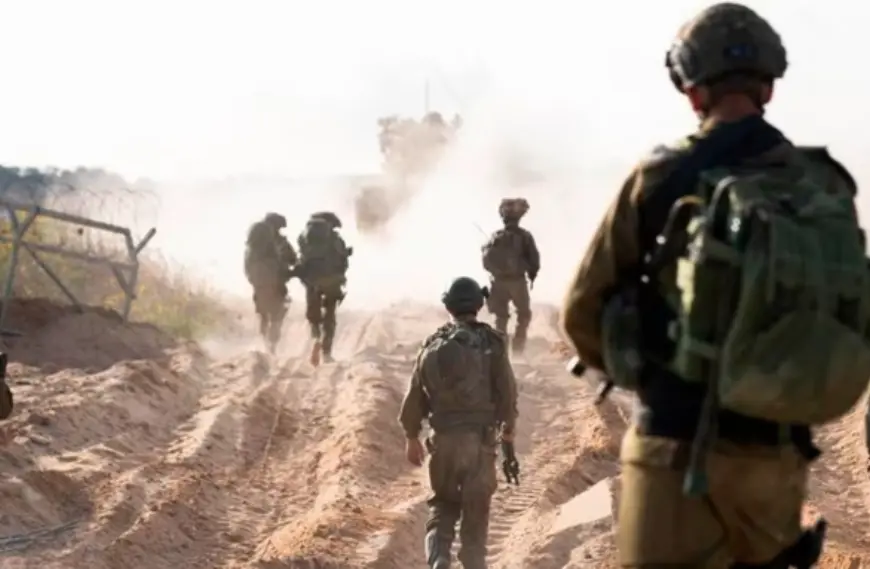
In mid-September 2025, Israel launched a ground offensive into Gaza City, marking a major shift in its military strategy. Until now, the campaign was driven mainly by air strikes and missile attacks, with only limited ground raids. The move into Gaza City represents a step-change as Israel seeks not just to weaken Hamas from the skies but to dismantle its infrastructure on the ground. The Israel Defence Forces (IDF) have confirmed that tanks and infantry are moving into the city, which is one of the most densely populated areas in the region. Ahead of the operation, Israel ordered hundreds of thousands of residents to evacuate, though humanitarian agencies have warned that safe zones are limited and many civilians remain trapped.
This escalation signals a new phase of the conflict. Air strikes allow distance and lower risk for Israeli forces, but urban ground combat brings soldiers into direct confrontation with Hamas fighters. Such fighting in crowded city streets is usually slower, more destructive, and more costly in terms of lives and infrastructure. Analysts warn that the offensive could stretch over weeks or months as Israel attempts to clear neighbourhoods block by block. The danger of civilian casualties is high, and displacement is already growing as families flee bombardments and advancing troops. The humanitarian situation, which was already severe, is expected to worsen further as supplies of food, medicine, and shelter come under even greater strain.
The political context is also central to this shift. Israel’s government faces intense domestic pressure to rescue hostages still believed to be held by Hamas. The ground operation is seen as a way to demonstrate progress, both militarily and politically. At the same time, Israel risks increasing international criticism as images of destruction and civilian suffering circulate globally. Diplomats and humanitarian groups are already calling for ceasefires, humanitarian corridors, and greater protection for non-combatants.
Strategically, Israel appears to have judged that air power alone cannot defeat Hamas inside its urban strongholds. Direct control over territory is seen as necessary to dismantle command centres, tunnel networks, and weapons stockpiles. Yet the scale of this ambition raises questions about duration and cost. Ground wars in cities are rarely quick or clean, and every extra day of combat adds to both the military burden and the humanitarian toll.
The offensive in Gaza City therefore represents more than just another stage of fighting; it is a turning point. It reflects Israel’s decision to escalate despite the risks, betting that deeper incursions will yield decisive results. For observers, the key issues ahead will be whether the IDF can achieve its stated goals, how long the operation will last, and what price will be paid by both sides, especially civilians caught in the middle.
